Ophthalmology 360
  • Conferences
  • Videos
  • Podcasts
  • Quizzes
  • About
    • About Us – Mission
    • Content Awards
    • Media Partners
    • Business Team
    • Brand Ambassadors
    • Photo Contest
    • Industry Council
    • Advisory Board

What are you looking for?

  • Anterior Segment
  • Cataract
  • Cornea and External Disease
  • Diabetic Macular Edema
  • Dry Eye
  • Early Onset Cataracts
  • Exclusives
  • General
  • Geographic Atrophy
  • Glaucoma
  • Industry News
  • Inherited Retinal Disease
  • IOLs
  • Neurotrophic Keratitis
  • Ocular Surface Disease
  • Oculoplastics
  • Optometry
  • Pediatrics
  • Practice Management
  • Presbyopia
  • Refractive Surgery/Vision Correction
  • Residents & Young Ophthalmologists
  • Retina
  • Retina Care 360
  • Retinopathy of Prematurity
  • Spotlight Series
  • The Interventional Glaucoma Project
  • The Ophthalmic Project
  • Trending Topics
2nd Annual Photo Contest - Enter Here!
Ophthalmology 360
  • Conferences
  • Videos
  • Podcasts
  • Quizzes
  • About
    • About Us – Mission
    • Content Awards
    • Media Partners
    • Business Team
    • Brand Ambassadors
    • Photo Contest
    • Industry Council
    • Advisory Board
Home > Glaucoma > Long-term topical latanoprost treatment for early POAG affects pupillary function
  • Glaucoma

Long-term topical latanoprost treatment for early POAG affects pupillary function

Ophthalmology 360

The long-term topical latanoprost 0.005% treatment in early-stage primary open-angle glaucoma (POAG) has a slight mydriatic effect on the pupil, according to the results of a 2-year longitudinal study. Further clinical studies with larger patient cohorts are necessary to better understand the effects of latanoprost on pupillary functions, reported the researchers.

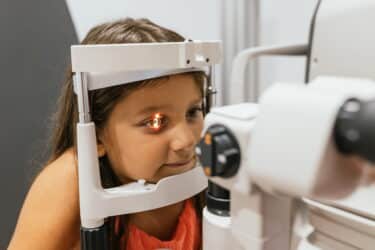
The prospective study involved 20 eyes of 20 treatment-naive subjects with early-stage POAG. After comprehensive ophthalmic examination, static and dynamic pupillometry measurements were performed before treatment, at the first follow-up visit (~1 month) and the second follow-up visit (~25 months). Dynamic parameters included resting diameter, amplitude, latency, duration, and velocity of pupil contraction and dilation. Static pupillometry parameters were pupil diameter (PD) in high-photopic, low-photopic, mesopic and scotopic conditions.

The results demonstrated that the velocity of pupil dilation significantly decreased during the first visit and the second visit of treatment compared to the pre-treatment visit. The resting PD was also significantly higher after the first visit and the second visit compared to the pre-treatment visit. However, the difference in resting PD measured between the first and second visits were not statistically significant and no significant changes in other dynamic parameters were found. In addition, a mild, but not significant, mydriatic effect was observed in PD measurements under scotopic, mesopic and low photopic lighting conditions after follow-up. None of the static and dynamic parameters correlate with age, changes in intraocular pressure or mean deviation values of visual field tests.

Reference
Bayraktar S, Hondur G, Şekeroğlu MA, Cengiz Özyurt B, Şen E. The long-term effects of topical latanoprost 0.005% treatment on pupillary functions: A 2-year longitudinal study. Eur J Ophthalmol. 2024 Jan 18:11206721241227780. doi:10.1177/11206721241227780.

Share

Related Content

  • Glaucoma

Nicotinamide linked to lower glaucoma risk in ocular hypertension

  • Dry Eye

Probiotic use tied to lower risk of primary open-angle glaucoma in adults with dry eye

  • Glaucoma

Poor sleep quality linked to glaucoma severity in older adults

  • Glaucoma

Glaucoma drainage devices provide meaningful IOP control in pediatric glaucoma

  • Glaucoma

Expanding the glaucoma treatment landscape with FLIGHT technology

  • Glaucoma

Geographic differences in glaucoma care raise concerns about equitable access

Share

Editor's Picks

  • Neurotrophic Keratitis

Topical insulin shows real-world benefit in neurotrophic keratopathy

  • Retina

GLP-1 RAs have protective effects against AMD

  • Retina

Four-month injection intervals appear safe for long-term stable nAMD

Advisory Board

Saad Ahmad, MD

Ahmad A. Aref, MD, MBA

Roomasa Channa, MD

David Chow, MD, FRCS(C)

Sally L. Baxter, MD, MSc

Neel R. Desai, MD

Nadia Haqqie, MD

Simon Fung, MD, FRCOphth

Sumit Garg, MD

Ross Lakhanpal, MD, FACS

Sanjai Jalaj, MD

Anton Kolomeyer, MD, PhD

Shan Lin, MD

Steven R. Sarkisian, Jr., MD

See All
Ophthalmology 360

Ophthalmology 360® is a dynamic digital platform dedicated to advancing the field of eye care.

Get to Know Us

  • Home
  • About Us
  • Media Partners
  • Advertising Policy
  • Our Advisory Board

Sign up for our Newsletter

Sign up for our Newsletter to get our newest articles instantly!

  • Privacy Policy
  • Advertising Policy
  • Medical Disclaimer
IHM Logo

2026 Ophthalmology 360 is a trademark of International Healthcare Media, LLC. All rights reserved

  • MedJournal360 Icon
  • RareDisease360 Icon
  • MyHero360 Icon
  • Optometry360 Icon
  • Ophtalmology360 Icon