Virtual reality vision therapy shows modest improvement in children with intermittent exotropia

Key Takeaways
- A 12-week home-based virtual reality vision therapy program led to modest improvement in distance exotropia control compared with observation.
- Greater improvement was seen in children who completed more than 75% of the VRVT training sessions.
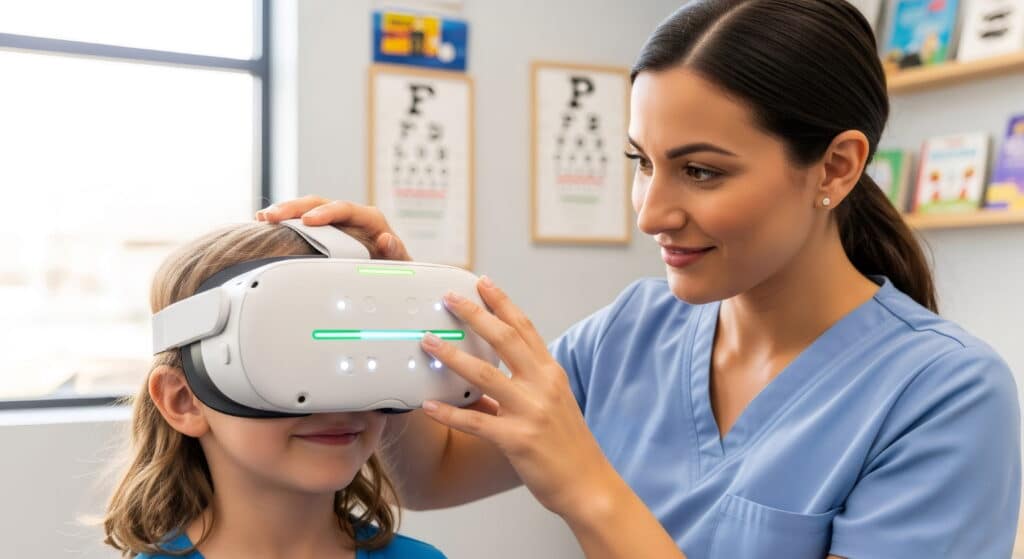
A 12-week home-based virtual reality vision therapy (VRVT) program produced modest improvement in distance exotropia control in children with intermittent exotropia (IXT), according to a study, although greater improvement was seen among those who maintained high adherence to the therapy.
The study included 177 children with previously untreated IXT, a distance exodeviation of 10 to 30 prism diopters, exotropia control scores of 1 to 3 at both distance and near, and cycloplegic spherical equivalents ranging from −6.00 to +0.50 diopters in each eye, randomized to either a home-based VRVT program for 12 weeks or an observation-only control group. The full analysis set included 161 children with a median age of 8 years.
By week 12, the median distance control score improved by 0.33 points compared to baseline in the VRVT group, while no change was observed in the control group.
Participants who completed more than 75% of the VRVT training sessions showed greater improvement, with a 0.71-point greater reduction in distance control score than the control group.
Children with baseline distance exotropia control scores≥2 showed greater improvement than those with a baseline score of 1, who showed minimal change.
No adverse events related to the intervention were reported during the treatment phase. The follow-up phase of the trial is ongoing to assess longer-term outcomes.
Reference
Jing Y, Li L, Li Z, et al. Virtual Reality-Based Vision Therapy for Intermittent Exotropia: A Randomized Clinical Trial. JAMA Netw Open. 2026;9(3):e260631. doi: 10.1001/jamanetworkopen.2026.0631. PMID: 41801202.
Related Content