
Talking to Patients About Co-management: Clear, Concise Communication Fosters Beneficial Relationships

Successful premium surgical care hinges on education and collaboration.
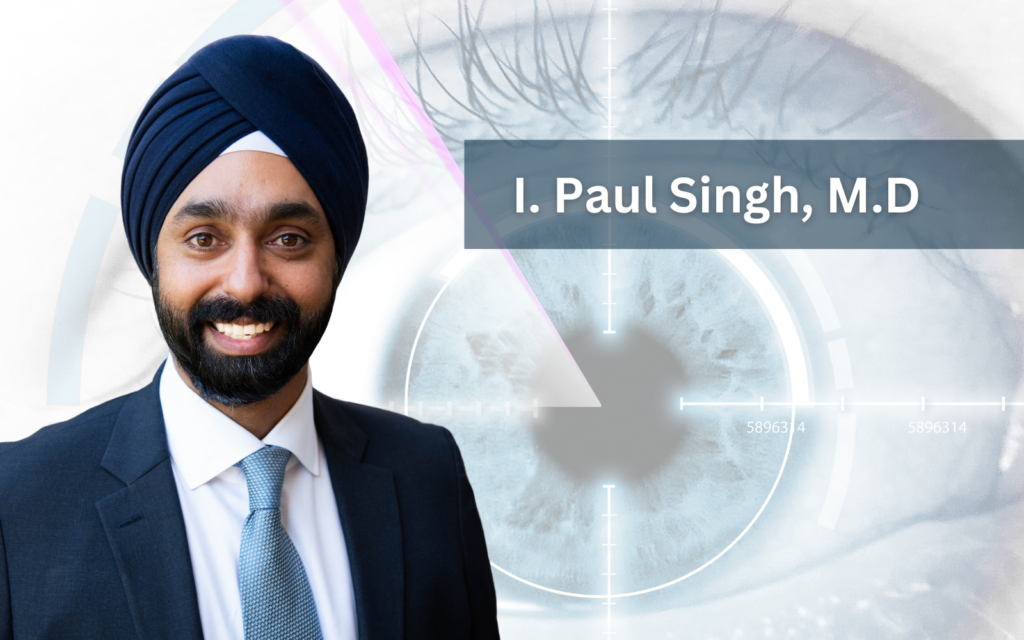
By Paul Singh, MD
Educating is an integral part of our relationship with patients. In my practice, at multiple touchpoints along a patient’s journey through the practice, my staff and I share vital information about their condition, the procedure they are going to have, as well as the fees involved. During these conversations, everyone who speaks with the patient reinforces that we are all working together as one team to provide their care.
Teamwork Makes the Dream Work
When I first meet with patients who are referred from an optometrist or other primary eye care provider, I start by acknowledging the source of the referral. In other words, I let patients know that I am happy to be assisting their practitioner as part of the team. This establishes continuity of care and lets patients know it is not me versus the other provider; rather we are collaborating and communicating in tandem to ensure the very best experience and outcome possible.
After my consultation, if we decide to move ahead with surgery, I tell patients my surgical scheduler—Lisa—will discuss the surgery date and additional details. Once again, Lisa reiterates that our practice is working as a team with the patient’s optometrist who can provide the follow-up care to ensure proper healing. She will explain that, if there are any issues at all, the patient can come back to our office. We want everyone who interacts with the patient to convey the same philosophy and consistent messaging. Our paperwork makes it clear to patients that they have a choice when it comes to their provider and that our practice’s collaborative relationship with referring providers ensures that there is a continuity of care.
As part of Lisa’s conversation, she explains to patients the cost involved with the surgical package we decided on together. She describes what is included in the package and explains that a portion must be paid to the surgery center to cover the facility’s fees, lens cost, and any additional services associated with the procedure; a portion is allocated to the surgeon; and a portion is paid to the comanaging provider if the patient has elected to see their optometrist for postoperative care. She will explain that, just as the surgeon’s exam confirmed that the patient was a proper candidate for the technology chosen, the optometrist with whom they have an established relationship will provide the proper postoperative care to ensure an optimal visual result.
Payment Streamlined
In the past, the payment process had the potential to become fraught, complex, and frankly frustrating for everyone involved. No matter how clear our explanation was to patients, many would often show up for surgery and not remember that there was a payment due at that time. This would put the surgery center staff in the uncomfortable position of having to “re-educate” our patients. Then when patients arrive for their postoperative appointments, they are asked to make another payment. This often resulted in patients being confused as to why they were “paying again,” with the referring provider’s staff now having to explain the comanagement fees (again). It is easy to see why this part of what is supposed to be a premium experience was at best annoying and at worst even contentious, leaving patients with a less than stellar impression no matter how wonderful the care was that they received.
To alleviate this, we now use CoFi, a deceptively simple multiparty invoicing system that allows patients to make separate payments to all 3 parties – our practice, the ASC, and the optometrist at one convenient time. The patient sees the breakdown of the separate charges on one invoice, and they simply provide their card to us once (or provide one check). The platform then facilitates separate payments to each party, just as if the patient had visited each party to pay them. The individual charges appear on their credit card or bank statement, yet the patient will only have had one payment event.
CoFi offers a huge benefit for our practice, our patients, our comanaging providers, and the surgery center. It takes something that can be a source of confusion and angst, and makes it into a compliant, streamlined, efficient, and easy-to-understand process. From a staff perspective, anything that provides a time savings and improves efficiency is welcome. Particularly in the current environment where we are challenged to hire and retain top notch staff, and as a result, many of us have fewer personnel doing more. Without a doubt, the platform has saved my staff a lot of time by avoiding additional discussions with patients around payment, and resulted in a superior patient experience.
Conclusion
It is important for surgeons to live—and preach—the idea that we are all on one team from the front desk staff to the technicians, to the surgery schedulers and counselors, to the surgeon, to the primary eye care providers and their entire staff. Teamwork and clear communication are two pillars of premium collaborative care that seeks to provide patients with a smooth, streamlined, and coordinated experience that leaves them 20/happy.
Paul Singh, MD, MPH, is President of The Eye Centers of Racine & Kenosha, Wisconsin. Dr. Singh has been involved with clinical research and has published papers in several ophthalmology journals. He has also presented his research at numerous national meetings and universities around the world. He maintains a full time research facility and is currently involved in both industry sponsored and independent research in glaucoma, cataract, ocular surface disease, and retina. Dr. Singh may be reached at [email protected]. He is a Consultant to CoFi.
Related Content