Optometry360 Logo White
  • Conferences
  • Videos
  • Podcasts
  • Quizzes
  • About
    • About Us – Mission
    • Content Awards
    • Media Partners
    • Business Team
    • Brand Ambassadors
    • Industry Council
    • Advisory Board

What are you looking for?

  • Anterior Segment
  • Cataract
  • Cornea and External Disease
  • Diabetic Macular Edema
  • Dry Eye
  • Early Onset Cataracts
  • Exclusives
  • General
  • Geographic Atrophy
  • Glaucoma
  • Industry News
  • Inherited Retinal Disease
  • IOLs
  • Neurotrophic Keratitis
  • Ocular Surface Disease
  • Oculoplastics
  • Optometry
  • Pediatrics
  • Practice Management
  • Presbyopia
  • Refractive Surgery/Vision Correction
  • Residents & Young Ophthalmologists
  • Retina
  • Retina Care 360
  • Retinopathy of Prematurity
  • Spotlight Series
  • The Interventional Glaucoma Project
  • The Ophthalmic Project
  • Trending Topics
Spotlight - The Future of Cryopreserved Amniotic Membrane in Oculoplastic Surgery
Optometry360 Logo White
  • Conferences
  • Videos
  • Podcasts
  • Quizzes
  • About
    • About Us – Mission
    • Content Awards
    • Media Partners
    • Business Team
    • Brand Ambassadors
    • Industry Council
    • Advisory Board
Home > Retina > Aflibercept and laser therapy show comparable success rates in ROP
  • Retina

Aflibercept and laser therapy show comparable success rates in ROP

Ophthalmology 360

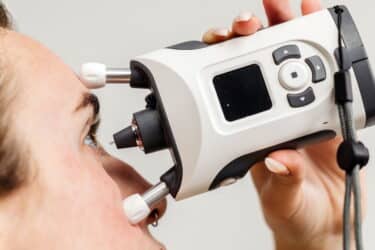
Treatment with intravitreal aflibercept 0.4 mg (IVT-AFL) demonstrates sustained absence of retinopathy of prematurity (ROP) through the first 2 years of a child’s life, while maintaining appropriate visual function, according to follow-up results from the FIREFLEYE Next study presented at AAO 2023. Moreover, there was no evidence of adverse effects on growth and neurodevelopmental outcomes at this age.

The study assessed the efficacy and safety outcomes up to the age of 5 years following the treatment of ROP using intravitreal aflibercept 0.4 mg (IVT-AFL) or laser photocoagulation, with participants randomly assigned in a 2:1 ratio.

The study, which reported outcomes at the age of 2 years, included 100 children in its Full Analysis Set (FAS) group. Among them, 66 received IVT-AFL treatment, while 34 underwent laser therapy. The children had a mean age of 9.0 ± 1.6 months at the start of the study.

Results at age 2 years revealed promising outcomes for both treatment groups. In the IVT-AFL group, 97% of children showed no signs of ROP, while the laser group demonstrated a commendable 94% success rate. Furthermore, 94% of children in both arms exhibited no unfavorable structural outcomes. There were no reported cases of retinal detachment.

In the IVT-AFL arm, 6% of children required treatment for ROP, with 2 cases addressing end-stage disease and 2 for reactivated bilateral disease. A small percentage of children in both groups (2% in IVT-AFL, 1 eye in laser) experienced challenges in fixating and following a 5-cm toy.

Importantly, there were no significant differences in growth and neurodevelopmental outcomes observed at 2 years of age between the IVT-AFL and laser treatment arms.

Reference
Stahl A, et al.Two-Year Outcomes From FIREFLEYE Next, a Prospective Long-Term Follow-Up Study After Treatment of ROP With Aflibercept vs. Laser. Presented at: AAO 2023.

Share

Related Content

  • Retina

Switching to aflibercept 8 mg improved anatomical outcomes in previously treated nAMD

Neovascular Age-related Macular Degeneration: Emerging Therapies With an EYE On Treatment Frequency
  • Retina

Treat-and-extend aflibercept 8 mg improves outcomes in nAMD over 1 year

  • Retina

Intravitreal therapy in nAMD linked to lower depression and anxiety risk

  • Retina

Alternative aflibercept regimens maintained efficacy in wet AMD

  • Retina

Nanoscope Therapeutics is working on the potential first-ever optogenetic therapy for retinal diseases

  • Glaucoma

Review finds low adverse event rates for glaucoma stents

Share

Editor's Picks

  • Neurotrophic Keratitis

Topical insulin shows real-world benefit in neurotrophic keratopathy

  • Retina

GLP-1 RAs have protective effects against AMD

  • Retina

Four-month injection intervals appear safe for long-term stable nAMD

Advisory Board

Saad Ahmad, MD

Ahmad A. Aref, MD, MBA

Roomasa Channa, MD

David Chow, MD, FRCS(C)

Sally L. Baxter, MD, MSc

Neel R. Desai, MD

Nadia Haqqie, MD

Simon Fung, MD, FRCOphth

Sumit Garg, MD

Ross Lakhanpal, MD, FACS

Sanjai Jalaj, MD

Anton Kolomeyer, MD, PhD

Shan Lin, MD

Steven R. Sarkisian, Jr., MD

See All
Optometry360 Logo

Ophthalmology 360® is a dynamic digital platform dedicated to advancing the field of eye care.

Get to Know Us

  • Home
  • About Us
  • Media Partners
  • Advertising Policy
  • Our Advisory Board

Sign up for our Newsletter

Sign up for our Newsletter to get our newest articles instantly!

  • Privacy Policy
  • Advertising Policy
  • Medical Disclaimer
IHM Logo

2026 Ophthalmology 360 is a trademark of International Healthcare Media, LLC. All rights reserved

  • MedJournal360 Icon
  • RareDisease360 Icon
  • MyHero360 Icon
  • Optometry360 Icon
  • Ophtalmology360 Icon