Optometry360 Logo White
  • Conferences
  • Videos
  • Podcasts
  • Quizzes
  • About
    • About Us – Mission
    • Content Awards
    • Media Partners
    • Business Team
    • Brand Ambassadors
    • Industry Council
    • Advisory Board

What are you looking for?

  • Anterior Segment
  • Cataract
  • Cornea and External Disease
  • Diabetic Macular Edema
  • Dry Eye
  • Early Onset Cataracts
  • Exclusives
  • General
  • Geographic Atrophy
  • Glaucoma
  • Industry News
  • Inherited Retinal Disease
  • IOLs
  • Neurotrophic Keratitis
  • Ocular Surface Disease
  • Oculoplastics
  • Optometry
  • Pediatrics
  • Practice Management
  • Presbyopia
  • Refractive Surgery/Vision Correction
  • Residents & Young Ophthalmologists
  • Retina
  • Retina Care 360
  • Retinopathy of Prematurity
  • Spotlight Series
  • The Interventional Glaucoma Project
  • The Ophthalmic Project
  • Trending Topics
Spotlight - The Future of Cryopreserved Amniotic Membrane in Oculoplastic Surgery
Optometry360 Logo White
  • Conferences
  • Videos
  • Podcasts
  • Quizzes
  • About
    • About Us – Mission
    • Content Awards
    • Media Partners
    • Business Team
    • Brand Ambassadors
    • Industry Council
    • Advisory Board
Home > Retinopathy of Prematurity > Premature infants receiving ROP treatment show personal-social development delay
  • Retinopathy of Prematurity

Premature infants receiving ROP treatment show personal-social development delay


Ophthalmology 360

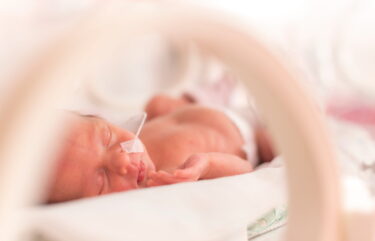
Premature infants treated for Type 1 retinopathy of prematurity (ROP) and aggressive ROP (A-ROP) with intravitreal bevacizumab (IVB) and intravitreal aflibercept (IVA) may experience delay in personal and social development compared to untreated infants, according to a study.

The prospective-controlled study, encompassed 3 groups: those treated with intravitreal bevacizumab (IVB, Group 1), those treated with intravitreal aflibercept (IVA, Group 2), and a control group (Group 3) comprising patients who did not receive any treatment. Patients were stratified into low, intermediate, and high-risk categories based on the high-risk infant follow-up guide.

The groups exhibited similar gender distributions, birth weights (BW), and neonatal risk categories. However, Group 1 demonstrated a lower gestational age (GA) compared to Group 3. When assessing fine and gross motor movements, communication, problem-solving skills, and personal-social development through the ASQ-3 test, no significant disparities emerged between the treatment and control groups in terms of motor movements, communication, or problem-solving abilities.

However, concerning personal and social development, both Group 1 and Group 2 displayed signs of retardation when compared to the control group.

“As a result, the detection of growth retardation in the personal and social areas in the treated patients, and the detection of growth retardation in other areas, although not significant, reveals the necessity of following the development of these patient groups and providing the necessary support in the areas where retardation is detected,” the study authors concluded.

Reference
Baysal SG, Ekinci DY, Okur N. Neurodevelopment of patients who received intravitreal bevacizumab or aflibercept for type 1 and aggressive retinopathy of prematurity. Eur J Ophthalmol. 2023;doi: 10.1177/11206721231200666. Epub ahead of print. PMID: 37680054.

Share

Related Content

  • Retinopathy of Prematurity

Quiz: ROP Pharmacologic Strategies

  • Retinopathy of Prematurity

Three-year FIREFLEYE outcomes reported for aflibercept vs laser in ROP

1 Min Read
  • Retinopathy of Prematurity

Study highlights link between obesity indicators and risk of retinopathy

  • Retinopathy of Prematurity

Declining trends in retinopathy of prematurity screening eligibility among U.S. infants

  • Anterior Segment

Shorter axial length and steeper corneas found in preterm children with ROP

  • Retina

Global survey reveals trends in treatment for retinopathy of prematurity

Share

Editor's Picks

  • Neurotrophic Keratitis

Topical insulin shows real-world benefit in neurotrophic keratopathy

  • Retina

GLP-1 RAs have protective effects against AMD

  • Retina

Four-month injection intervals appear safe for long-term stable nAMD

Advisory Board

Saad Ahmad, MD

Ahmad A. Aref, MD, MBA

Roomasa Channa, MD

David Chow, MD, FRCS(C)

Sally L. Baxter, MD, MSc

Neel R. Desai, MD

Nadia Haqqie, MD

Simon Fung, MD, FRCOphth

Sumit Garg, MD

Ross Lakhanpal, MD, FACS

Sanjai Jalaj, MD

Anton Kolomeyer, MD, PhD

Shan Lin, MD

Steven R. Sarkisian, Jr., MD

See All
Optometry360 Logo

Ophthalmology 360® is a dynamic digital platform dedicated to advancing the field of eye care.

Get to Know Us

  • Home
  • About Us
  • Media Partners
  • Advertising Policy
  • Our Advisory Board

Sign up for our Newsletter

Sign up for our Newsletter to get our newest articles instantly!

  • Privacy Policy
  • Advertising Policy
  • Medical Disclaimer
IHM Logo

2026 Ophthalmology 360 is a trademark of International Healthcare Media, LLC. All rights reserved

  • MedJournal360 Icon
  • RareDisease360 Icon
  • MyHero360 Icon
  • Optometry360 Icon
  • Ophtalmology360 Icon