Optometry360 Logo White
  • Conferences
  • Videos
  • Podcasts
  • Quizzes
  • About
    • About Us – Mission
    • Content Awards
    • Media Partners
    • Business Team
    • Brand Ambassadors
    • Industry Council
    • Advisory Board

What are you looking for?

  • Anterior Segment
  • Cataract
  • Cornea and External Disease
  • Diabetic Macular Edema
  • Dry Eye
  • Early Onset Cataracts
  • Exclusives
  • General
  • Geographic Atrophy
  • Glaucoma
  • Industry News
  • Inherited Retinal Disease
  • IOLs
  • Neurotrophic Keratitis
  • Ocular Surface Disease
  • Oculoplastics
  • Optometry
  • Pediatrics
  • Practice Management
  • Presbyopia
  • Refractive Surgery/Vision Correction
  • Residents & Young Ophthalmologists
  • Retina
  • Retina Care 360
  • Retinopathy of Prematurity
  • Spotlight Series
  • The Interventional Glaucoma Project
  • The Ophthalmic Project
  • Trending Topics
Spotlight - The Future of Cryopreserved Amniotic Membrane in Oculoplastic Surgery
Optometry360 Logo White
  • Conferences
  • Videos
  • Podcasts
  • Quizzes
  • About
    • About Us – Mission
    • Content Awards
    • Media Partners
    • Business Team
    • Brand Ambassadors
    • Industry Council
    • Advisory Board
Home > Cornea and External Disease > Cornea specialists identify key clinical signs linked to microbial keratitis subtypes
  • Cornea and External Disease

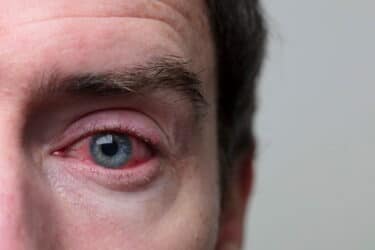
Cornea specialists identify key clinical signs linked to microbial keratitis subtypes

Ophthalmology 360

Key Takeaways

  1. US cornea specialists identified 20 clinical factors most strongly associated with specific microbial keratitis organism groups.
  2. Agreement among specialists was limited, underscoring the difficulty of differentiating microbial keratitis organisms based on clinical presentation alone.

United States cornea specialists identified a limited set of clinical features they believe reliably distinguish microbial keratitis (MK) organism groups, according to a study.

The survey included 67 US cornea specialists and evaluated whether 61 clinical factors helped differentiate gram-positive bacterial keratitis, gram-negative bacterial keratitis, mold fungal keratitis, yeast fungal keratitis, parasitic keratitis, and viral keratitis.

Overall, 20 of the 61 evaluated clinical factors (32.8%) were identified by more than 75% of respondents as distinguishing a specific MK organism group. Commonly recognized features included the following:

  • Bacterial keratitis: 9 distinguishing factors, including copious ocular discharge and loose ocular sutures
  • Fungal keratitis: 3 distinguishing factors, including feathery infiltrate and ocular trauma involving organic matter
  • Parasitic keratitis: 5 distinguishing factors, including pain out of proportion to clinical findings and perineuritis
  • Viral keratitis: 3 distinguishing factors, including reduced or absent corneal sensation and prodromal symptoms

The remaining 41 clinical factors were identified by 75% or fewer specialists as distinguishing between organism groups.
The authors noted that specialist agreement was limited to roughly one-third of the evaluated clinical features, consistent with prior studies showing the challenges of differentiating MK organisms clinically. They concluded that the 20 factors with higher agreement may help support initial diagnosis, although additional validation is needed.

Reference
Vogt EL, Lu MC, Niziol LM, et al. Distinguishing Factors for Microbial Keratitis Groups: A Cross-Sectional Survey of US Cornea Specialists. Cornea. 2026;doi: 10.1097/ICO.0000000000004162. Epub ahead of print. PMID: 42133664.

Share

Related Content

  • Cornea and External Disease

Quiz: The impact of blepharitis and conjunctivitis on quality of life

  • Cornea and External Disease

Phase 3 trial of cenegermin-bkbj for PCED enrolls first US patient

Cornea Update: Corneal Dystrophies & Related Conditions with an Update on Genetic Assessment and Treatment
  • Cornea and External Disease

Preventing complications of superficial keratectomy

  • Conference Roundup

Phase 1/2 CLARA study shows AURN001 improves BCVA compared with standard of care for corneal endothelial dysfunction

  • Conference Roundup

Epioxa crosslinking system has positive outcomes at 30 months in patients with keratoconus

  • Conference Roundup

New screening device for keratoconus may help identify patients earlier

Share

Editor's Picks

  • Neurotrophic Keratitis

Topical insulin shows real-world benefit in neurotrophic keratopathy

  • Retina

GLP-1 RAs have protective effects against AMD

  • Retina

Four-month injection intervals appear safe for long-term stable nAMD

Advisory Board

Saad Ahmad, MD

Ahmad A. Aref, MD, MBA

Roomasa Channa, MD

David Chow, MD, FRCS(C)

Sally L. Baxter, MD, MSc

Neel R. Desai, MD

Nadia Haqqie, MD

Simon Fung, MD, FRCOphth

Sumit Garg, MD

Ross Lakhanpal, MD, FACS

Sanjai Jalaj, MD

Anton Kolomeyer, MD, PhD

Shan Lin, MD

Steven R. Sarkisian, Jr., MD

See All
Optometry360 Logo

Ophthalmology 360® is a dynamic digital platform dedicated to advancing the field of eye care.

Get to Know Us

  • Home
  • About Us
  • Media Partners
  • Advertising Policy
  • Our Advisory Board

Sign up for our Newsletter

Sign up for our Newsletter to get our newest articles instantly!

  • Privacy Policy
  • Advertising Policy
  • Medical Disclaimer
IHM Logo

2026 Ophthalmology 360 is a trademark of International Healthcare Media, LLC. All rights reserved

  • MedJournal360 Icon
  • RareDisease360 Icon
  • MyHero360 Icon
  • Optometry360 Icon
  • Ophtalmology360 Icon