
The contents of this article are informational only and are not intended to be a substitute for professional medical advice, diagnosis, or treatment recommendations. This editorial presents the views and experiences of the author and does not reflect the opinions or recommendations of the publisher of Ophthalmology 360.
By Peter Polack, MD
We now have many tools to treat dry eye disease (DED). New prescriptions and treatment devices come with great regularity to address inflammation, meibomian gland dysfunction (MGD), and aqueous deficiency. These therapies all have their place, but as we manage this chronic problem long-term, I think it’s essential that we address another underlying cause: poor nutrition. We know that inflammation is a major component of DED, yet many doctors do not talk to patients about reducing inflammation systemically through better nutrition. If we make nutrition a cornerstone of DED management from the start, we can set patients up for success, as well as better overall health.
Initiating the Conversation
If we were doing a clinical study about DED and nutrition, we would need to use questionnaires, but I’ve found that asking about eating habits on a history form adds time in a busy clinic, plus it doesn’t collect all the information I need. Instead, my conversation with patients about nutrition happens naturally as we reach the end of the exam.
The exam starts with a brief review of their symptoms. As I examine the patient, I explain what I’m finding while a scribe checks off the findings in the electronic medical record. While they’re in the chair, patients might learn they have inflammation, staining, low tear volume, redness, blepharitis, Demodex, or poor gland expression and meibum quality. I also ask questions based on what I’m seeing. For example, if I see crescent-shaped corneal staining that might indicate nocturnal lagophthalmos, I ask the patient how their eyes feel in the morning and whether they sleep with a blowing fan.
Similarly, if I see inflammation, tear film instability, or MGD—as I do in most cases of DED—I say, “Tell me what you eat in a typical day.” In most cases, patients describe a diet packed with pro-inflammatory foods, including refined grains (wheat flour foods like bread and pasta), processed meats, fried foods, sweets, and sugary drinks. For example, a lot of people have cereal or toast and jelly for breakfast, a sandwich and chips for lunch, a few cookies or other snacks, pasta for dinner, and a sugary dessert. Protein content is often low compared to simple carbohydrates, and pro-inflammatory omega-6 fatty acids are too high compared to anti-inflammatory omega-3s.
When the scribe prints the patient’s checklist, it includes the clinical findings as well as the recommendations I discuss with the patient. Often, those recommendations include dietary changes.
Recommending Dietary Changes
While I’m educating patients about their condition and explaining my recommendations for therapy, the discussion revolves around the underlying causes. I explain that if they keep using artificial tears every few hours to hydrate their dry eyes, the problem will not go away. In fact, because DED is chronic and progressive, it will continue to get worse as they get older. Instead of focusing on the symptoms, we need to focus on the underlying cause.
I tell them that tear production problems and MGD are driven by inflammation. We can reduce inflammation from the inside out by making some dietary changes. The goal is to reduce consumption of foods that promote inflammation and eat more foods that improve overall health, including the health of the ocular surface.
I make the following recommendations:
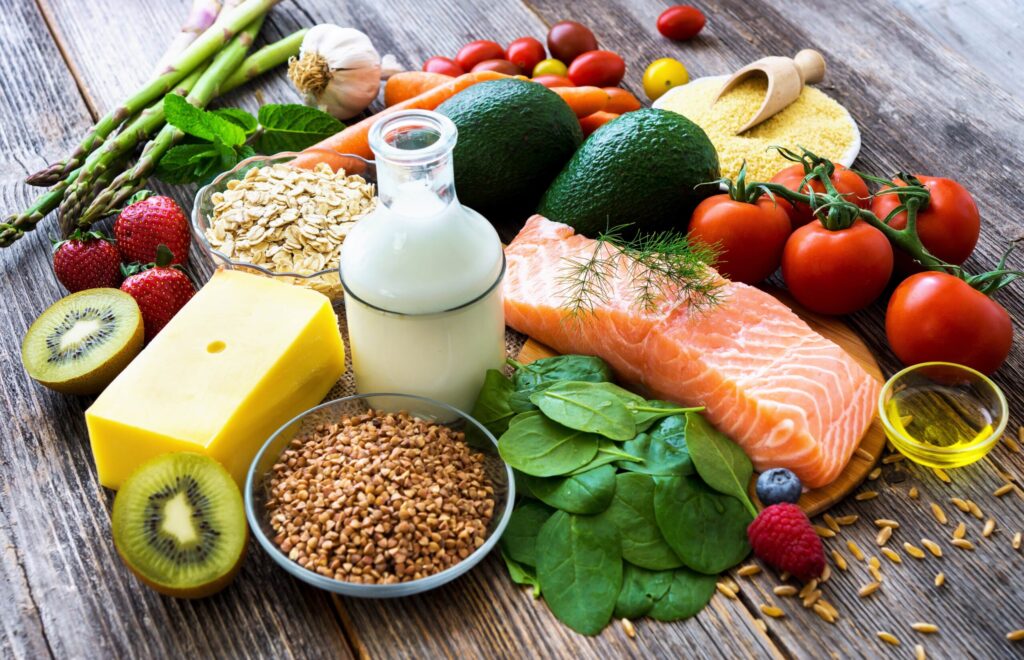
- Balancing fat intake: The first half of the nutrition equation is fat consumption. It’s best to get the nutrients we need through nutrition and diet, but it can be hard to do that consistently. For example, I suggest eating more omega fatty acids, such as from fatty fish, but patients often tell me they don’t like it. As a result, I recommend an omega supplement for all my DED patients. HydroEye (ScienceBased Health) is my go-to recommendation because it is a very high-quality supplement with gamma-linolenic acid, a unique anti-inflammatory omega-6, plus omega-3s from highly purified fish oil. We’ve gotten the best feedback from patients who use it compared to other supplements, and this supplement is also clinically validated.1 Patients also need to adjust their dietary intake of fats—namely, eating less fried foods and more olive oil and (tree) nuts that are rich in omega-3 and omega-9 oils. Unless the patient has a cholesterol problem, I recommend they don’t shy away from eating grass-fed meat, butter, and eggs, which can help boost their protein and “good fat” intake. Often, folks who tell me they think it’s best to avoid red meat eat a great deal of simple carbohydrates, so I point out that they’ve shifted from red meat to more pro-inflammatory foods.
- Reducing wheat and sugar: These trigger an inflammatory response in the body.2-6 My patients who reduce their consumption of pasta, bread, baked treats, and sweets see positive changes in DED and other health metrics. To help patients replace these pro–inflammatory foods with healthier alternatives, I recommend they shop the perimeter of the supermarket where fruits, vegetables, and grass-fed meat and dairy products are located. Whenever possible, avoid the processed foods located in the middle. I also recommend books they can read that help illuminate the problem, such as Wheat Belly, The Paleo Solution, and The Science-Backed Anti-Inflammatory Diet for Beginners.
Patients often expect to get a prescription, but I explain that my patients see the biggest impact when they have good nutrition, take an omega supplement, and use a heat mask daily as directed. I do prescribe Xiidra (Bausch + Lomb) or another anti-inflammatory medication for more resistant cases, as well as for patients with autoimmune disease, but for routine cases, the supplement and heat mask give patients the most bang for their buck.
Achieving Better Results
My patients who read about anti-inflammatory changes to their diet and make some of these lifestyle changes see the proof for themselves. When they come back in 6 months, they tell me they’ve lost weight, they have less joint pain and gastrointestinal issues, and their bloodwork has improved. I can see that their ocular surface inflammation has improved, as well as meibum quality. There’s nothing magical about it—they’ve changed their body from the inside with healthier nutrition.
Peter J. Polack, MD, FACS, is a partner, cataract and refractive surgeon, and expert in external disease and dry eye at Ocala Eye in Ocala, Florida. Dr. Polack has no financial disclosures.
References
- Sheppard JD Jr, Singh R, McClellan AJ, et al. Long-term supplementation with n-6 and n-3 PUFAs improves moderate-to-severe keratoconjunctivitis sicca: a randomized double-blind clinical trial. Cornea. 2013;32(10):1297-1304. doi:10.1097/ICO.0b013e318299549c
- Narula N, Wong ECL, Mente A, et al. Ultraprocessed grains and risk of inflammatory bowel disease: results from the prospective urban rural epidemiology study. Am J Gastroenterol. 2025. doi:10.14309/ajg.0000000000003700
- Narula N, Wong ECL, Dehghan M, et al. Association of ultra-processed food intake with risk of inflammatory bowel disease: prospective cohort study. BMJ. 2021;374:n1554. 2021. doi:10.1136/bmj.n1554
- Leonard MM, Silvester JA, Leffler D, et al. Evaluating responses to gluten challenge: a randomized, double-blind, 2-dose gluten challenge trial. Gastroenterology. 2021;160(3):720-733.e8. doi:10.1053/j.gastro.2020.10.040
- Uhde M, Ajamian M, Caio G, et al. Intestinal cell damage and systemic immune activation in individuals reporting sensitivity to wheat in the absence of coeliac disease. Gut. 2016;65(12):1930-1937. doi:10.1136/gutjnl-2016-311964
- Lange S, Tsohataridis S, Boland N, et al. Effects of short-term gluten-free diet on cardiovascular biomarkers and quality of life in healthy individuals: a prospective interventional study. Nutrients. 2024;16(14):2265. doi:10.3390/nu16142265
Related Content