
Optometry360 Logo White
  • Conferences
  • Videos
  • Podcasts
  • Quizzes
  • About
    • About Us – Mission
    • Content Awards
    • Media Partners
    • Business Team
    • Brand Ambassadors
    • Industry Council
    • Advisory Board

What are you looking for?

  • Anterior Segment
  • Cataract
  • Cornea and External Disease
  • Diabetic Macular Edema
  • Dry Eye
  • Early Onset Cataracts
  • Exclusives
  • General
  • Geographic Atrophy
  • Glaucoma
  • Industry News
  • Inherited Retinal Disease
  • IOLs
  • Neurotrophic Keratitis
  • Ocular Surface Disease
  • Oculoplastics
  • Optometry
  • Pediatrics
  • Practice Management
  • Presbyopia
  • Refractive Surgery/Vision Correction
  • Residents & Young Ophthalmologists
  • Retina
  • Retina Care 360
  • Retinopathy of Prematurity
  • Spotlight Series
  • The Interventional Glaucoma Project
  • The Ophthalmic Project
  • Trending Topics
Spotlight - The Future of Cryopreserved Amniotic Membrane in Oculoplastic Surgery
Optometry360 Logo White
  • Conferences
  • Videos
  • Podcasts
  • Quizzes
  • About
    • About Us – Mission
    • Content Awards
    • Media Partners
    • Business Team
    • Brand Ambassadors
    • Industry Council
    • Advisory Board
Home > Dry Eye > Study finds dry eye disease increasingly common in children, linked to screen time
  • Dry Eye

Study finds dry eye disease increasingly common in children, linked to screen time

Ophthalmology 360

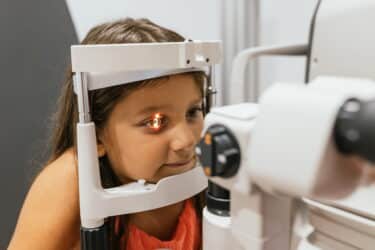
Dry eye disease is increasingly common in children and is strongly associated with higher daily screen time, particularly in those aged 10-14, according to a poster presented at AAO 2025.

Researchers evaluated 1,750 patients aged 5 to 17 over six months, using a validated pediatric dry eye questionnaire alongside a comprehensive eye exam.

Participants’ daily screen use was grouped into three categories: low (under 2 hours per day), moderate (2 to 4 hours per day), and high (over 4 hours per day). Among the 1,750 children studied, 35.6% were diagnosed with dry eye disease. The analysis revealed a clear link between longer screen time and increased DED prevalence, particularly in children aged 10–14. In addition, both how often and how long children took breaks from screens were associated with differences in DED severity.

Reference
Bhola R, et al. The Prevalence of DED in Pediatric Patients and Its Correlation With Screen Time: A Cross-Sectional Analysis in a Tertiary Care Pediatric Ophthalmology Center. Poster presented at: American Academy of Ophthalmology Annual Meeting; October 18–20, 2025; Orlando, FL.

Share

Related Content

  • Dry Eye

Statin use linked to a small increase in dry eye disease risk

  • Glaucoma

Glaucoma drainage devices provide meaningful IOP control in pediatric glaucoma

  • Dry Eye

Analysis of FDA reports reveals widespread ocular adverse events linked to antidepressants

  • Cataract

Optimizing cataract surgery outcomes through dry eye management

  • Dry Eye

Preservative-free lubricants linked to improved dry eye symptoms in real-world study

  • Retina Care 360

Cost analysis shows greater losses for pediatric versus adult retinal detachment repairs

Share

Editor's Picks

  • Neurotrophic Keratitis

Topical insulin shows real-world benefit in neurotrophic keratopathy

  • Retina

GLP-1 RAs have protective effects against AMD

  • Retina

Four-month injection intervals appear safe for long-term stable nAMD

Advisory Board

Saad Ahmad, MD

Ahmad A. Aref, MD, MBA

Roomasa Channa, MD

David Chow, MD, FRCS(C)

Sally L. Baxter, MD, MSc

Neel R. Desai, MD

Nadia Haqqie, MD

Simon Fung, MD, FRCOphth

Sumit Garg, MD

Ross Lakhanpal, MD, FACS

Sanjai Jalaj, MD

Anton Kolomeyer, MD, PhD

Shan Lin, MD

Steven R. Sarkisian, Jr., MD

See All
Optometry360 Logo

Ophthalmology 360® is a dynamic digital platform dedicated to advancing the field of eye care.

Get to Know Us

  • Home
  • About Us
  • Media Partners
  • Advertising Policy
  • Our Advisory Board

Sign up for our Newsletter

Sign up for our Newsletter to get our newest articles instantly!

  • Privacy Policy
  • Advertising Policy
  • Medical Disclaimer
IHM Logo

2026 Ophthalmology 360 is a trademark of International Healthcare Media, LLC. All rights reserved

  • MedJournal360 Icon
  • RareDisease360 Icon
  • MyHero360 Icon
  • Optometry360 Icon
  • Ophtalmology360 Icon