Optometry360 Logo White
  • Conferences
  • Videos
  • Podcasts
  • Quizzes
  • About
    • About Us – Mission
    • Content Awards
    • Media Partners
    • Business Team
    • Brand Ambassadors
    • Industry Council
    • Advisory Board

What are you looking for?

  • Anterior Segment
  • Cataract
  • Cornea and External Disease
  • Diabetic Macular Edema
  • Dry Eye
  • Early Onset Cataracts
  • Exclusives
  • General
  • Geographic Atrophy
  • Glaucoma
  • Industry News
  • Inherited Retinal Disease
  • IOLs
  • Neurotrophic Keratitis
  • Ocular Surface Disease
  • Oculoplastics
  • Optometry
  • Pediatrics
  • Practice Management
  • Presbyopia
  • Refractive Surgery/Vision Correction
  • Residents & Young Ophthalmologists
  • Retina
  • Retina Care 360
  • Retinopathy of Prematurity
  • Spotlight Series
  • The Interventional Glaucoma Project
  • The Ophthalmic Project
  • Trending Topics
Spotlight - The Future of Cryopreserved Amniotic Membrane in Oculoplastic Surgery
Optometry360 Logo White
  • Conferences
  • Videos
  • Podcasts
  • Quizzes
  • About
    • About Us – Mission
    • Content Awards
    • Media Partners
    • Business Team
    • Brand Ambassadors
    • Industry Council
    • Advisory Board
Home > Inherited Retinal Disease > Breakthroughs in Gene Therapy and Diagnostics: Advancing Treatments and Understanding
  • Inherited Retinal Disease

Breakthroughs in Gene Therapy and Diagnostics: Advancing Treatments and Understanding


Kelsey Moroz

Long-term data on voretigene neparvovec-rzyl and promising results from OCU400 highlight significant progress in treating genetic retinal disorders, while new genetic panels enhance diagnostics; however, regulatory challenges persist for gene therapies.

1. Long-term data reinforce voretigene neparvovec-rzyl’s role in treating genetic retinal disorders

 Voretigene neparvovec-rzyl gene therapy shows sustained safety and efficacy in improving mobility and visual function for up to 9 years in patients with biallelic RPE65 mutation-associated retinal dystrophy, with no therapy-related serious adverse events. A Phase 3 study comparing early versus delayed treatment demonstrated meaningful, long-term improvements in mobility and visual function, with consistent safety results.

Read more here.


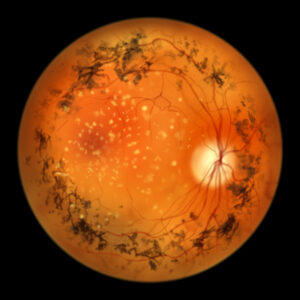
2. No significant difference in circulating antiretinal antibodies between patients with retinitis pigmentosa and healthy individuals

A recent cross-sectional study found no significant difference in the prevalence of circulating antiretinal antibodies (ARAs) between patients with retinitis pigmentosa (RP) and healthy controls, despite a slightly higher frequency of anti-HSP70 ARAs in RP patients. The study found no association between ARAs and macular complications in RP-affected eyes, such as macular edema or epiretinal membranes.

Read more here.


3. Gene therapy OCU400 shows promise for improving vision in retinitis pigmentosa and Leber congenital amaurosis

 OCU400, a gene modifier therapy, shows safety and potential clinical benefits in improving vision for patients with RP and Leber congenital amaurosis associated with specific genetic mutations, with 75% of RP patients experiencing visual improvements or stabilization after treatment. The Phase 1/2 trial demonstrated that OCU400 was well-tolerated, with no therapy-related serious adverse events, and provided meaningful improvements in visual acuity and mobility scores for most patients.

Read more here.


4. Tailored gene panel enhances diagnosis and refines treatments for IRDs

 A multi-center study using a 319-gene panel for inherited retinal dystrophy (IRD) successfully identified disease-causing variants in 68.5% of patients, providing molecular diagnoses and insights into the genetic landscape of Taiwanese IRD patients. The study highlighted common mutations in genes like USH2A and EYS, identified 87 previously unreported variants, and refined clinical diagnoses for a subset of patients.

Read more here.


5. Regulatory Hurdles and Triumphs: One approved, many more on the horizon for ophthalmic gene therapies

 A study of gene therapy clinical trials for ophthalmic disorders found that the majority were Phase 1/2 trials, with the United States hosting the majority of them and a focus on retina and optic nerve disorders, particularly inherited retinal diseases and age-related macular degeneration. Despite the widespread use of gene augmentation with viral vectors, only one trial has received regulatory approval, emphasizing both the promising potential and significant challenges in bringing gene therapies for eye conditions to market.

Read more here.

Share

Related Content

  • Inherited Retinal Disease

Patients with inherited retinal diseases face elevated risk of multiple ocular complications

  • Inherited Retinal Disease

Low-dose atropine shows limited effect on myopia progression in children with IRDs

  • Inherited Retinal Disease

Emerging imaging technologies offer hope for inherited retinal disease management

  • Inherited Retinal Disease

Emerging therapies and treatment for rare retinal diseases: a look at the pipeline

  • Inherited Retinal Disease

Limited myopia progression in CSNB patients may guide treatment approaches

  • Inherited Retinal Disease

Global trends in AI applications for retinal disease diagnosis

Share

Editor's Picks

  • Neurotrophic Keratitis

Topical insulin shows real-world benefit in neurotrophic keratopathy

  • Retina

GLP-1 RAs have protective effects against AMD

  • Retina

Four-month injection intervals appear safe for long-term stable nAMD

Advisory Board

Saad Ahmad, MD

Ahmad A. Aref, MD, MBA

Roomasa Channa, MD

David Chow, MD, FRCS(C)

Sally L. Baxter, MD, MSc

Neel R. Desai, MD

Nadia Haqqie, MD

Simon Fung, MD, FRCOphth

Sumit Garg, MD

Ross Lakhanpal, MD, FACS

Sanjai Jalaj, MD

Anton Kolomeyer, MD, PhD

Shan Lin, MD

Steven R. Sarkisian, Jr., MD

See All
Optometry360 Logo

Ophthalmology 360® is a dynamic digital platform dedicated to advancing the field of eye care.

Get to Know Us

  • Home
  • About Us
  • Media Partners
  • Advertising Policy
  • Our Advisory Board

Sign up for our Newsletter

Sign up for our Newsletter to get our newest articles instantly!

  • Privacy Policy
  • Advertising Policy
  • Medical Disclaimer
IHM Logo

2026 Ophthalmology 360 is a trademark of International Healthcare Media, LLC. All rights reserved

  • MedJournal360 Icon
  • RareDisease360 Icon
  • MyHero360 Icon
  • Optometry360 Icon
  • Ophtalmology360 Icon