
Optometry360 Logo White
  • Conferences
  • Videos
  • Podcasts
  • Quizzes
  • About
    • About Us – Mission
    • Content Awards
    • Media Partners
    • Business Team
    • Brand Ambassadors
    • Industry Council
    • Advisory Board

What are you looking for?

  • Anterior Segment
  • Cataract
  • Cornea and External Disease
  • Diabetic Macular Edema
  • Dry Eye
  • Early Onset Cataracts
  • Exclusives
  • General
  • Geographic Atrophy
  • Glaucoma
  • Industry News
  • Inherited Retinal Disease
  • IOLs
  • Neurotrophic Keratitis
  • Ocular Surface Disease
  • Oculoplastics
  • Optometry
  • Pediatrics
  • Practice Management
  • Presbyopia
  • Refractive Surgery/Vision Correction
  • Residents & Young Ophthalmologists
  • Retina
  • Retina Care 360
  • Retinopathy of Prematurity
  • Spotlight Series
  • The Interventional Glaucoma Project
  • The Ophthalmic Project
  • Trending Topics
Spotlight - The Future of Cryopreserved Amniotic Membrane in Oculoplastic Surgery
Optometry360 Logo White
  • Conferences
  • Videos
  • Podcasts
  • Quizzes
  • About
    • About Us – Mission
    • Content Awards
    • Media Partners
    • Business Team
    • Brand Ambassadors
    • Industry Council
    • Advisory Board
Home > Myopia > One in four myopic children show signs of dry eye, study finds
  • Myopia

One in four myopic children show signs of dry eye, study finds

Ophthalmology 360
1 Min Read

Key Takeaways

  1. Nearly one-quarter of myopic schoolchildren reported dry eye symptoms, primarily associated with reduced tear volume.
  2. Tear film parameters varied by age and sex, with significant differences in tear break-up times, lipid layer thickness, and tear meniscus height.
  3. Tear volume measures correlated with dry eye symptom scores, while myopia severity showed no significant association with ocular surface parameters.

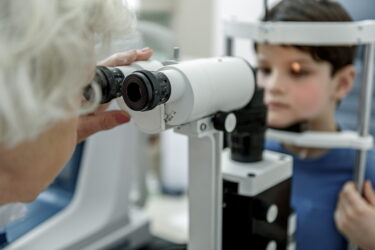
Nearly one-quarter of myopic schoolchildren experience dry eye symptoms that are mainly associated with reduced tear volume, according to a study.

The study included 224 children aged 7 to 14 years with myopia. Participants completed the Ocular Surface Disease Index (OSDI) questionnaire, and tear volume was measured using strip meniscometry (SMTube) and the Schirmer I test.

Median measurements showed SMTube values of 6.0 mm and Schirmer I values of 17.0 mm. Median noninvasive first and average break-up times were 7.4 seconds and 10.1 seconds, respectively, while median tear meniscus height was 0.21 mm and mean lipid layer thickness was 64 nm. Superior and inferior meibomian gland atrophy measured 33% and 21.5%, respectively.

Significant differences in noninvasive break-up times and lipid layer thickness were observed between boys and girls, while tear meniscus height differed across age groups. Age, SMTube, and Schirmer I results varied significantly according to OSDI scores. Tear film parameters did not differ significantly among groups stratified by myopia severity. Correlation analysis showed that SMTube values were positively associated with Schirmer I results, tear break-up times, and tear meniscus height.

Reference

Wang H, Zheng Y, Wang G, et al. Ocular Surface Health in Myopic School-Age Children: An Observational Study. J Ophthalmol. 2025;2025:9197399. doi: 10.1155/joph/9197399. PMID: 41497723; PMCID: PMC12767026.

Share

Related Content

  • Cataract

Optimizing cataract surgery outcomes through dry eye management

  • Dry Eye

Preservative-free lubricants linked to improved dry eye symptoms in real-world study

  • Retina Care 360

Cost analysis shows greater losses for pediatric versus adult retinal detachment repairs

  • Glaucoma

PreserFlo MicroShunt shows short-term benefit in refractory childhood glaucoma

  • Dry Eye

Spotlight on LACRIFILL®

  • Inherited Retinal Disease

Low-dose atropine shows limited effect on myopia progression in children with IRDs

Share

Editor's Picks

  • Neurotrophic Keratitis

Topical insulin shows real-world benefit in neurotrophic keratopathy

  • Retina

GLP-1 RAs have protective effects against AMD

  • Retina

Four-month injection intervals appear safe for long-term stable nAMD

Advisory Board

Saad Ahmad, MD

Ahmad A. Aref, MD, MBA

Roomasa Channa, MD

David Chow, MD, FRCS(C)

Sally L. Baxter, MD, MSc

Neel R. Desai, MD

Nadia Haqqie, MD

Simon Fung, MD, FRCOphth

Sumit Garg, MD

Ross Lakhanpal, MD, FACS

Sanjai Jalaj, MD

Anton Kolomeyer, MD, PhD

Shan Lin, MD

Steven R. Sarkisian, Jr., MD

See All
Optometry360 Logo

Ophthalmology 360® is a dynamic digital platform dedicated to advancing the field of eye care.

Get to Know Us

  • Home
  • About Us
  • Media Partners
  • Advertising Policy
  • Our Advisory Board

Sign up for our Newsletter

Sign up for our Newsletter to get our newest articles instantly!

  • Privacy Policy
  • Advertising Policy
  • Medical Disclaimer
IHM Logo

2026 Ophthalmology 360 is a trademark of International Healthcare Media, LLC. All rights reserved

  • MedJournal360 Icon
  • RareDisease360 Icon
  • MyHero360 Icon
  • Optometry360 Icon
  • Ophtalmology360 Icon