Early detection and targeted treatment strategies are critical for optimal outcomes in neurotrophic keratitis

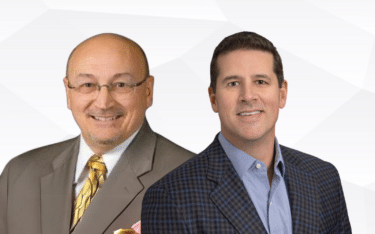
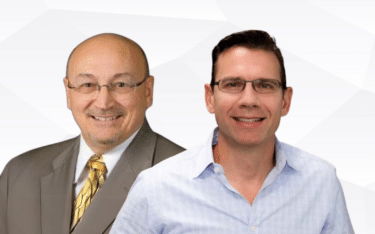
In the latest episode of The Spotlight Series Podcast, host Mario Nacinovich welcomes Nandini Venkateswaran, MD, of Massachusetts Eye and Ear, and Analisa Arosemena, MD, of Elite Eyecare Specialists, to the show. The trio filmed their conversation at the Sunshine Eye and Retina Conference and focused on neurotrophic keratitis (NK). They emphasized the importance of early suspicion and testing for NK, as well as the importance of timely escalation from supportive care to targeted therapies like cenegermin to restore corneal healing. Drs. Venkateswaran and Arosemena outlined the paradigm shift toward nerve-focused, multidisciplinary, and individualized care to improve outcomes and prevent irreversible vision loss.
Mario Nacinovich:
Welcome to The Spotlight Series. I’m Mario Nacinovich. Today’s conversation is taking place at the Sunshine Eye and Retina Conference in Miami Beach, Florida. We are focusing in on a critical shift in how we understand and manage neurotrophic keratitis, moving beyond surface-level treatment to targeting the underlying loss of corneal nerve function. Joining me are 2 outstanding ophthalmic surgeons who are helping redefine what’s possible in this space: Dr. Nandini Venkateswaran is a fellowship-trained cataract, cornea, and refractive surgeon at Massachusetts Eye and Ear, specializing in complex anterior segment care and advanced surgical techniques. She completed her medical training at the University of Rochester, residency at Bascom Palmer Eye Institute, and fellowship at Duke University, building a strong foundation in both clinical care and research. An active leader in ophthalmology, she has authored over 50 publications and is recognized for expertise in corneal transplantation, refractive surgery, and innovative patient-centered care.
Dr. Analisa Arosemena is a board-certified ophthalmologist in Miami, Florida, with extensive expertise in glaucoma, cornea, and complex cataract surgery. After training at Tulane University and completing a glaucoma fellowship, she has performed over 30,000 surgeries and is widely regarded as a referral specialist for challenging cases. Known for combining surgical precision with compassionate care, she’s also an internationally recognized contributor to advancing glaucoma treatment through her research and education.
Thank you both for being here. I know one of the biggest challenges we see on the comprehensive ophthalmology side is missed diagnosis, but today I want to talk to both of you about misdiagnosis and NK often being treated as dry eye, as we talked about, but talking about those persistent epithelial defects as well. What’s fundamentally being missed as you both see patients a little bit later on in their disease stages? What’s being fundamentally missed about the underlying nerve dysfunction?
Nandini Venkateswaran, MD:
I think that the key to neurotrophic keratitis diagnosis is that they have no pain symptomatology. They have some sort of corneal pathology, but often it’s us telling the patient there’s something going on versus the patient coming to us with a complaint.
Analisa Arosemena, MD:
If you don’t think about it, you won’t test for it. The biggest difference when you see a stage 1 neurotrophic keratitis versus a severe dry eye is testing because the patient won’t feel it, but we have the patient that comes in, but if you’re not thinking, even if the patient doesn’t necessarily complain about it, you’re going to send them out with tears. Testing is the misdiagnosis, is the missed spot is where you test. In order to test, you need to suspect it. Keeping it present, thinking about it, patients that look bad, but don’t complain.
Mario Nacinovich:
I’m curious, are we starting to see both the US and European thought processes and guidelines reflect this shift toward earlier recognition of nerve damage as a primary driver of this disease?
Analisa Arosemena, MD:
I think guidelines have changed. I’m not sure the guidelines have translated into the…
Mario Nacinovich:
Practical side?
Analisa Arosemena, MD:
Practical side. I think that there has to be a lot more education. We are a big team of eye care professionals. We have from the patient showing up at the optometry office and they discovering it and making a prompt referral to somebody to treat this is quite important. I think that we’re just missing a chance and there has to be more much more awareness on neurotrophic keratitis.
Nandini Venkateswaran, MD:
I think that we have become better at characterizing it. The Mackie classification scheme had stage 1, 2, and 3, which was great. You went from mild punctate epitheliopathy to the classic persistent epithelial defect and then a stromal ulcer. But then the Neurotrophic Keratopathy Study Group, they basically have stage 1 through 6. They’re starting as early as just altered corneal sensation where you’re not seeing any staining on the cornea. They’re saying, “Okay, then think about your PEE on the cornea. Think about the persistent epithelial defect, the stromal ulcer, the corneal perforation.” I think the disease state awareness is improving. I think that as we do more in terms of educating our referring providers, our comprehensive ophthalmologists, and our subspecialists, we should ideally be diagnosing this in more of the early stages where the prognosis is better versus seeing that patient when they’re in a more advanced stage, they need more of a surgical intervention, and the visual prognosis is more limited.
Analisa Arosemena, MD:
I think when we were talking in the discussion at the lunch CME session, we were talking and the diabetics as the herpetic keratitis, the diabetics have very similar neuropathies. The minute that a diabetic is losing sensation in their feet, they’re instructed on how to prevent getting an ulcer. There’s a whole package of care that these patients are getting educated on, comfy shoes, inspect your feet. We have to do a better job of also discovering these patients, but teaching them what to look out for, because they won’t feel the pain. We have to let them know we were talking about, “Hey, you’re tearing more. It may not hurt, but you have this funky sensation in the eye, and your vision gets really blurry.” You need to be aware of what the patient is coming and educate the patient so they can show up in time. Because a lot of the times, the patients don’t know what’s coming. They think, “Oh, it’s a little irritated. It’s a little red. Oh, my vision is a little blurry.” By the time they come, we have a neurotrophic keratitis that is severe.
Nandini Venkateswaran, MD:
It’s okay to be a frequent flyer in the practice. For this condition, I’d rather you call me and come in. Even if it’s nothing, I’m happy that I was able to check versus you coming in later stage where something bad has happened and we have to take you to the operating room.
Mario Nacinovich:
Let’s talk about that because there’s a decision point, Analisa, like you said, where the diabetic now has to care for other things and go from the supportive care to actual targeted intervention. Let’s talk about that in terms of NK. At what point do you both move from the supportive management phase to absolute targeted intervention?
Analisa Arosemena, MD:
Well, I think that being real, there’s a cost to the system when we are going to more advanced treatments. I do find myself trying to get the patient with more of the supportive care first. You start with the punctal plugs, you do an amniotic membrane that is done right there at the office that doesn’t require 6 drops a day for 8 weeks. I think that once the patient hasn’t responded, we need to pull the trigger early enough that the patient hasn’t gotten worse. As soon as we’re seeing that things are not working with close follow-up of the patient, we need to be able to take that second step. I don’t start right off the bat. I try to get…Because the patient might not be ready to do 6 drops for 8 weeks. At the beginning, on early stages of neurotrophic keratitis, they may not get it. It doesn’t hurt. Why should I care? I’m happy.
Mario Nacinovich:
Are we still too late in initiating therapy in many patients?
Nandini Venkateswaran, MD:
I think the key is diagnosing it at an earlier stage, but okay, say your patient comes in at a stage 2 neurotrophic ulcer. Let’s start the paperwork for cenegermin, but let’s also bridge them to starting that modality of therapy. What does that mean? Do we do a tarsorrhaphy? Do we put an amniotic membrane in? Do we do punctal occlusion, have them patch? What can we do to support the ocular surface while we get them to the targeted therapy? I think just figuring out how you use treatments in conjunction with one another is actually a lot of the learning approach to treating these patients. It’s not just a one-size-fits-all. Great, we have cenegermin, but it’s not necessarily the magic bullet for every case.
Analisa Arosemena, MD:
Well, but even if the patient has a severe ulcer that perforate, I’m going to patch that ulcer. I’m going to do something to hold that cornea, but the nerve disease proceeds. Whatever you do to get vision back, so first you save the eye. The eye had perforated. You save the eye. You have an eyeball right now that it’s intact, bad cornea, chamber is full, but the patient doesn’t see. If I don’t improve that nerve, that sensation on that patient, my corneal transplant is going to fail. Anything you do to regain vision on that patient will fail. It’s never too late. The question is when it’s too early. I think that it’s never late to start it because even if they are severe, once you control the acute emergency, you’re going to put them on it to be able to prevent further complications when you do a larger treatment. When you do a corneal transplant, I want that nerve to work.
Mario Nacinovich:
For the benefit of our listeners who may not know what we’re talking about here in terms of targeted therapies, starting with cenegermin or OXERVATE, how does it work to actually restore corneal nerve function?
Nandini Venkateswaran, MD:
Cenegermin is recombinant nerve growth factor. It’s essentially acting like nerve growth factor, which is one of those neuromediators that your corneal epithelial cells and corneal nerve architecture are helping you produce. You need trophic support for your cornea to continue to grow. You need it to heal. You need that feedback loop that says, “There is an injury. I need to heal it. I need to heal it by tearing, by blinking, by giving all the good, happy stuff to the cornea to heal.” It makes a lot of intuitive sense. You are providing the cornea with a substance that it requires to heal itself.
Analisa Arosemena, MD:
I love that when you said that you need to feel the injury to start healing the injury. That circle of trophic treatment, so I love that when you explained it today in the session because people think, what for? You do need it. Even if you’re putting tears, you’re not going to put them often enough if you’re not healing it. We go back to the diabetic. The reason they end up losing their feet is because they don’t feel and one little thing becomes a huge problem and they can still see that, but in the eye, they delay. We need to feel that injury in order to be able to get the cornea to heal itself.
Mario Nacinovich:
You brought us to an interesting point. I skipped over this earlier in our conversation, but from each of your perspectives, how does that loss of the corneal innervation directly impair healing or the thinking process for the patient or potentially longer-term visual outcomes?
Nandini Venkateswaran, MD:
Yeah, so essentially your nerves are telling your corneal epithelium to proliferate, to heal, to maintain anatomic integrity. If you don’t have sensation of the cornea, the feedback to help start that healing response is disrupted. Therefore, you don’t produce those trophic factors, you don’t produce those neural mediators, you don’t blink and try to protect your surface, you don’t tear. As a result, your ocular surface is exposed, it’s not healing, and you have breakdown. It happens spontaneously because nothing is really helping…
Mario Nacinovich:
The patient recognition of that, to the point of what you said earlier, if they’re not feeling that, if it’s out of sight, out of mind, pun intended, when you are bringing that to their awareness, do they then recognize it or do they need to be convinced?
Analisa Arosemena, MD:
I think at the beginning, early NK, they need to be convinced. They really don’t…
Mario Nacinovich:
They don’t believe.
Analisa Arosemena, MD:
Unless, here’s the thing, if they’ve had herpetic keratitis before, they know that they had a problem, I think they understand it more. If they had a tumor removed, I would expect that they can see that as a consequence. But when it’s just a diabetic and they’re usually a bit on the train wreck situation, they just don’t think it’s that important. They don’t think it’s sight-threatening. They just don’t believe when it’s early enough. By the time they’re really committed, they already have this huge epi defect they don’t see. Then when you heal it, they have a scar.
It’s one of those things that that’s why it’s important for us doctors to create that rapport with the patient…
Mario Nacinovich:
Trust.
Analisa Arosemena, MD:
Give them that time to explain and to trust what we’re suggesting. Sometimes when I have a patient that is a little hesitant, I would open Dr. Google or ChatGPT and say, “Well, this is what’s here. You don’t have this yet. This is what can happen. You’re early enough.” Or just guide them because then they read this and they see perforation and they also freak. The patient just really gets very concerned and that’s not the attitude. You want to be able to guide them. Sometimes what they find on the internet can be very, very scary. I try to also guide them because…
Mario Nacinovich:
You let them know that? You let them know that if they go looking, that there may be some things that…
Analisa Arosemena, MD:
There might be. I do this not only for NK, I do it for glaucoma, I do it. I think it’s important for them to see it and believe it because they’re going to go out and do it on their own. Then they find even patients with narrow angle that I’m going to do a PI, then they go and say, “Acute angle…” “No, you don’t have that.” I think it’s important because they are going to do it. I think NK, there’s enough information out there that if they go and they know that you support it, they will be more trusting when they read about it.
Nandini Venkateswaran, MD:
I do think that patients, at least they have a consumer mindset. I think they want to understand why is something not working? What is the underlying cause? I think reiterating the nerve dysfunction, reiterating some of those comorbid diagnoses they may have give them context and give them data. I mean, I practice in Boston. They love data. I have lots of engineers and scientists, but I’ll show them the data from the clinical trials and say, “Look, very high percentages of patients had complete corneal healing over 65% to 70%, and 80% of them maintained it a year later. My goal is to give you one cycle of this and hopefully that sticks. If I need to give you another cycle, I can. If I need to use other therapies, we have several, so let’s figure out what custom-tailored approach works for you.” I think that goes back to just helping guide them from misinformation and giving them perspective as to, why does this affect them.
Analisa Arosemena, MD:
The last thing is that I always tell them that it’s not a once-and-done. This is a step ladder. They have to support and they have to use the tears and they have to get the punctal plugs and they need to close their eye and they need to get the regeneration. It’s not going to happen without going through all the steps in the ladder. You can fall right back because if right now you improve the corneal sensation, your eyes are much better and your diabetes, you end up on a steroid and your diabetes goes through the roof and you fall off the battle. Well, you’re going to lose what you started. Your inflammatory diseases, your arthritis, you get a flare-up of herpes. There’s other factors that need to be there like maintenance therapy for herpetic keratitis, like control of sugar on the patient. They need to have whatever is going to throw them off in the future, also be aware that it can happen.
Mario Nacinovich:
Nandini, you mentioned something before. Where do biologics like serum or PRP fit into your approach to regeneration?
Nandini Venkateswaran, MD:
Yeah, I use them all the time. I think there’s so much power in our blood drive products. I always tell patients, we have so much in our blood in terms of growth factors, proteins, anti-inflammatory markers. We just can’t replicate that in other commercially available products. There’s a lot of uses outside of it.
Mario Nacinovich:
How do you both define the line between managing the surface and then truly restoring function?
Analisa Arosemena, MD:
I think they come hand in hand because it’s hard for a cell to heal without the trophic input, but it’s also hard to function if the cell is not working. I think they have to go hand in hand, and you have to give support for everything. I need the patient to be functional. If I put them on a contact lens while I’m rejuvenating the surface, while I’m giving a neurotrophic growth factor, while I’m doing all of this other stuff, at least the patient can function and see. All of this has to come hand in hand. I don’t think one therapy alone in this disease is enough. It’s great for co-managing. I think that I don’t do sclerals, I send them out to my optometry partners.
I think having 2 doctors binding in, telling the patient, that team that in private practice you don’t have a team. It’s a lot harder than when you’re in an academic center, you have your cornea department. You have this team of people and the patient sometimes gets this whole team approach. When you’re in private practice, you don’t have that. You have to develop it. You find your people, you know the person that will put the scleral, you know the doctor that will treat the tumor. You become and you develop your team, but it’s a great place to do collaborative care.
Nandini Venkateswaran, MD:
Absolutely. That’s a great point.
Mario Nacinovich:
Corneal neurotization has emerged as a fascinating surgical option. Can you both walk us through how it works, what it means for your patients?
Analisa Arosemena, MD:
Well, big surgery. Big surgery, I don’t perform it. It’s usually also a collaborative care. You usually get maxillofacials or ENT doctors or some oculoplastics do it. Harnessing the branches of the trigeminal nerve and applying it to the eye and getting it closer to the cornea, because you don’t really put them on the cornea, you put it superiorly. It’s a large surgery that we in private practice don’t get to experience. That’s usually more on your side, Nandini.
Nandini Venkateswaran, MD:
Yeah, absolutely. I mean, I personally haven’t done many of these cases, but we have certain colleagues who work with our ENT and our plastics partners to help harvest a donor sensory nerve, either from the ipsilateral part of the face or from an indirect location, and then you are essentially transplanting it onto the ocular surface around where those corneal nerves will start to enter the corneal tissue. I think for that patient that has a true anesthetic cornea, they’ve had a neurosurgical procedure, they’ve had resection of a tumor, and they really have no corneal sensory innervation.
Mario Nacinovich:
Nothing else would work, right?
Nandini Venkateswaran, MD:
Right. Trying to rebuild their nerves would necessarily work. They need actual physical nerve support.
Mario Nacinovich:
I’m curious, for the patients that have had this surgical procedure, what does the recovery of sensation actually look like over time and how does that translate into epithelial healing and vision overall?
Nandini Venkateswaran, MD:
Yeah, that’s a great question. I think it can vary from patient to patient. I think as the nerve is kind of finding its home regenerating, I think…
Mario Nacinovich:
What’s the timeframe for that? How does that…
Nandini Venkateswaran, MD:
I think a few weeks to months. I’d have to look specifically at the literature, but I think as you are seeing the nerves regenerate and grow, you’re seeing improvement in their corneal epithelial root.
Mario Nacinovich:
Let’s talk about best possible outcome. We’ve got cornea sensation is restored, whatever degree of restoration we’re aiming for here. How does that change what’s possible then from a surgical standpoint?
Nandini Venkateswaran, MD:
Yeah. Let’s say you had a patient who had an advanced-stage neurotrophic keratitis, you need to perform a transplant at some point. You want to first bridge them, you want to do some sort of supportive therapy, and then you may want to start them on cenegermin so you’re restoring corneal function so that when they need to have the penetrating keratoplasty, they actually have nerves that will work and support the transplants. I think like you were saying before, you can’t just expect the nerves to do something if you haven’t actually helped them in some form. That’s where the targeted nerve therapy makes a lot of sense.
Mario Nacinovich:
That’s where NK being addressed first matters most.
Nandini Venkateswaran, MD:
Yes.
Mario Nacinovich:
Okay.
Analisa Arosemena, MD:
We don’t want to overdiagnose. I mean, it is something that you need to be aware, but not all dry eye is NK and not all NK is dry eye, even though they do have similar signs. It’s not like we want to be putting cenegermin on everyone. It’s not like we want to put insulin on everyone. It’s not like we are going to do amniotic membranes on everyone because some of them work for both. I just think guiding the patient to the correct person to treat them, it’s as important because if you’re not comfortable or if you don’t have the bandwidth in your clinic to do these kind of treatments and to follow the patient accordingly, a prompt referral to somebody that has the qualification and the capacity to treat this is important.
I mean, I see this from our side in private practice. I mean, we don’t have weekend coverage. A lot of the times, I may feel comfortable with it, but my partners may not. All of these are factors that need to be considered. From referral and early diagnosis are to my 2 key takeaway points because there is treatment.
Nandini Venkateswaran, MD:
I love when people refer and they’ve thought about it. They had the index of suspicion. They were like, “Something doesn’t add up. I’m worried about neurotrophic keratitis.” Disease state awareness is actually what I love teaching folks about, whether they be referring doctors or our trainees or even our residents who may go into comprehensive, it’s like, just think about it because if you did, then you’re closer to diagnosing it than not. It doesn’t have to be so fancy to test corneal sensation. Now we have a non-contact esthesiometer available on the market.
Mario Nacinovich:
We mentioned this briefly, but I think it’s important for our listening audience talking about future directions and looking ahead, what innovations are most exciting to both of you, whether that’s next-generation neurotrophic agents, various surgical advances, or even some of the gene-based approaches?
Analisa Arosemena, MD:
I’m very excited about not having to pipette and mix and do all of this. It’s going to come prepackaged. I think that’s going to be easier for the patients. I think it’s in the works. I think that understanding the cascade of dry eye is going to be able to allow us to redefine the way we see the disease. I think that it’s going to help people have an understanding. If you’re treating dry eye, check sensation first. People are not doing the Schirmers and some of the other stainings, just check sensation, divert your thought process, treat, and then be able to go down the path. I think that easier treatment and diagnosis, it’s coming, and that’s going to be exciting.
Nandini Venkateswaran, MD:
Yeah, that’s so exciting. I think there’s also some other upcoming treatments. I mentioned in my talk, there’s nicergoline, which is actually used for cognitive impairment, but actually has effects on nerve growth factor and nerve regeneration, which is so interesting. There’s a synthetic nerve growth factor that they’re trying to create that’s an early trial. I think the space is still active and I think we’re going to start to hear more about upcoming agents, upcoming trials. I think that’s really great because at the end of the day, we want options for patients.
Mario Nacinovich:
I think this has been incredibly important from a practical standpoint as we originally discussed, but also from a forward-looking discussion. What stands out to me is that NK is no longer a condition we simply manage. We certainly have the tools to diagnose it earlier, which sounds like it’s key, certainly treat it more effectively, and in many cases, restore function in a way that just wasn’t possible before.
For those listening, especially comprehensive ophthalmologists, anterior segment surgeons, referring optometrists, the takeaway is clear to me. If you’re not actively addressing cornea sensitivity, if NK isn’t part of your differential and non-healing corneas, there’s a real risk of missing the window where intervention can change the trajectory of disease, earlier recognition, earlier escalation, and a willingness to think beyond the surface. I think that’s how we ultimately improve outcomes.
I want to thank you both Dr. Venkateswaran, Dr. Arosemena, my great friends here, for your leadership in this space, for your presentation here at Sunshine Eye and Retina. Thank you to you, our audience, for joining us on The Spotlight Series.
Related Content