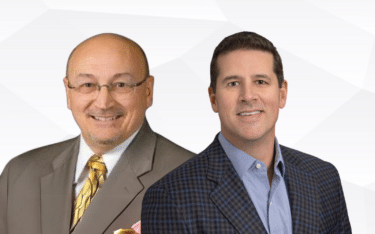
In the latest episode of The Ophthalmic Project, host Mark Dlugoss speaks with Michael O’Rourke, CEO of Re-Vana Therapeutics, about the company’s 2 biodegradable, photocrosslinked ocular drug delivery platforms: EyeLief and OcuLief, which were designed to provide sustained release of small- and large-molecule therapies, including biologics, for 6 months or longer. Mr. O’Rourke talks about how the goal is to substantially reduce the number of intravitreal injections patients receive in a year.
Mark Dlugoss:
Drug delivery platforms have revolutionized the way ophthalmologists deliver and target medications into the eye. One company has developed a platform incorporating a photocrosslinked technology to provide sustained-release of small and large molecular therapeutics that lasts from 6 months to 2 years.
Hello, this is Mark Dlugoss, senior contributing editor for Ophthalmology 360, and welcome to The Ophthalmic Project, powered by Ophthalmology 360. In today’s edition of The Ophthalmic Project, we sit down with Re-Vana Therapeutics to learn how biodegradable photocrosslinked sustained-release technologies can reduce the treatment burden for patients with retina diseases.
Joining The Ophthalmic Project to provide the key details behind this technology is Michael O’Rourke, CEO of Re-Vana Therapeutics. Michael, welcome to The Ophthalmic Project.
Michael O’Rourke:
Hi, Mark. Thank you. Great to connect with you again. Hope you’re well.
Mark Dlugoss:
First of all, your story, I think, is incredible. I think, and we’ll be getting into this as we get into it, but I found it very interesting in your backing that you’ve recently, well, I won’t say recently, but have gotten involved with, and I think it’s going to be a great story to tell. Let’s begin our discussion with the overall review of Re-Vana Therapeutics. Re-Vana Therapeutics was founded as a biotech company in Belfast, Ireland, specializing in biodegradable long-acting ocular delivery systems. Can you provide a brief history of Re-Vana, how it came into existence, the principles of the company at the time, and their motivation for starting the company?
Michael O’Rourke:
Sure. Yeah, happy to do so. As a company, we were founded in 2016 as a spinout from Queen’s University in Belfast. I came into the company really in 2017 as the first CEO at the really very, very early stages of Re-Vana. It was essentially like a PhD thesis almost when I took it over. But I’d had a strong background in ocular drug delivery going back to…I can talk a bit more about this, but going back to Chiron Vision days and Bausch + Lomb days launching products like Vitrasert into the market, Retisert. The first 2 sustained-release intraocular drug delivery products really ever launched into ophthalmology I was involved. I was involved with both of those.
Really the goal, having worked with those products and having seen a couple of other technologies launched, it was very apparent that drug delivery technologies on the market were all small molecules, whether steroids or antiviral drugs. The retina market had changed so much from 2006 onwards with the introduction of anti-VEGF drugs. Now you were seeing biologic-type drugs being delivered from an intravitreal basis to treat serious eye conditions like AMD and diabetic retinopathy and so on. The opportunity with Re-Vana really appealed to me in the sense that…Really for 2 things, I wanted to really take ocular drug delivery to a whole new level. I didn’t want to just deliver another steroid, another small molecule. It was a chance to really put ocular drug delivery on a map going into the retina market, which is going to be a $24 billion market by 2029. But secondly, it wanted to do something that no one had ever achieved before, and that was to look at the sustained-release of biologics, of large molecules.
Working with biologics is a more complex challenge than working with small molecules, and even more so when you’re trying to put it into a sustained-release biodegradable implant. The founding technology that came out of Queen’s University and the IP around it was really enabling technologies that could deliver biologics on a sustained-release basis for 6 months or greater. There are 2 different technologies. I can talk about one is EyeLief and one is OcuLief, but really that was the genesis of the company, Mark. What I did, so I came in 2017, quickly raised about $1.6 million in seed money from just local investors. We were quite fortunate that Queen’s University has its own internal venture capital group called Qubis. They came on board along with a couple other local Belfast investors, venture capital groups, at Clarendon, Invest Northern Ireland, and Techstart, along with some private investors. That really gave us the catalyst to get Re-Vana going.
We brought in $1.6 million, and that gave us the foundation to start putting what was then a very small team together. It was then, really, it was progressing Re-Vana. I came over to the States in 1998 after the Bausch + Lomb acquisition of Chiron. I’d been in the States for quite some time, obviously built up a whole network, and I was able then to reach out to some of the major venture capital groups in the U.S. In 2020, we brought in a small series A round of at $3.25 million, but that brought in ExSight Ventures, that led around Vision Ventures and InFocus Capital. Three leading ophthalmic venture capital groups, along with additional U.K. investors as well. Then that really came to a head in 2022 when we raised another $12 million. This time the Vision Ventures leading a round, but the same…There was follow-on investment from the same VCs like XI and Focus and Techstart, Clarendon, Invest Northern Ireland, and Qubis. That was really how the company came together.
The challenge, when you come out of academia, really, the challenge is how do you transform the company? How do you transition the company from being an academic-based institution to an emerging biotech company, because it’s a completely different skillset of individuals that are required. That was really the goal, but we recognized having…I’ve worked in retina since 1995 and really talking to many retina physicians that worked with over the years, the whole idea of having a sustained-release biodegradable 6-month implant, 25-gauge, 27-gauge perhaps that could deliver not just biologic, but in large molecules as well, was a total game-changer.
That really gave me the impetus to say, “Right, we’re going to take on board this challenge, we’re going to take it head on.” It’s never been done before. Even going beyond that, we also have an additional goal of saying, “Look, the products that have come into this market ever since the Vitrasert days, the drugs have all been generic drugs. They’ve all been approved drugs. No one’s ever been able to take on board a novel therapeutic with a novel technology.” That takes us into a whole different dimension of complexity and challenge, but that’s exactly what we’re taking on board with Re-Vana today. Working with both established assets and looking at potentially novel assets as well and really the basis was to put a strategy together for the company. I’d previously been at Graybug as well. Really what we put together was the parallel strategy. Once you say, okay, we have 2 different technologies, both with benefits and advantages, depending on the assets that we’re looking to deliver, but let’s look at an internal asset program where we’re not just a drug delivery company, we’re looking to bring in our own assets, raise capital against that, and take those products toward the clinic, but externally work with big pharma and work to build up external strategic collaborations. We’ve been doing that for many years, and that’s still very much the strategy that we have today.
Mark Dlugoss:
Good. I mentioned you joined Re-Vana in 2017 as CEO, and I know for a fact you bring over 30 years of experience in drug delivery to Re-Vana. Could you go in more detail about your personal experience, where you’ve been, where you’ve become from, what haven’t bring you up to this point?
Michael O’Rourke:
Sure. Originally, I’m from Glasgow, from Scotland, started my career at really a fantastic company, 3M. 3M then had a major pharmaceutical business. I was a drug rep, I was a sales rep for four years across Scotland and the north of England. That first gave me my insights into drug delivery because I was selling a sustained-release theophylline product. These are for asthma patients. Instead of taking 4 tablets a day, you could take 1 a day. That was really giving my first insights into the advantages and the benefits to patients of sustained-release. We then got into, we launched and sold one of the first-ever breath-actuated inhalers for asthma. Instead of pressing and breathing in the conventional inhaler, this one, it was just a direct delivery straight into the lungs. Site-specific treatment was also something that I really learned a lot of from 3M.
I was there for about 9 years. They were a brilliant company, but I wanted international experience. I actually went into the orthopedics. I stepped outside drugs and I came into the orthopedic industry with Howmedica, which later became Stryker. I was based in London and in Hong Kong, launching new trauma products into both the European and the Asian markets. But I came back into pharma in 1993 within the world’s largest drug delivery company, who was called ALZA, Palo Alto-based company, opened up their division in Europe, and we launched the world’s first ever sustained-release periodontal product. This was a tetracycline product treating the large pockets in the gums. Never been done before. That’s another breakthrough into sustained-release and worked with the other ALZA products as well. But they were then taken over by J&J.
Made my next move and came into the ophthalmology in 1995 with a Bill Link company, Chiron Vision, who had just been set up. Chiron Vision back then was really 4 companies. It was a surgical division of J&J, which was iLab. We had Domilens, a French cataract company, Technolas, the laser company, the LASIK company, and ADATA Med that was another German retina company. These 4 companies all came together. I joined as the first European market director, but I picked up Vitrasert, so the ganciclovir implant for senior retinitis. Inherited this really quite remarkable sustained-release technology. Back then, in the mid-1990s, it was the height of AIDS, the AIDS epidemic, AIDS diseases. What Vitrasert did was to deliver an antiviral drug, ganciclovir, to late-onset HIV patients with CMV retinitis, which was really a fantastic enabler for these patients because when you got CMV retinitis, you maybe had perhaps 1 or 2 years left to live. We felt by giving this implant, it could then deliver an antiviral drug for between 4 and 6 months.
It was an incredible invention back then by Chiron Vision. It was really the first-ever sustained-release centraocular product. That really set the passion for ocular drug delivery. We were then acquired by Bausch + Lomb at the end of 1997. I moved to California, working alongside Tom Burns, who heads up Glaukos. I spent 3 years in Southern California. Then I headed up to Rochester, New York, the headquarters of Bausch + Lomb, and really spearheaded our global ophthalmic program for a number of years, but then came down to Tampa as general manager to run the U.S. business. Tampa had been the pharmaceutical headquarters of Bausch + Lomb since the early 1990s. I came down here in 2004 to run Bausch + Lomb pharma, took that up to just under, I think about $200 million business and launched the world’s second product back then, Retisert, which is still on the market today, fluocinolone acetonide for non-infectious posterior uveitis, similar technology to the Vitrasert implant, but a smaller implant.
In this case, the FDA label was 32 months of delivery as opposed to 4 to 6 months. That really gave me the grounding, having the background in drug delivery from 3M, from ALZA, and then came into all ophthalmology, really with Bausch + Lomb. Left Bausch + Lomb 2009 or 2010 thereabouts after they were taken over by Warburg Pincus. Ran a consulting business, but then became the first CEO of Graybug based out of Johns Hopkins in Baltimore. This was a microparticle, nanoparticle technology, working with a great team in an amazing facility of Johns Hopkins. That really allowed me to then progress with a different form of technology. We ended up working with the Sutent, with the cancer drug, which we brought into the ophthalmic portfolio. Left Graybug and then really came into Re-Vana in 2017.
I’ve been fortunate that for more than 30 years now I’ve been involved in sustained-release and ocular drug delivery in particular, and that really is where the passion lies because I see this…I believe the future of therapeutics is going to be sustained-release technologies, patient-specific, patient site-specific technologies, enhancing the value for patients. Of course, the situation we are in today is that there’s 26, 27 million injections in the eye every year, intravitreal injections. The average patient today will get, depending on the drug, will get between 3 and 9 injections in the eye each year. Our goal, clearly, is to reduce that, reduce your treatment burden down to 1 or 2 injections a year with either EyeLief or OcuLief technology. That’s the passion, that’s the goal, and that’s how we’ve built Re-Vana really on that basis because we think that is the future of ophthalmology as far as our thinking is concerned.
Mark Dlugoss:
Yeah. Your experience and background over the years, and I didn’t know you went as far as Bausch + Lomb because I think at first I met you was when you were with Graybug. But moving forward, as you know, a company’s leadership team is vital to establishing a strategic direction and organizational performance and turning a company’s vision into action. Can you highlight some of the key members of Re-Vana’s Therapeutics leadership team and what their expertise and experience bring to the company?
Michael O’Rourke:
Yeah, absolutely. Everything’s down to the team. When I started, it was just me working alongside a couple of the professors from Queen’s. We were able to bring on board some of the PhDs from Queen’s and brought them in from the university, but to work on a basis. That really gave us the start. But really the first major move we made after we’d raised some capital was to bring in a chief operating officer. Our CEO, a guy called Patrick Ruane, who’s both…not only a drug delivery polymer expert originally from Ireland, but he’s also a photochemist, and it’s almost like the perfect hire for us. He’s been truly instrumental. We worked in many Silicon Valley companies, many startups, I think one of the best, one of the brightest in the business. Bringing in someone really, a real seasoned industry expert was a major, major catalyst for us moving forward.
With his knowledge, and again, raising additional capital, we were then able to bring in a more seasoned team. A little bit of the challenge was in Belfast in Northern Ireland, so you have to try and attract individuals, but we are a team of 21 today. If you look at our leadership team, but Patrick, again, is, I think, just the utmost professional that has spearheaded much of the growth and the operations of Re-Vana. We recently brought in, I think, one of the best business development business guys in the industry, Hans Christinger, who was previously Ophthotech. He’s now our chief business officer. We have a world-class vice president of quality, Jim McIlroy. We have a chief of staff, Daphne Doucet. We have a VP of R&D, JJ Hancock. Look at just the top leadership team. Funnily enough, we did a recent documentary for Reuters and we said on there that we would be happy to take our team and put it up against anyone in Silicon Valley today.
The rest of the team, 3 of us, are based here in the States, myself, Patrick, and Hans. The other 18 are based in Belfast. Beyond the leadership team, we’ve put together, I think, a really fantastic group of scientists, all very dedicated, very passionate about the whole Re-Vana strategy. As CEO, I’m incredibly fortunate that I have just an absolute world-class team, and that’s really the focus of Re-Vana is to work with the team and looking to expand on that. But I have to say, we have fantastic support from our key investors, from Vision Ventures, from ExSight, from InFocus, our U.K. team, Clarendon, Techstart, Invest Northern Island, Qubis. We also have a world-class scientific advisory board of some of the leading retina physicians and others, in my opinion, in the world. We have a very comprehensive team, very focused team, strong retina-focused, that are really incredibly helpful to us as we track our pathway to get to the clinic and to expand upon, expand our collaborations and look to bring in more internal assets.
The transition from academia to being a biotech company can be quite a long run. We’ve done it by really having a hiring policy, really from a fairly early on stage that we would only hire people as full-time Re-Vana employees if they had industry experience. Working with Queen’s University was really, really fantastic. They were very, very supportive. In fact, just literally in the last 2 weeks, last couple of weeks, we’ve now moved out of Queen’s University into our own facility. We’re in Belfast, if you know your history, the Titanic was built in Belfast, and we are actually in the Titanic Quarter, and a new lab actually overlooks the exact dry dock where the Titanic was built. But as I say, the Titanic was in great working order when it left Belfast, so something happened to it when it left Belfast.
Mark Dlugoss:
Yeah, got to watch those icebergs.
Michael O’Rourke:
Yes. But we’re in a really real quality lab setting now, and we’ve got the ability to double that number, quite frankly. We’re just under 8,000 square foot, but really I think a world-class facility. That was all the transition to get out of the academic environment. But as I say, working with Queen’s University was really, really fantastic. They were incredibly helpful.
Mark Dlugoss:
Now, you and your leadership, I’ve been noticing, been following you guys for a while, and you and your leadership team have been attending the major healthcare conferences lately, sort of outlining Re-Vana Therapeutic’s direction for 2026. One of the major points of your presentation that I noticed was the importance of establishing long-term partnerships. One of those partnerships is that I noticed is the $1 billion-plus collaboration you have with Boehringer Ingelheim. Could you outline the details of this collaboration, how it came about, and what the partnership entails?
Michael O’Rourke:
Sure. Before I get into the partnership, if I can just explain to you, I think the value proposition as to what Re-Vana brings, because that then attracts investors and attracts companies that allowed us to secure the collaboration with Boehringer Ingelheim. The Re-Vana approach is very different. We have 2 technologies. We use photocrosslinked technology. Photocrosslinking means that it involves delivering energy to a system using light as opposed to heat to prepare the implant. The main advantage here is that light is less likely to damage sensitive molecules like proteins or biologics provided the correct wavelength of light and intensity is chosen. This is where our chief operating officer, Patrick, is just the perfect fit as a photochemist, and he was previously at University of Toronto and Johns Hopkins and Ohio State.
We have the knowledge base on how to do this, but we don’t use off-the-shelf polymers. We use custom molecules to build our polymers using photochemistry. These polymers are…the photocrosslinking is really designed to do 2 things. One is to control and sustain the delivery of active pharmaceuticals, again, from anything from 6 months and beyond, as mentioned, but we also want to control the degradation of the polymer such that the patient can be retreated again and again for the chronic disease and do so in such a way as not to be pro-inflammatory. You really need good tolerability to be able to deliver these technologies. Then once we photocrosslink the polymer, once it’s formed in the presence of a drug, the drug release is then controlled by a three-dimensional structure of the hydrogel structure. In essence, the pore size within the photocrosslinked polymer ultimately controls the rate of drug release and polymer degradation. This is a standout feature, I believe, for Re-Vana.
I think, secondly, if you look at traditional ocular platforms that tend to use PLGA as a polymer technology, this works well, but really for small molecules, when the drug loading is very high, like for Ozurdex, for instance, with a small molecule is dexamethasone and the drug loading is about 70% by weight. At low drug loadings of less than 50%, PLGA will degrade and generate lactic and glycolic acid at a rate that’s too high for the body’s natural buffering system really to address. This in ophthalmology would lead to intraocular inflammation that is unacceptable. Poor tolerability is the biggest killer of sustainable systems, so you really can’t have inflammation because it really impacts the success of the technology. The situation is even more difficult for peptides, for proteins, as mentioned, PLGA is not a viable option. That’s why some of the other companies you know in the ocular drug delivery field, they’re small molecule companies, they’re not developing really biologics or sustainable biologics.
PLGA is not a viable option as any acid that’s generated while in addition to the inflammatory risk also degrades the active ingredient. Re-Vana has really designed a proprietary suite of photocrosslinked hydrogel polymers to circumvent the acidic problems associated with traditional PLGA. The details can be quite technical, but in short, our polymer is slowly and in a controlled manner degrades from the surface in a way that allows natural buffering systems of the eye to prevent any buildup of acid. That provides all the advantages to patients of sustained-release, minimal, no inflammation, great tolerability. We’ve overcome a lot of the challenges of delivering biologics where previous companies have failed. The other thing we can do, now to answer your question, is we can then customize our technology, our technologies to an actual drug.
Our first technology is called EyeLief. It’s a preformed implant, it’s prepared. It’s photocrosslinked before it goes into the eye and then is injected with a 25-gauge, approximately, as an intravitreal injection. The second technology is very novel. It’s the same chemistry base as the first technology that EyeLief, but in this case, it’s an in situ forming gel. When you inject a gel into the vitreous, into an aqueous environment, the vitreous, it forms an implant. We have now developed an applicator working with Cambridge Design Consultants in England that allows us to both inject a drug and photocrosslink it in the eye with visible light. There’s no damaging UV light in the eye, which I think is really quite unique. We have now the ability to do this. When you look at what Re-Vana can do, and we can cover a very wide range of therapeutics, we can customize our technology to a very specific target product profile.
If a company comes to us and say, “We need to know the size of the drug, how long we want to deliver it for, what the target therapeutic dose is going to be,” we now have the experience our team, both with Patrick and the team in Belfast, to totally customize either of those technologies to a very specific target product profile drug. This capability of Re-Vana is really what has attracted interest and has allowed us to raise just over $16 million to date, but it’s to build up an external bank of collaboration partners. The interest with Boehringer Ingelheim really came back in about, really after a presentation I gave at one of the OIS meetings in 2023, it was in Seattle, and Boehringer were in the audience and we started a dialogue. We were actually on the stage recently talking about this. It took about 2 years, but we gradually built up a fantastic working relationship with Boehringer Ingelheim.
They are a major, major corporation. They’ve been around since 1885. They’re one of the biggest private healthcare companies in the world, they’re based in Germany. They have a growing commitment to ophthalmic R&D, specifically into the retina area. With the future pipeline of retina therapeutics, Boehringer’s mindset was the same as ours in that we believed that sustained-release was really the way forward with these new therapeutics in the future. That was the basis of the start of the dialogue. We then worked through, as you can imagine, quite extensive due diligence, and that really materialized back in July 2025 when we signed a strategic collaboration and licensing deal with Boehringer Ingelheim that allows us to work with up to 3 different therapeutics in any 1 year. Its target exclusivity. We can still work with other companies, and we are indeed looking to expand our strategic collaborations, but the result of the deal with Re-Vana was up to a billion dollars in milestones plus royalties and up to three targets in any one year working with our technology.
That started literally after…We signed it in July, the program very much started a couple of weeks later in August, and so far that’s gone extremely well. They’ve been truly a fantastic company to work with. We really look to expand the relationship with them to drive success and really change in many ways I think what we can do with ocular drug delivery in the future, working with Boehringer Ingelheim.
Mark Dlugoss:
Basically, what does it mean for the future of the company working with Boehringer Ingelheim? What does the partnership mean for the future of Re-Vana?
Michael O’Rourke:
Clearly, as we said in the press release at the time, it’s transformative for Re-Vana. When you’re a startup company, you’re raised about $16 million, and then you partner with, I think, one of the leading pharmaceutical companies in the world, then it is transformative. It allowed us to expand the team, it’s allowed us to bring in more expertise, but we know that we have to deliver for Boehringer. There’s a great need to meet our milestones here. What it’s particularly meant for Re-Vana is just an insatiable passion for getting this right, for delivering to the milestones that we’ve set out with them, but it allows us to bring more expertise into the company. It really has enabled some ways just to move, to move out of academia, move out of Queen’s, to move into the new facility that I mentioned done by the Titanic Center in Belfast.
Wth that, we will expand. We’re looking to add additional hires by the end of the year. It’s really now a bit growing Re-Vana, managing Re-Vana, but also bringing in additional partners. With the endorsement of the Boehringer deal, clearly that’s a great thing to have and there’s been a lot of interest that has come our way because of that. But we recognize that it’s still relatively early. Our goal here is to get into the clinic. We know what we’ve got to do, but we really believe that we have the team that’s going to enable us to do this and we work hand in hand with Boehringer Ingelheim on this. They’re a fantastic team to work with, and we’re incredibly excited as to where we’re going to take this over the next couple of years, but it has been transformative in a really good way. We’re looking to build on that. We’re as passionate and as hungry as ever to take Re-Vana forward.
Mark Dlugoss:
You touched earlier on photocrosslinked technology. You touched base on it a little bit. Can you explain the technology or the science behind it and how it works when you apply it to a biodegradable long-acting ocular delivery platform?
Michael O’Rourke:
Yeah. As I was saying earlier there, Mark, with 2 different technologies, one is EyeLief, which is prepared as an implant before it goes into the eye. Really, the founding IP and the secret sauce actually, to be honest, of Re-Vana, is all about using light instead of heat to prepare the implant. That was really the marker that gave us the very early belief that we could deliver biologics, which had never been done before at a biodegradable level. A lot of companies are trying to deliver biologics in sustainable spaces, but it failed. Our technology really enabled us to come over, really to go over three of the main barriers to delivering biologics. One is really making sure that the active, the biologic remains…The API does remain active in itself. In other words, the protein is not denatured. Secondly, you have to get high enough drug learning, and we have been able to achieve that working with anti-VEGF drugs. Then thirdly, as I mentioned earlier, the biggest cause of any failure of ocular drug delivery systems is inflammation, it’s poor tolerability.
We’ve conducted multiple studies to show that we have really sound a tolerability, minimal inflammation. These 3 barriers that have traditionally hampered companies, we’ve overcome those. It’s the technology, it’s the photocrosslinking technology, it’s customized polymers that we use. There’s nothing off the shelf. We don’t use organic solvents. It’s the combination of these factors that really has allowed us to move forward with both the EyeLief technology and the OcuLief technology. But the secret sauce behind it is how we photocrosslink it with light and prepare the implant.
Mark Dlugoss:
Photocrosslinked technology, how’s this going to revolution…How do you see it as revolutionizing the anti-VEGF drug delivery as we currently know it?
Michael O’Rourke:
Our goal here is, I mean, we are looking at, with the anti-VEGF type drugs with biologics of that category, it is a major area of focus for us, but we also have capabilities in other segments, whether it’s complement drugs. We can also do small molecules as well. The therapeutic spectrum of what Re-Vana can deliver is actually really extensive. Not only do we have that, but then it’s this customization of either the EyeLief technology or the OcuLief technology, depending on the target product profile, that allows us to be even more flexible in how we move forward. Our goal here, quite simply, is to be a world-leading pharmaceutical company. We believe our value proposition is really quite unique because of the biodegradable nature of these hydrogel implants as opposed to when the first 2 products come out of in vitro. These require surgery.
We don’t want to go down the surgical route is not our goal. We want to be able to deliver EyeLief and OcuLief technology in the clinic. We know that many retina physicians can do 40, 50, maybe more injections in any 1 day, so we have to develop a technology with that in mind. We’re working very closely with retina physicians. Our goal here is really to, you can say, revolutionize if you want, but it goes back to the reasons why I joined Re-Vana and it’s to elevate ocular drug delivery into a way that’s never been achieved before with the delivery of biologics and potentially with the delivery of novel drugs into a novel ocular drug delivery system, which has never been done before. We are breaking new ground here. We’ve made fantastic momentum to date with the collaborations, with the investment, the investors we’ve got.
We’re going to need to raise additional money clearly in the future, but the strategy remains core. It’s internal asset development. We’re not just a platform company. We want to bring in our own assets, drive them to the clinic. But in addition to working with Boehringer is look to expand our collaborations, and we’ll take it from there and see where that leads us. But we’ve got a very clear strategy, very clear goal in mind, and that’s what we’re striving towards.
Mark Dlugoss:
Now you mentioned that there are 2 preliminary platforms. You mentioned EyeLief and OcuLief. What’s the difference between the 2 platforms and as well as their scientific capability in treating patients with ocular diseases?
Michael O’Rourke:
Yeah. EyeLief technology, as I say, it’s prepared before it goes into the eye, but very small implant, could be 2 or 3, 4 mm by half a millimeter. It’s a very small implant. That’s photocrosslinked, let’s say, traditionally with ultraviolet light before it goes into the eye, could also be done with visible light. The way we define it is that delivers molecules maybe less than or equal to micrograms a day. The OcuLief, which is the in situ form and gel, would be for greater target release rates of drug. We define them by the release rate capabilities.
There’s commonalities between them, but both biodegradable. It’s the same chemistry. They’re both photocross-linked. EyeLief though, it could be photocrosslinked with the ultraviolet light, focused into the eye. OcuLief, because it’s in situ, is photocrosslinked with a visible light in the eye. There is no damage to the retina, so we’re not using ultraviolet light, for instance. Those are the broad differentiators between the technologies, but it really comes down to what the target product profile is, what the release rates are. We’re talking to our company, we will sit down and really map out the target product profile. As I mentioned, what’s the size of the drug? How long do you want to deliver it for? What’s the target therapeutic dose with a number of other factors as well? Then we’ll come up with a model and a plan that will allow us to move ahead, let’s say, under a feasibility type agreement with a company’s asset and indeed looking at our own internal assets as well.
There are commonalities between both, but fundamentally we segmented by target release rates and some other factors would go into the target product profile, but they’re both biodegradable, they’re both photocrosslinking, both delivered in the clinic. We have a great opportunity here to expand upon the capabilities of these two platforms with the assets and with the future collaborations.
Mark Dlugoss:
Yeah. Currently, EyeLief is working its way through the clinical process. Can you provide an update on EyLief’s status and any potential clinical trials that Re-Vana is working on?
Michael O’Rourke:
We took on board a challenge that no one had ever achieved before with the sustained-release biologics. As of today, we’re still preclinical, but we are looking to raise additional capital as part of a series B later this year that would then allow us, we’re looking at closing deals from multiple internal assets that we’re on, and that would then be to drive that towards the clinic. Externally, with our partners, of course, we want it also to drive that to the clinic as well. That’s the situation of Re-Vana today. We expect that to accelerate rapidly over the next year or 2, and really allow us to truly redefine what ocular drug delivery can do in this growing retina segment. As I said, it’s $23 billion by 2029, probably will go higher than that. As I said, back in Chiron days, hardly anyone was in retina, now everyone’s in retina, but that is the way forward.
The population’s getting older, both the indigence and prevalence of retinal diseases is increasing. There’s more obesity, there’s more diabetes. We are in a high-growth market, and over the next 10, 20, 30 years, whatever it may take, the rate and the increase of retina conditions is going to become even more profound, more patients there. The need for sustained-releases is going to become even greater as time develops here.
Mark Dlugoss:
Now, Re-Vana Therapeutics, it sounds like from what you described today, is developing something really unique with its photocross-linked drug delivery systems, and they look pretty promising for both clinicians and patients. Are there any other points of discussion we may have overlooked today, or is there anything you would like to add about Re-Vana Therapeutics before we close?
Michael O’Rourke:
I’d say from an ophthalmic perspective, it’s going incredibly well according to plan. We recognize, as I said, the transformative nature of having a collaboration with Boehringer that we’re looking to as a priority area clearly of focus for us. I think strategically, there may be opportunities down the road to go outside of the eye to look at non-ocular applications because either of our technologies could be used probably elsewhere in the body. But 99% of the focus today of Re-Vana is in the ocular space. It’s an area I’ve been in for 30 years. It’s an incredible area to work in and we have great team, advisory board, investors that are really helping us move forward on here. I would say that in closing, we’re looking to expand the collaborations. If there are companies that are thinking about sustained-release for the therapeutics, I would say that we’re very interested to talk.
I think one of the things that’s changed somewhat is, I mean, even just a few years ago, the large pharma companies would probably only think about ocular drug delivery after their therapeutic was approved. That’s why the products to date have all been with generic type drugs or approved drugs. I think that we’re seeing that changing. The reason it’s changing is that pharma companies are now thinking earlier into the development cycle of the drug, phase one, phase 2, maybe as late as phase 3, they’re thinking about sustained-release much earlier. That is an incredible opportunity for Re-Vana. I think it’s a game-changing strategy for the whole ophthalmic sector from a sustained-release basis. I think Re-Vana is perfectly positioned to capitalize on this.
We’ve now worked with up to 21 different therapeutics, over 10 of those of biologics. We have a fantastic database and knowledge of how to develop these products and to take them forward, both from an in vivo, both from an in vitro and an in vivo perspective. I think we’re leading the way on this. That’s the goal, that’s our belief. There’s very few companies in the world I think that are attempting to doing what we’re doing.
Mark Dlugoss:
That concludes today’s edition of The Ophthalmic Project. I want to thank Michael O’Rourke for explaining how Re-Vana Therapeutics is developing its platform, a photocrosslinked sustained-release technologies. Finally, I want to thank you, the listeners, for tuning in. I hope you found today’s edition of The Ophthalmic Project interesting and will join us for the next edition of The Ophthalmic Project, powered by Ophthalmology 360. Until next time, have a great day.
Related Content