Ophthalmology 360
  • Conferences
  • Videos
  • Podcasts
  • Quizzes
  • About
    • About Us – Mission
    • Content Awards
    • Media Partners
    • Business Team
    • Brand Ambassadors
    • Photo Contest
    • Industry Council
    • Advisory Board

What are you looking for?

  • Anterior Segment
  • Cataract
  • Cornea and External Disease
  • Diabetic Macular Edema
  • Dry Eye
  • Early Onset Cataracts
  • Exclusives
  • General
  • Geographic Atrophy
  • Glaucoma
  • Industry News
  • Inherited Retinal Disease
  • IOLs
  • Neurotrophic Keratitis
  • Ocular Surface Disease
  • Oculoplastics
  • Optometry
  • Pediatrics
  • Practice Management
  • Presbyopia
  • Refractive Surgery/Vision Correction
  • Residents & Young Ophthalmologists
  • Retina
  • Retina Care 360
  • Retinopathy of Prematurity
  • Spotlight Series
  • The Interventional Glaucoma Project
  • The Ophthalmic Project
  • Trending Topics
2nd Annual Photo Contest - Enter Here!
Ophthalmology 360
  • Conferences
  • Videos
  • Podcasts
  • Quizzes
  • About
    • About Us – Mission
    • Content Awards
    • Media Partners
    • Business Team
    • Brand Ambassadors
    • Photo Contest
    • Industry Council
    • Advisory Board
Home > Oculoplastics > Blepharoplasty candidates prioritize function over aesthetics, survey finds
  • Oculoplastics

Blepharoplasty candidates prioritize function over aesthetics, survey finds

Ophthalmology 360

Key Takeaways

  1. Functional concerns were the primary reason for seeking blepharoplasty, with relatively few patients motivated by cosmetic factors alone.
  2. Most patients expected meaningful improvement after surgery, though safety and maintaining a natural appearance were common concerns.
  3. Social media had limited overall influence but was linked to greater uncertainty, particularly among younger and male patients.
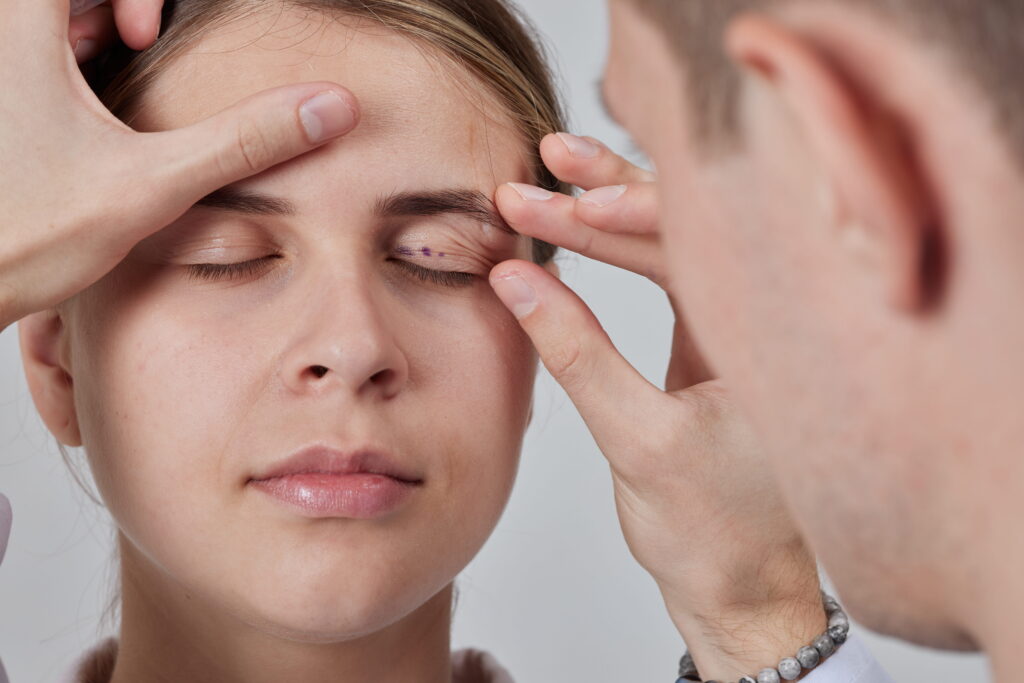
Most individuals considering blepharoplasty cite functional concerns as their main motivation, while social media appears to have a limited yet somewhat uncertain influence on decision-making, according to a cross-sectional survey of 60 adults.

Participants most commonly cited functional necessity as the reason for pursuing surgery (48.3%). Only 16.7% reported purely cosmetic motivations. Motivations differed by sex, with women more likely to report aesthetic concerns (27.6%) and men more likely to cite a combination of functional and cosmetic reasons (48.4%; P = 0.024).

Expectations for surgery were generally positive. Nearly half of respondents (48.3%) anticipated improvement in their visual field, and 60.0% expected to feel “much better” after the procedure. The most frequently reported concerns were safety (45.0%) and the risk of losing a natural appearance (25.0%).

Although 68.3% of participants reported no indecision about proceeding with surgery, approximately one-third expressed some level of hesitation. Logistic regression analysis identified male sex, younger age, and social media influence as independent predictors of decisional indecision (P < 0.05).

Reference
Kesimal B, Kocamış Sİ. Motivations, Concerns, and the Role of Social Media in Upper Blepharoplasty Candidates: A Cross-Sectional Survey. Aesthetic Plast Surg. 2026;doi: 10.1007/s00266-026-05821-3. Epub ahead of print. PMID: 41954640.

Share

Related Content

  • Oculoplastics

Pain measures may help track treatment response in Graves’ orbitopathy

FDA approves Eysuvis for short-term treatment of dry eye disease
  • Oculoplastics

FDA approves Lumvoa for active and chronic thyroid eye disease

Cornea Update: Corneal Dystrophies & Related Conditions with an Update on Genetic Assessment and Treatment
  • Cornea and External Disease

Preventing complications of superficial keratectomy

  • Oculoplastics

Integrating amniotic allografts into modern oculoplastic reconstruction: a practical perspective

  • The Ophthalmic Project

The next generation of amniotic membranes for the treatment of corneal epithelial defects

  • Oculoplastics

Can ChatGPT-4 respond accurately to common blepharoplasty questions?

2 Mins Read

Share

Editor's Picks

  • Neurotrophic Keratitis

Topical insulin shows real-world benefit in neurotrophic keratopathy

  • Retina

GLP-1 RAs have protective effects against AMD

  • Retina

Four-month injection intervals appear safe for long-term stable nAMD

Advisory Board

Saad Ahmad, MD

Ahmad A. Aref, MD, MBA

Roomasa Channa, MD

David Chow, MD, FRCS(C)

Sally L. Baxter, MD, MSc

Neel R. Desai, MD

Nadia Haqqie, MD

Simon Fung, MD, FRCOphth

Sumit Garg, MD

Ross Lakhanpal, MD, FACS

Sanjai Jalaj, MD

Anton Kolomeyer, MD, PhD

Shan Lin, MD

Steven R. Sarkisian, Jr., MD

See All
Ophthalmology 360

Ophthalmology 360® is a dynamic digital platform dedicated to advancing the field of eye care.

Get to Know Us

  • Home
  • About Us
  • Media Partners
  • Advertising Policy
  • Our Advisory Board

Sign up for our Newsletter

Sign up for our Newsletter to get our newest articles instantly!

  • Privacy Policy
  • Advertising Policy
  • Medical Disclaimer
IHM Logo

2026 Ophthalmology 360 is a trademark of International Healthcare Media, LLC. All rights reserved

  • MedJournal360 Icon
  • RareDisease360 Icon
  • MyHero360 Icon
  • Optometry360 Icon
  • Ophtalmology360 Icon