The next generation of amniotic membranes for the treatment of corneal epithelial defects

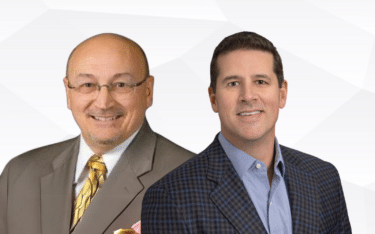
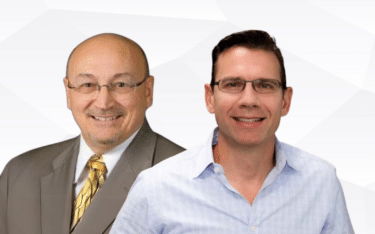
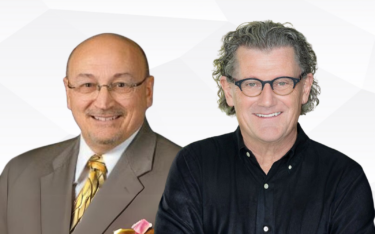
The latest episode of The Ophthalmic Project, pairs host Mark Dlugoss with Rob Sambursky, MD, Chief Executive Officer of DefEYE, where they discuss the company’s products Biovance and Biovance 3L Ocular, the only decellularized basement membrane product that provides an extracellular matrix. Learn more about these products and their treatment of corneal epithelial defects in this informative episode.
Mark Dlugoss:
Amniotic membranes first appeared in ophthalmology in the 1940s when Hungarian ophthalmologist, Dr. Andreas De Roth, utilized fetal membranes to reconstruct ocular surface following burns the eye. Amniotic membranes have not changed much in regard to the structure over the years. However, the next generation of membranes appear to be on the horizon.
Hello, this is Mark Dlugoss, senior continuing editor for Ophthalmology 360, and welcome to The Ophthalmic Project, powered by Ophthalmology 360. In today’s edition of The Ophthalmic Project, we look at a new company that recently launched with a portfolio of what they call decellularized biologic membranes that offer a new approach to the management of ocular surface disease and healing. Joining The Ophthalmic Project to discuss the latest versions of amniotic membranes is Dr. Rob Sambursky. Dr. Sambursky is the CEO of a company called DefEYE Inc. He is also a refractive corneal specialist. Dr. Sambursky, welcome to The Ophthalmic Project.
Rob Sambursky, MD:
Oh, it’s a pleasure to be here, Mark. Really excited about it.
Mark Dlugoss:
Let’s begin our discussion with a look at DefEYE as a company. Recently, DefEYE was pretty much launched in October of this past year, in 2025, as an independently privately held company from Verséa Ophthalmics. Can you provide some background about DefEYE’s launch, how it came about, and sort of wrap up the question by what is the company’s mission and vision?
Rob Sambursky, MD:
You have to go back in time a little bit. Verséa Health was a holding company, and it had 3 subsidiaries. One subsidiary was called Discovery. It was focused on mitochondrial health. A second was called Diagnostics, and it was focused on the classic point-of-care tests, influenza, COVID, tests like that that you would do in primary care setting or urgent care. Then in 2022, the Ophthalmics subsidiary was created. That’s really when I was brought on to be the president of Verséa Health, as well as the president of Verséa Ophthalmics. During that time, you can imagine, or you can think of the subsidiaries as being almost like an incubator, and Verséa Health feeding us with capital and helping to get 3 companies thriving. Over about a year or so, we launched Verséa Ophthalmics. We had this novel product line. What happened is, there was a year’s worth of nuanced learning to understand just how to bring in this new technology.
By 2023 end, say Q4 and 2024, it was obvious that we were onto something that started to develop significant commercial traction. At the same time, there were competing interests from the other subsidiaries. The leadership at the Verséa Health level decided that the best way to feed the needs from a resource perspective of all these subsidiaries was going to be to bring in external capital. It was impossible with changing market conditions for Verséa Health to do it itself. At that time, we had momentum in eye care. It was the perfect company to really, and I’m going to use air quotes, spin out first, because we actually created a new company and then transferred all of the assets and liabilities into DefEYE. But we did that on purpose, because A, we wanted to take advantage of the clinical momentum that was happening, the commercial traction, and because from an investor perspective, it’s challenging to get someone to understand three disparate businesses.
Within DefEYE, we could be laser-focused on bringing, as you said, a decellularized ocular biologics portfolio to both optometry and ophthalmology. That was really the genesis of DefEYE. Once created, we really decided that we were going to target a vision of really advancing eye health, and we were going to do that through a combination of therapeutics, in this case, biologics initially, and then adding in diagnostics with a goal to really elevate the standard of care. Our mission sort of falls right in line, and that is to improve vision. We really want to target the ocular surface and improve its health, and ultimately that should lead to an improvement in patient’s quality of life. Because in the end, it’s all about providing the best possible care for our patients.
Mark Dlugoss:
With the launch, you became CEO of DefEYE. For viewers who may not know who you are, can you provide some background about yourself and what does your experience bring to DefEYE moving forward as a new company?
Rob Sambursky, MD:
Sure. I jokingly like to say that I’m a commercial guy that’s really trapped in an ophthalmologist’s body. I say that because I have a background in medical sciences, actually a master’s with a focus on biochemistry and also microbiology. Then I went on to do a general medical internship, and then eventually residency at Wills Eye Hospital, chief residency and fellowship. While I was at Wills during my chief residency and fellowship, I was the co-founder of a company called RPS Diagnostics. I evolved through that company from being a medical director to chief medical officer, to president and then overseeing R&D, and eventually was appointed the CEO role in 2012. I have a unique experience, both as an eye care physician and someone who still practices a couple of days a month, as well as commercial experience. After 2012 of taking the company forward and bringing 3 products to market, including InflammaDry and AdenoPlus, which many people are aware of, we sold that business unit to Quidel to become Quidel’s eye health.
I took the balance of the business and we merged with a company called Lumos Diagnostics, where I was also the CEO and spun out a new company, which was called Vicus Therapeutics. They have a product called Brimochol for presbyopic therapy. I was instrumental in building the management team, served as the executive chair, and then ultimately a board member for several years. That company has subsequently been acquired by Tenpoint Therapeutics. Then the balance of the business, Lumos Diagnostics, I took public on the Australian Exchange. I was subsequently recruited to Verséa as the Verséa Health President and then president of this division in 2022. In the end, I think what people get with me is someone that still sees patients, understands what life is like as a practicing physician, what it’s like to actually use the products. I throw on a chief medical officer hat for that, and ultimately I understand the reimbursement and how important that is to drive practice management.
I also understand what it’s like to do the best for our patients. Couple that with years of experience bringing commercial products to market and managing teams, I figured out how to surround myself with a bunch of all-stars to make it a whole lot easier to get something done.
Mark Dlugoss:
Yeah. You seem like you’ve gotten a full background, both clinical and research and industry experience. That’s pretty solid. Congratulations.
Rob Sambursky, MD:
Thank you. I have all the scars to prove it as well, Mark. I’d like to think, at this point, I have a little bit more maturity and grounding than I did in the past.
Mark Dlugoss:
As with any new launch of a company, the leadership team always plays an intricate role in the success of that company. You’ve brought several seasoned individuals with expertise in ophthalmic therapeutics and diagnostics and commercialization. Would you highlight the top officials, executives you brought into lead DefEYE, and what did do their experience and background mean for in achieving the mission of the company?
Rob Sambursky, MD:
I want to start by actually emphasizing what you said, which is team is critical. I’ve really realized over the years that 1 person can’t get it done, 1 person can’t carry the weight. It really is about surrounding yourself with great people that have the talent and the experience to help drive a company forward. I’ve seen companies where the products were marginal at best, but the team was great and the company was very successful. I’ve seen the opposite, where I thought the products were unbelievable and there was no chance they could fail, but the team was problematic and ultimately led to lack of success in the downfall of a company. With that, I really wanted to build an infrastructure that was very solid. I’ve really hand-selected the majority of the people. In the past, I’ve always tried to pick my own leadership team players.
With that said, I’ll start with finance, because it was a big part of how we raised this initial capital and built the foundation of the company. I brought on Robert Glashow. I had spent about a year with him at Verséa Health. He brings tremendous financial rigor and also operational experience. He brought 4 or 5 companies public. He’s really managed all kinds of manufacturing settings. While not specifically in eye care, I think he has a lot of transferable skills. For me, as the CEO, I tend to be more of a visionary. I’m strong on the commercial, the clinical, and the regulatory. It’s good to be balanced by somebody that’s very strong on the finance side. I think we make for a great team.
Then to compliment that, we’re in a regulated industry. I’ve been able to bring in Sue Hiblin, who is a quality regulatory expert. She’s more new to biologics, but has years of experience on the diagnostic side, and we’ve worked together at both RPS Diagnostics and Lumos Diagnostics. She was a great addition to our team. From a commercial standpoint, it was really built around bringing people that know how to launch products. I’m going to start with Rahim Hirji. He’s launched several products. He’s a well-known leader within marketing in the eye care space. Then I couple that with Tyler Johnson, who’s new to eye care, but has a strong background, especially as a clinical background in biologics to help lead our market development and sales, and then brought in Rebecca Chandler to lead strategic accounts. In this day and age, it’s important to really have access to the private equity-backed clinics and the VA hospitals and DOD, and that’s really a focus for us. Having somebody leading strategic accounts is key to our future success.
I think together we’ve harmonized as a team, we’ve been able to really drive the ball forward. I think we all get along. I think we have a great culture, so I’m really excited to continue to build.
Mark Dlugoss:
With the launch of DefEYE, the company has a portfolio of what you’re calling decellularized biologics, and the two products are basically Biovance and Biovance 3L Ocular. Before we get into details, let’s discuss the present state of the amniotic membranes. I guess basically the types, the structure, a little bit of history. Amniotic membranes, for the most part, people use them, but they don’t know much about them.
Rob Sambursky, MD:
Sure. I think the best way to do that is to start with placenta, and we’ll do a brief anatomical lesson here. I don’t mean to be truly didactic, but I think it’s important to understand.
Within the placenta, you have an umbilical cord that attaches to the chorionic plate, and then you have 2 critical structures, an amniotic membrane and a chorionic membrane with a little stroma in between. You can think of the chorion as being pro-inflammatory and it rests outside the fetus and the amnion is closest to the fetus, and that has a much more of an anti-inflammatory function. Historically, there have been 2 categories of amniotic tissue. Though some people combine chorion and amnion, there’s a little risk of having too thick a product and a lot more inflammation. The majority of products on the market are simply amnion. What really has differentiated the balance of the amnion products is how it’s preserved. There is cryopreservation, where you effectively freeze the product, and the theoretical advantage is that you take components at that moment in time, such as pentraxin or high chain hyaluronic acid, and you then freeze it and you’re able to transfer it for use immediately upon thawing, and hopefully that has an impact on healing.
A conventional dehydrated comes at it from a different side, where usually using heat or freeze drying, you create a completely dehydrated product, you have all the inherent materials absent, and you’re really focusing on a protective structure and a scaffold to lead to the healing. That’s really where this all originated. I would be remiss not to say that I want to compliment BioTissue for really creating the cryopreserved landscape and I believe creating a brand new category for how we approach ocular health today, and they deserve a lot of kudos for that.
Mark Dlugoss:
Dehydrated and cryopreserved amniotic membrane grafts also present many challenges for the ophthalmic surgeons. What are some of those challenges?
Rob Sambursky, MD:
I’m going to take them one at a time. From a conventional dehydrated, the potential challenges include how do you apply it to the eye? Many times, the studies show that despite putting it on under a contact lens, there’s slippage. The graft moves out of position and it creates pain or discomfort, and that happens about 20% to 25% of the time. There’s also the problem that to keep it in position, it really requires use with a contact lens. Many of these patients have dry eyes, they don’t want to be in a contact lens or they shouldn’t be in a contact lens. Ultimately, by adding a barrier with a dehydrated lens and a contact lens, you’re increasing the risk for pain, discomfort. In severe cases, corneal anoxia, which leads to corneal swelling, even sterile infiltrates, which can plague the dehydrated category. In addition to that, none of the grafts are actually bidirectional.
They have a polarity, and it’s often challenging to figure out which side should be up or down. From a cryopreserved perspective, it’s a little bit different. For many years, the primary product had a ring around it. They call it a symblepharon ring, and that ring was smart, because it holds the graft in position. However, not every eye is the same size. Sometimes it’s challenging to put in. Sometimes it shifts and it rubs on the limbus, which can create discomfort, and ultimately it can even be expulsed from the eye. It became a challenge, because patients don’t necessarily like the way it feels in the eye, and about 30% to 50% of patients report that. A newer generation version is a little bit more challenging to place on the eye. It has to be manipulated. In the classic sense, most of the cryopreserve requires some level of refrigeration and rinsing, which just make it a little bit more time-consuming relative to a classic or conventional dehydrated graft.
Mark Dlugoss:
Now, let’s talk about your 2 products, Biovance and Biovance 3L Ocular. DefEYE offers it, I guess do you want to call it the next generation of amniotic membranes with its so-called proprietary deceleration process? Can you outline the breakdown of decellularization process, the science behind it, and what makes it different?
Rob Sambursky, MD:
I think you’re spot on in how you characterize it. I would argue that functionally it’s its own category. We really like to refer to it as decellularized basement membrane. If I take you back to my anatomical description, where you have chorion and amnion, we remove the chorion in the stroma and all that’s left is the amniotic membrane. Then we go one step further and we remove the epithelium and the stroma and all the fibroblast layers. What that does is that through a mechanical process, we’ve stripped away all of the donor debris. That donor debris has a tendency to be pro-inflammatory. Even though the amniotic membrane is anti-inflammatory, it becomes even more anti-inflammatory without that pro-inflammatory donor debris. In addition to that, by exposing purely the basement membrane, we’re now bidirectional. It doesn’t matter which side is up or down, which gives it a lot of ease of use relative to the other products.
We know that basement membranes are where cells like to interact. If you think of the cornea, the Bowman’s membrane, which is a basement membrane, is where the epithelial cells like to sit, Descemet’s membrane is where the endothelial cells like to live. Having pure decellularized basement membrane allows the product to stick really well to a surface. It allows the engagement between the actual decellularized basement membrane and the recipient cells to happen faster and more efficiently, and that in turn creates a more efficient cell-mediated response. That translates into higher levels of growth factors and cytokines. In the study by Mao at Rutgers, really was able to show that head-to-head compared to cryopreserved as well as to other conventional dehydrated grafts, there was significantly more cells present at day four, which is the primary time of healing is usually in the first 3 to 5 days, and a substantial decrease in the amount of pro-inflammatory cytokines like IL-1 and TNF and MMP-9 and an upregulation of anti-inflammatory cytokines like IL-10.
It really leads to a product that’s going to interact more easily, stay in position and lead to more efficient incorporation and cell-mediated response relative to either cryopreserved or conventional dehydrated grafts.
Mark Dlugoss:
Basically, what are the benefits of a decellularized amnio memberships over past amniotic? What kind of challenges do they overcome that were prevalent in the old models? Also, how are the benefits both to the patient, the surgeon, and the practice?
Rob Sambursky, MD:
Having new technology like this, the decellularized basement membrane, we’ve been able to figure out a variety of benefits that really work both surgically. What I mean by surgically is in the operating room as well as in the clinic. I’m going to start with the clinic first. We have the opportunity to use our graphs and I’m going to focus on the Biovance 3L Ocular. In terms of the ease of use and using this in clinical practice, we kind of think of it with the 3 Ps: prepare, place, and patch. The idea behind this is simple to do. You’re going to prepare the cornea, you then put the graft on, and then effectively pressure patch. This is a lot easier than having to take a graft out of a refrigerator, thawing it, rinsing it, and then placing the graft. It’s a very simple procedure and one that anyone can do.
The fact of the matter is it’s 3 layers of single layer that has effectively been laminated together. One of the things I should have mentioned before is that because we remove mechanically all of the donor debris, we’re left with a decellularized basement membrane that was processed without heat or freeze drying. We effectively have collagen and elastin that can serve as a matrix scaffold, as well as fibronectin, laminin, and glycoaminoglycides, which act like a factory to produce all those cytokines and growth factors. When we have 3 layers of single layer that have been laminated together, we’re dramatically increasing the amount of growth factors and cytokines, and increasing the duration of protection that occurs on the ocular surface by having that graft prevent the mechanical rubbing of the eyelid and it increases its protective quality and creates a scaffold for new cells to grow across.
The handleability becomes significantly better, so you won’t see it curl up when you put it onto the eye. We’ve also realized that it works the best when you put it under a pressure patch or a dissolvable collagen shield, because it makes so many growth factors and cytokines, they can interact with the entire ocular surface and really improve the overall outcome of patients beyond just healing the ocular surface. There was a study that came out by Lindsay in 2024 that looked at 144 patients that received a Biovance graft along with a pressure patch. Within the first week, 100% had complete resolution of any epitheliopathy. If you compare that to some of the cryopreserve versus ambio disc, most of the time their initial healing in 2 published papers is about 45% complete healing and about 60% with improvement. This really demonstrates that in the field, beyond just in the bench top, the clinical data supports the use of a decellularized basement membrane.
In the surgical setting, it really allows for us to do glueless sutureless surgery. That means you don’t need tissue glue, you don’t need sutures to keep the graft in place. That leads to faster operating times that is less expensive without the tissue glue. Because the graft partially sits on the cornea as an anchor, it actually can help with, let’s say, pterygium removal to get that cornea to heal more comfortably. You’re preventing how many drops the patient needs to be on. You’re preserving the conjunctiva that otherwise would’ve been used for an autograft. Ultimately, I think you have a winning combination both in the clinic and surgically.
Mark Dlugoss:
Optimization of the ocular surface is crucial to managing patient symptoms and supporting consistent surgical outcomes. How does decellularization structure behind Biovance and Biovance 3L Ocular help in addressing ocular surface diseases, especially in dry eye and corneal epithelial defects?
Rob Sambursky, MD:
As far as using a graft like the decellularized basement membrane, in dry eye, there’s a little bit more of a strict procedural policy. You never want it to be the first application. You want to at least fail some other therapies, like the classic artificial tears, lid hydrane, anti-inflammatory therapies. Then this becomes a great option. For other conditions, those rigors aren’t necessarily necessary. For instance, if someone had recurrent erosion or neurotrophic keratitis, you can move faster to actually implementing something like an amniotic membrane. That even goes true for microbial keratitis as well, or if someone had a thermal or chemical burn. An amniotic membrane like BIOVANCE is a great potential clinical management tool. You have persistent epithelial defects, and as you mentioned, that type of epitheliopathy will lead to problems with keratometry and biometry. It’s going to impact the type of lenses people pick. It also creates a lot of pain and discomfort, maybe not in neurotrophic keratitis where you tend to have more of the clinical signs and less of the pain, and that’s sort of what is key with neurotrophic issues.
Ultimately, if you then think of the pathophysiology of our graph that we just reviewed, we have the ability to put an amniotic membrane, in this case, decellularized basement membrane right onto that persistent epithelial defect. It’s going to act as a cover. It’s going to provide a matrix scaffold. It’s going to transfer the production factory of laminin, fibronectin, and GAGs that will interface with the recipient’s own cells to stimulate the production of growth factors and cytokines that help to create a smooth surface. That’ll reduce the discomfort over time. Anytime the epitheliopathy heals, you’ll get better, more accurate measurements, you would have reduced discomfort and you would have improved surface, and that improved surface is associated with improved visual function.
Mark Dlugoss:
As with any new device and drug, clinical practices are always interested in the reimbursement aspects. Has DefEYE developed any reimbursement support for Biovance and Biovance 3L Ocular?
Rob Sambursky, MD:
This is an interesting situation in eye care, because it’s really reimbursed under a CPT code. For example, in the clinical setting, it’s reimbursed under the code 65778. It’s a procedural code for actually using a graft. It’s agnostic to any graft specifically. If I were to use a cryopreserved or another dehydrated or use Biovance, we would all use the same code. This code has been around for a while. It gets excellent reimbursement, somewhere between 1,200 and 1,300 per application. There’s no global period with it, although you wouldn’t want to abuse it, you would use it based on the presence of epitheliopathy or other issues. Ultimately, it’s been tested across all insurances. As long as there’s a clear documentation of need, including valve therapies, as we mentioned, this is never a first-line therapy, and you have clear diagnostic indications like persistent epithelial defect, recurrent erosions, neurotrophic keratitis, microbial keratitis, then reimbursement has not at least been a problem to date. I’m going to knock wood when I say that, but that’s ultimately where we stand today.
Mark Dlugoss:
Yeah, that’s good news. In efforts to build upon its partnerships with ophthalmologists and optometrists, DefEYE is working to provide education, training, and support programs. Can you outline some of the programs you have and how the ophthalmic and optomic communities can take advantage of these programs?
Rob Sambursky, MD:
Certainly. Again, our paramount focus is patient care. We look at any interaction with the doctors really as a consulting relationship. We want to be advocates to them. Frankly, I really try to get involved as much as possible to really learn, because any product has nuances. If we make the relationship bidirectional, then we’re going to figure out areas where they had great experiences and then we can teach to those experiences. At the same time, I don’t claim that Biovance is a silver bullet. Like any product, there’s always going to be issues, but we want to work through it together with the doctors. Again, we can figure out why something happened and then we can learn what not to do or how we can prevent that. With that said, the way we build partnerships is we do it through strong education webinars. We do wet labs, where we train the doctors usually on pig eyes, sometimes on artificial eyes, and we ultimately get them comfortable with the process.
In addition, we try and be there for all the first surgeries. We try to be there even with initial placements. We’ve created a robust library of videos that people can watch in terms of doing pterygium surgery or clinical application. We’ve created clinical application guides that they can review and even post in their workstations, so that they’re always available. One other way we partner with the ophthalmic community, both optometry and ophthalmology, is through our resource page. We think it’s really strong. It has a lot of clinical application videos, as well as peer reviewed articles. You can find that right on our website, DefEYE.com. In addition to that, we also have a third-party insurance verification benefits program, and that’s another way we can support doctors in the field. Then we try as a small company to make ourselves available for any questions and ultimately really want to support the doctors in any way possible.
That said, I think it’s been very successful. I think we’ve really built true partnerships with the doctors and together I think we’re improving patient care and that’s what it’s all about.
Mark Dlugoss:
Now you mentioned the training process. Is there a big learning curve to master the procedures?
Rob Sambursky, MD:
I actually don’t think it’s challenging to use the products. Our biggest challenge is that we’re a bit nuanced from how people use the product in the past. If we get lumped into a category of dehydrated, which we’ve already hopefully established that we’re a new category decellularized basement membrane, and someone were to use, let’s say, a contact lens with a Biovance 3L Ocular, that’s problematic, because that graph really works best under either a pressure patch or dissolvable collagen sealed and not a contact lens. Contact lens can create anoxia. I wouldn’t want someone to think it was a product problem when it’s actually a contact lens problem. In addition, we require the surface to be very dry when we apply the graft, and that doesn’t matter whether it’s single layer or a three layer. Then we recommend that the doctors paint them down and just really make sure that they’re dampened on the outside so that they conform to the eye.
Ultimately, those are just subtle differences that have a profound impact. If someone were to use a single layer with a contact lens, we really want it to be a flat fitting contact lens that’s a high water content contact. The reason that we have to do that is because we don’t generate as much inflammation, so we’re more anti-inflammatory, and the pro-inflammation that other grafts create dissolve their grafts faster. We want to encourage the graft to be a little bit around longer and produce higher levels of growth factors in cytokines, provide that protective covering for a little bit longer period of time. It’s key to understand the nuances. Once people try it and with that sort of supervision, just to correct some of their other behaviors, or if they’ve never placed a graft, it’s helpful to have someone just encourage them how to do it, how to place an eyelid speculum.
We find that that’s extremely useful to be really involved in the first couple of cases.
Mark Dlugoss:
Now our discussion today has covered a lot of information about DefEYE and its decellularized biologics. Are there any points of discussion we may have overlooked, or is there anything you would like to add before we close?
Rob Sambursky, MD:
I think I just want to emphasize that decellularization really is a highly differentiating step. The ability to mechanically remove all of the donor debris while maintaining the extracellular matrix proteins, the collagen and the elastin as a matrix scaffold and still keep the laminin, fibronectin, and GAGs as a production factory is completely unique. That innovation really leads to significant cell-mediated responses, and that ultimately can have a dramatic impact on how persistent epithelial defects improve over time. We really think that that type of impact will have a significant clinical management perspective for doctors. Ultimately, we look forward to learning more about where they find the opportunities that we haven’t even thought of.
Mark Dlugoss:
Well, that concludes today’s edition of The Ophthalmic Project. I want to thank Dr. Sambursky for discussing his company DefEYE and its evolution under the amniotic membranes. I hope you’ll join us for the next edition of The Ophthalmic Project, powered by Ophthalmology 360. Until next time, have a great day.
Related Content