Optometry360 Logo White
  • Conferences
  • Videos
  • Podcasts
  • Quizzes
  • About
    • About Us – Mission
    • Content Awards
    • Media Partners
    • Business Team
    • Brand Ambassadors
    • Industry Council
    • Advisory Board

What are you looking for?

  • Anterior Segment
  • Cataract
  • Cornea and External Disease
  • Diabetic Macular Edema
  • Dry Eye
  • Early Onset Cataracts
  • Exclusives
  • General
  • Geographic Atrophy
  • Glaucoma
  • Industry News
  • Inherited Retinal Disease
  • IOLs
  • Neurotrophic Keratitis
  • Ocular Surface Disease
  • Oculoplastics
  • Optometry
  • Pediatrics
  • Practice Management
  • Presbyopia
  • Refractive Surgery/Vision Correction
  • Residents & Young Ophthalmologists
  • Retina
  • Retina Care 360
  • Retinopathy of Prematurity
  • Spotlight Series
  • The Interventional Glaucoma Project
  • The Ophthalmic Project
  • Trending Topics
Spotlight - The Future of Cryopreserved Amniotic Membrane in Oculoplastic Surgery
Optometry360 Logo White
  • Conferences
  • Videos
  • Podcasts
  • Quizzes
  • About
    • About Us – Mission
    • Content Awards
    • Media Partners
    • Business Team
    • Brand Ambassadors
    • Industry Council
    • Advisory Board
Home > Pediatrics > School vision programs succeed in providing glasses but face referral challenges
  • Pediatrics

School vision programs succeed in providing glasses but face referral challenges

Kelsey Moroz

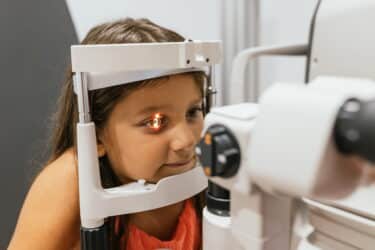
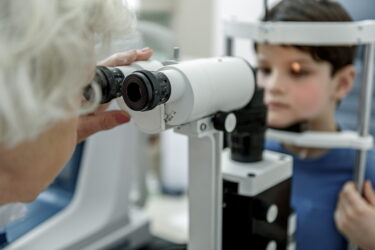
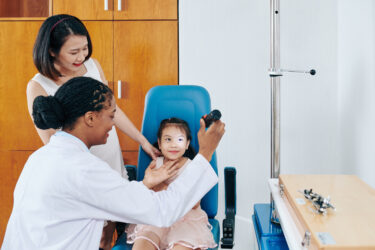
Although school-based vision programs (SBVPs) successfully provide eyeglasses to most students with uncorrected refractive errors, a significant number—particularly younger students and those with high refractive errors—require referral to community eye care providers, according to a study.

The retrospective study examined data from 97,107 students aged 5-22 who underwent eye exams after failing vision screenings.

Overall, 75% of students received eyeglasses through the SBVP, while 14.3% were referred to community providers for further evaluation. Referrals were more frequent among younger students and those in schools with higher socioeconomic disadvantage. High hyperopia (OR = 7.21) and high myopia (OR = 3.70) significantly increased the likelihood of referral. The most common reasons for referral included refractive error (42.1%), suspected amblyopia (26.6%), and uncorrectable vision (26.1%).

The study underscores that while SBVPs effectively address most uncorrected refractive errors, many students require specialized care.

Reference
Ambrosino CM, Guo X, Nguyen A, et al. Practices of a United States school-based vision program in referring children to community eye care. J AAPOS. 2025;104164. doi: 10.1016/j.jaapos.2025.104164. Epub ahead of print. PMID: 40058565.

Share

Related Content

  • Glaucoma

Glaucoma drainage devices provide meaningful IOP control in pediatric glaucoma

  • Retina Care 360

Cost analysis shows greater losses for pediatric versus adult retinal detachment repairs

  • Glaucoma

PreserFlo MicroShunt shows short-term benefit in refractory childhood glaucoma

  • Pediatrics

Virtual reality vision therapy shows modest improvement in children with intermittent exotropia

  • Practice Management

New review highlights urgent need to tackle adherence gaps in eye care throughout the patient life cycle

  • Myopia

Dietary patterns linked to myopia risk in children and adolescents

Share

Editor's Picks

  • Neurotrophic Keratitis

Topical insulin shows real-world benefit in neurotrophic keratopathy

  • Retina

GLP-1 RAs have protective effects against AMD

  • Retina

Four-month injection intervals appear safe for long-term stable nAMD

Advisory Board

Saad Ahmad, MD

Ahmad A. Aref, MD, MBA

Roomasa Channa, MD

David Chow, MD, FRCS(C)

Sally L. Baxter, MD, MSc

Neel R. Desai, MD

Nadia Haqqie, MD

Simon Fung, MD, FRCOphth

Sumit Garg, MD

Ross Lakhanpal, MD, FACS

Sanjai Jalaj, MD

Anton Kolomeyer, MD, PhD

Shan Lin, MD

Steven R. Sarkisian, Jr., MD

See All
Optometry360 Logo

Ophthalmology 360® is a dynamic digital platform dedicated to advancing the field of eye care.

Get to Know Us

  • Home
  • About Us
  • Media Partners
  • Advertising Policy
  • Our Advisory Board

Sign up for our Newsletter

Sign up for our Newsletter to get our newest articles instantly!

  • Privacy Policy
  • Advertising Policy
  • Medical Disclaimer
IHM Logo

2026 Ophthalmology 360 is a trademark of International Healthcare Media, LLC. All rights reserved

  • MedJournal360 Icon
  • RareDisease360 Icon
  • MyHero360 Icon
  • Optometry360 Icon
  • Ophtalmology360 Icon