

Optometry360 Logo White
  • Conferences
  • Videos
  • Podcasts
  • Quizzes
  • About
    • About Us – Mission
    • Content Awards
    • Media Partners
    • Business Team
    • Brand Ambassadors
    • Industry Council
    • Advisory Board

What are you looking for?

  • Anterior Segment
  • Cataract
  • Cornea and External Disease
  • Diabetic Macular Edema
  • Dry Eye
  • Early Onset Cataracts
  • Exclusives
  • General
  • Geographic Atrophy
  • Glaucoma
  • Industry News
  • Inherited Retinal Disease
  • IOLs
  • Neurotrophic Keratitis
  • Ocular Surface Disease
  • Oculoplastics
  • Optometry
  • Pediatrics
  • Practice Management
  • Presbyopia
  • Refractive Surgery/Vision Correction
  • Residents & Young Ophthalmologists
  • Retina
  • Retina Care 360
  • Retinopathy of Prematurity
  • Spotlight Series
  • The Interventional Glaucoma Project
  • The Ophthalmic Project
  • Trending Topics
Spotlight - The Future of Cryopreserved Amniotic Membrane in Oculoplastic Surgery
Optometry360 Logo White
  • Conferences
  • Videos
  • Podcasts
  • Quizzes
  • About
    • About Us – Mission
    • Content Awards
    • Media Partners
    • Business Team
    • Brand Ambassadors
    • Industry Council
    • Advisory Board
Home > Refractive Surgery/Vision Correction > Contact Lenses > Could Drug-Eluting Contact Lenses Replace Eye Injections?
  • Contact Lenses

Could Drug-Eluting Contact Lenses Replace Eye Injections?

Ophthalmology 360
Could Drug-Eluting Contact Lenses Replace Eye Injections?

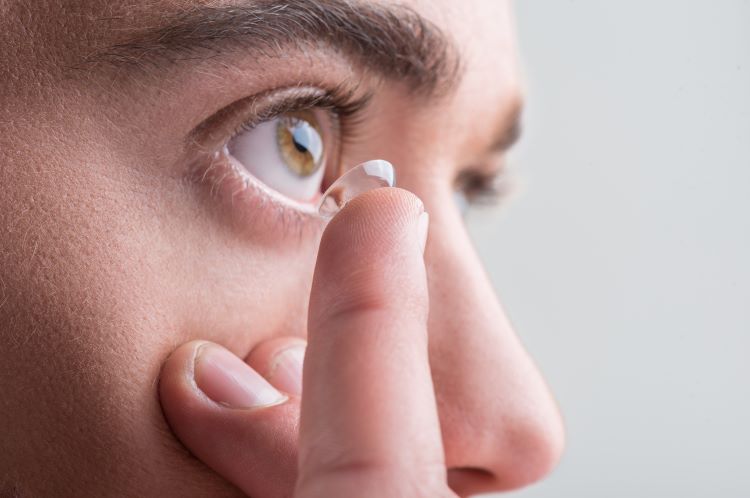
Drug-eluting contact lenses gradually release medication into the eyes. They are considered a promising alternative to eye drops, which are not always correctly administered by patients. Researchers from Massachusetts Eye and Ear and Boston Children’s Hospital are exploring uses of these contact lenses for harder to treat areas of the eye, including the retina.

Most retinal diseases require eye injections or implants, which patients want to avoid. In fact, 1 in 4 patients receiving eye injections do not return for follow-up injections due to fear of needles. Because of this, the researchers are testing use of the contact lenses for the dispersal of dexamethasone to treat inflammatory eye diseases.

Findings showed that the contact lenses safely delivered the drug in preclinical animal models of uveitis and macular edema. Specifically, they provided 200x the concentration of hourly eye drops and were as effective as injections.

The researchers hope to begin clinical trials in human patients in the following year.

You can read more here.

Share

Related Content

  • Contact Lenses

Blue-violet filtering contact lenses improve contrast sensitivity in low light and glare

  • Spotlight Series

Spotlight on ACUVUE®

contact lens
  • Optometry

Customize contact lens selection to avoid dropout in presbyopic patients

contact lens
  • Contact Lenses

Understanding contact lens wearers’ attitudes could help decrease improper use

  • Contact Lenses

Quiz: Contact Lens-Related Complications

  • Exclusives

Novel Visual Alignment Technology for Practice Growth

Share

Editor's Picks

  • Neurotrophic Keratitis

Topical insulin shows real-world benefit in neurotrophic keratopathy

  • Retina

GLP-1 RAs have protective effects against AMD

  • Retina

Four-month injection intervals appear safe for long-term stable nAMD

Advisory Board

Saad Ahmad, MD

Ahmad A. Aref, MD, MBA

Roomasa Channa, MD

David Chow, MD, FRCS(C)

Sally L. Baxter, MD, MSc

Neel R. Desai, MD

Nadia Haqqie, MD

Simon Fung, MD, FRCOphth

Sumit Garg, MD

Ross Lakhanpal, MD, FACS

Sanjai Jalaj, MD

Anton Kolomeyer, MD, PhD

Shan Lin, MD

Steven R. Sarkisian, Jr., MD

See All
Optometry360 Logo

Ophthalmology 360® is a dynamic digital platform dedicated to advancing the field of eye care.

Get to Know Us

  • Home
  • About Us
  • Media Partners
  • Advertising Policy
  • Our Advisory Board

Sign up for our Newsletter

Sign up for our Newsletter to get our newest articles instantly!

  • Privacy Policy
  • Advertising Policy
  • Medical Disclaimer
IHM Logo

2026 Ophthalmology 360 is a trademark of International Healthcare Media, LLC. All rights reserved

  • MedJournal360 Icon
  • RareDisease360 Icon
  • MyHero360 Icon
  • Optometry360 Icon
  • Ophtalmology360 Icon