
Optometry360 Logo White
  • Conferences
  • Videos
  • Podcasts
  • Quizzes
  • About
    • About Us – Mission
    • Content Awards
    • Media Partners
    • Business Team
    • Brand Ambassadors
    • Industry Council
    • Advisory Board

What are you looking for?

  • Anterior Segment
  • Cataract
  • Cornea and External Disease
  • Diabetic Macular Edema
  • Dry Eye
  • Early Onset Cataracts
  • Exclusives
  • General
  • Geographic Atrophy
  • Glaucoma
  • Industry News
  • Inherited Retinal Disease
  • IOLs
  • Neurotrophic Keratitis
  • Ocular Surface Disease
  • Oculoplastics
  • Optometry
  • Pediatrics
  • Practice Management
  • Presbyopia
  • Refractive Surgery/Vision Correction
  • Residents & Young Ophthalmologists
  • Retina
  • Retina Care 360
  • Retinopathy of Prematurity
  • Spotlight Series
  • The Interventional Glaucoma Project
  • The Ophthalmic Project
  • Trending Topics
Spotlight - The Future of Cryopreserved Amniotic Membrane in Oculoplastic Surgery
Optometry360 Logo White
  • Conferences
  • Videos
  • Podcasts
  • Quizzes
  • About
    • About Us – Mission
    • Content Awards
    • Media Partners
    • Business Team
    • Brand Ambassadors
    • Industry Council
    • Advisory Board
Home > Cornea and External Disease > Drug use–related endogenous endophthalmitis hospitalizations increase
  • Cornea and External Disease

Drug use–related endogenous endophthalmitis hospitalizations increase

Ophthalmology 360
Drug use–related endogenous endophthalmitis hospitalizations increase

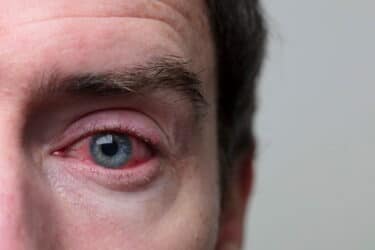
From 2003 to 2016, the rate of drug use–related endogenous endophthalmitis hospitalizations increased 4-fold in the United States, according to a study.

In this retrospective cross-sectional study, 56,839 patients admitted with a diagnosis of endogenous endophthalmitis from 2003 to 2016 were included. Of these patients, 13.7% (n = 7783) had a history of drug dependence or use. Patients who had a history of drug use were significantly younger and more likely to be men.

Endogenous endophthalmitis incidence associated with drug use increased from 0.08 per 100 000 in 2003 to 0.32 per 100 000 population in 2016

The incidence of endogenous endophthalmitis associated with drug dependence or use increased from 0.08 per 100,000 in 2003 to 0.32 per 100,000 population in 2016 across the United States.

The authors concluded that “clinicians should maintain a high index of suspicion for endophthalmitis when evaluating patients with intraocular inflammation in the setting of drug dependence or use.”

Reference

Mir TA, Papudesu C, Fang W, et al. Incidence of drug use–related endogenous endophthalmitis hospitalizations in the United States, 2003 to 2016. JAMA Ophthalmol. Published online November 05, 2020. DOI:10.1001/jamaophthalmol.2020.4741

Share

Related Content

  • Cornea and External Disease

Quiz: The impact of blepharitis and conjunctivitis on quality of life

  • Cornea and External Disease

Phase 3 trial of cenegermin-bkbj for PCED enrolls first US patient

  • Cornea and External Disease

Cornea specialists identify key clinical signs linked to microbial keratitis subtypes

Cornea Update: Corneal Dystrophies & Related Conditions with an Update on Genetic Assessment and Treatment
  • Cornea and External Disease

Preventing complications of superficial keratectomy

  • Conference Roundup

Phase 1/2 CLARA study shows AURN001 improves BCVA compared with standard of care for corneal endothelial dysfunction

  • Conference Roundup

Epioxa crosslinking system has positive outcomes at 30 months in patients with keratoconus

Share

Editor's Picks

  • Neurotrophic Keratitis

Topical insulin shows real-world benefit in neurotrophic keratopathy

  • Retina

GLP-1 RAs have protective effects against AMD

  • Retina

Four-month injection intervals appear safe for long-term stable nAMD

Advisory Board

Saad Ahmad, MD

Ahmad A. Aref, MD, MBA

Roomasa Channa, MD

David Chow, MD, FRCS(C)

Sally L. Baxter, MD, MSc

Neel R. Desai, MD

Nadia Haqqie, MD

Simon Fung, MD, FRCOphth

Sumit Garg, MD

Ross Lakhanpal, MD, FACS

Sanjai Jalaj, MD

Anton Kolomeyer, MD, PhD

Shan Lin, MD

Steven R. Sarkisian, Jr., MD

See All
Optometry360 Logo

Ophthalmology 360® is a dynamic digital platform dedicated to advancing the field of eye care.

Get to Know Us

  • Home
  • About Us
  • Media Partners
  • Advertising Policy
  • Our Advisory Board

Sign up for our Newsletter

Sign up for our Newsletter to get our newest articles instantly!

  • Privacy Policy
  • Advertising Policy
  • Medical Disclaimer
IHM Logo

2026 Ophthalmology 360 is a trademark of International Healthcare Media, LLC. All rights reserved

  • MedJournal360 Icon
  • RareDisease360 Icon
  • MyHero360 Icon
  • Optometry360 Icon
  • Ophtalmology360 Icon