Key Takeaways
- Older adults with dry eye had poorer sleep quality than controls, including shorter and lower-percentage deep sleep.
- Greater dry eye severity and prolonged video terminal use were associated with reduced deep sleep in elderly patients.
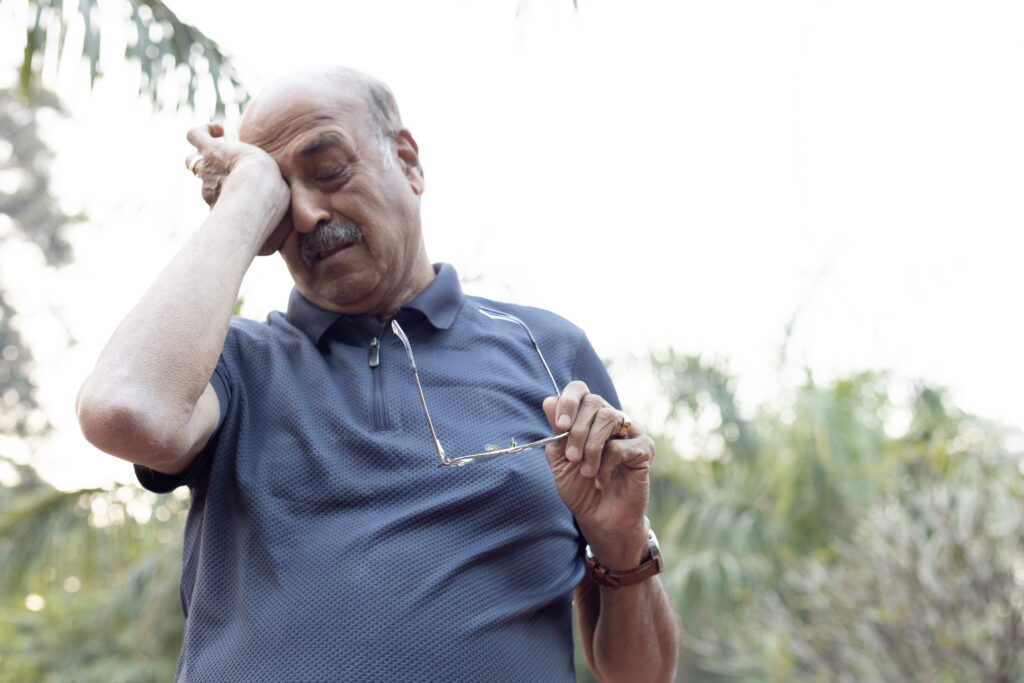
Elderly patients with dry eye have poorer sleep quality, with reduced deep sleep appearing to correlate with dry eye severity, according to a study.
Investigators evaluated sleep with the Pittsburgh Sleep Quality Index (PSQI) and wearable devices, as well as dry eye symptoms and ocular surface measures in 58 elderly patients with dry eye and 31 controls.
The dry eye group had significantly worse Ocular Surface Disease Index, fluorescein tear breakup time, corneal fluorescein staining, Schirmer I test, and PSQI scores than controls (all P < 0.01). They also had a shorter duration of deep sleep (P = 0.02) and a lower percentage of deep sleep (P < 0.01).
Among patients with dry eye, 69% had poor sleep quality and 94.8% slept fewer than 8 hours per night. Subjective sleep quality was significantly correlated with fluorescein tear breakup time and corneal fluorescein staining (P < 0.05). Deep sleep percentage was also associated with tear breakup time (P < 0.05) and corneal staining score (P < 0.01).
The study also found that prolonged video terminal use was linked to a lower deep sleep percentage (P < 0.01) and worse tear breakup time (P < 0.01).
Reference
Li A, Wu Y, Yin Z, et al. Association between dry eye disease and poor sleep quality in the elderly. BMC Ophthalmol. 2026;doi: 10.1186/s12886-026-05075-2. Epub ahead of print. PMID: 42414992.
Related Content