
By Savak Teymoorian, MD, MBA, and Deborah Ristvedt, DO
The contents of this article are informational only and are not intended to be a substitute for professional medical advice, diagnosis, or treatment recommendations. This editorial presents the views and experiences of the authors and does not reflect the opinions or recommendations of the publisher of Ophthalmology 360.
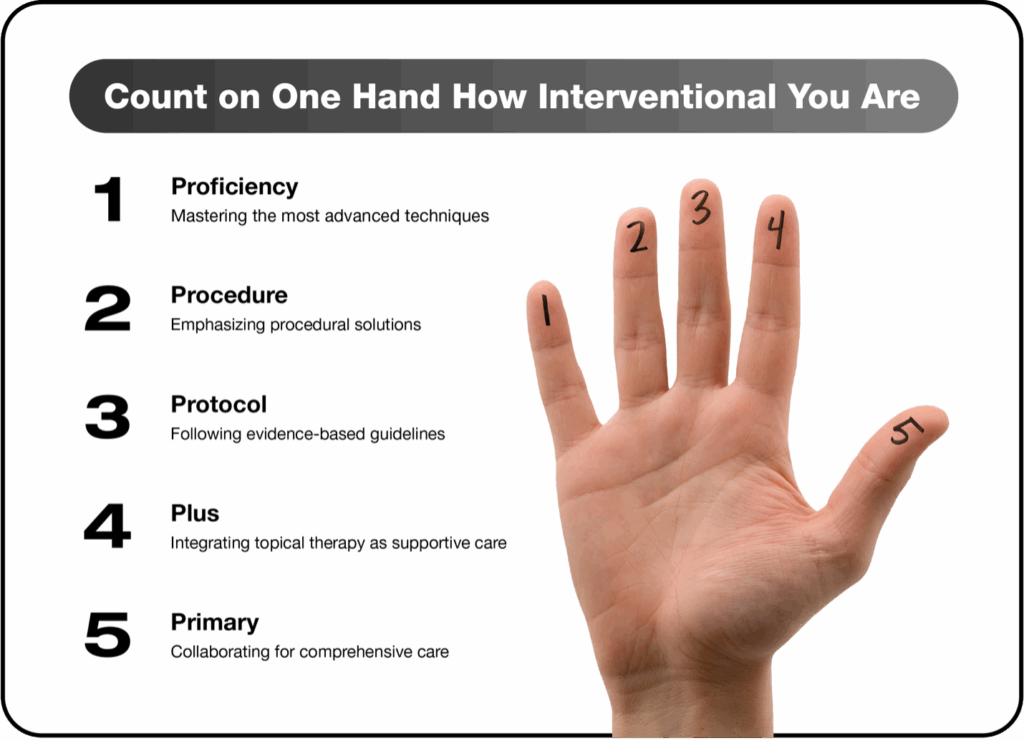
Adopting the “Team 5P” framework is essential for glaucoma surgeons committed to transitioning from conventional treatment approaches to a more proactive and interventional strategy. This article outlines how the 5 pillars of proficiency, procedure, protocol, plus, and primary can serve as a monitor for surgeons aiming to achieve excellence in interventional glaucoma (IG) care.
- Proficiency: Mastering the Most Advanced Techniques
A true IG surgeon demonstrates proficiency by continuously updating their skills and knowledge. Mastery of advanced procedural techniques, including procedural pharmaceuticals, selective laser trabeculoplasty, and microinvasive glaucoma surgery, is crucial. Staying abreast of technological advancements ensures that surgeons are prepared to offer the best possible outcomes to their patients, utilizing the most effective and least invasive methods available.1,2
- Procedure: Emphasizing Procedural Solutions
Procedure-first thinking should be at the heart of an IG surgeon’s practice philosophy. This approach prioritizes procedural interventions over topical therapy (eye drops) as first-line treatments, as procedural solutions often provide more durable and effective management of glaucoma.3,4 Adopting this mindset helps shift the focus from managing symptoms to actively controlling the disease progression.
- Protocol: Following Evidence-Based Guidelines
IG surgeons rely on robust, evidence-based protocols to guide both the timing and type of interventions employed. These protocols prioritize a procedure-first approach, where procedural interventions form the primary treatment pathway. In this model, topical drops are reserved for supplemental use or as a temporary bridge—not as the mainstay of therapy. This structured approach ensures that procedures are performed at optimal times to maximize patient benefits and minimize risks. Adherence to these guidelines, as outlined in the IG consensus protocol,5 is key to maintaining consistency in treatment outcomes and enhancing the overall quality of care.
- Plus: Integrating Topical Therapy as Supportive Care
In the Team 5P framework, topical therapy is not the primary solution but is used strategically to bridge gaps between procedures or to enhance outcomes from procedural interventions. This redefines topical therapy as supportive care, supplementing procedural interventions, rather than being a standalone and/or primary treatment, thus supporting a more sustainable long-term management strategy for glaucoma.3
- Primary: Collaborating for Comprehensive Care
Collaboration with primary eye care providers is essential for delivering comprehensive and continuous care. IG surgeons work closely with optometrists and other eye care professionals to ensure that every aspect of the patient’s care journey is managed effectively, from initial diagnosis to postoperative recovery and beyond. This cooperative approach fosters a holistic view of patient care, crucial for successful outcomes.6
Conclusion
The Team 5P framework provides a comprehensive outline for assessing whether a glaucoma surgeon truly embodies the principles of IG. By focusing on proficiency, procedure-first, protocol adherence, plus supplement/bridge therapy, and primary care collaboration, surgeons can elevate their practice and offer their patients the most advanced and effective treatment options available. Embracing these pillars not only transforms patient care but also sets a new standard in the field of glaucoma treatment.
IG calls to action
- Master new techniques: stay at the forefront of glaucoma care.
- Procedure over prescription: prioritize surgery to control glaucoma.
- Follow the protocol: ensure optimal outcomes with evidence-based practices.
- Drops as support: use pharmacological treatments effectively between procedures.
- Collaborate for success: work with primary care providers for comprehensive care.
Savak Teymoorian, MD, MBA, is a board-certified ophthalmologist who specializes in both premium cataract surgery and interventional glaucoma at Harvard Eye Associates.
Disclosures:
- AbbVie: Researcher, consultant, and speaker
- Glaukos: Researcher, consultant, and speaker
Deborah Ristvedt, DO, is a board-certified ophthalmologist who leads the Vance Thompson Vision facility in Alexandria, Minnesota.
Disclosures:
- Alcon: Speaker
- AbbVie: Consultant and speaker
- Glaukos: Consultant and speaker
- Rayner: Speaker
- BVI: Consultant
- Osheru: Consultant
- Tarsus: Consultant
- Sight Sciences: Consultant and Speaker
References
- Ahmed IIK, De Francesco T, Rhee D, et al; HORIZON Investigators. Long-term outcomes from the HORIZON randomized trial for a Schlemm’s canal microstent in combination cataract and glaucoma surgery. Ophthalmology. 2022;129(7):742-751. doi:10.1016/j.ophtha.2022.02.021
- Gazzard G, Konstantakopoulou E, Garway-Heath D, et al; LiGHT Trial Study Group. Selective laser trabeculoplasty versus eye drops for first-line treatment of ocular hypertension and glaucoma (LiGHT): a multicentre randomised controlled trial. Lancet. 2019;393(10180):1505-1516. doi:10.1016/S0140-6736(18)32213-X
- Rajanala AP, Prager A, Tanna AP. Association of efficacy of eye drop instillation and long-term outcomes in patients with glaucoma and ocular hypertension. Presented at the 2020 ARVO Annual Meeting. May 16, 2020, Virtual.
- Oltramari L, Mansberger SL, Souza JMP, et al. The association between glaucoma treatment adherence with disease progression and loss to follow-up. Sci Rep. 2024;14(1):2195. doi:10.1038/s41598-024-52800-2
- Funke CM, Ristvedt D, Yadgarov A, Micheletti M. Interventional glaucoma consensus treatment protocol. Expert Rev Ophthalmol. 2025;20(2):79-87. doi:10.1080/17469899.2025.2465330
- About glaucoma. US Centers for Disease Control and Prevention. May 15, 2024. Accessed August 26, 2025. https://www.cdc.gov/vision-health/about-eye-disorders/glaucoma.html#:~:text=Facts%20about%20glaucoma,your%20vision%20health%20is%20key
Related Content