
Key Takeaways
- Patients with Leber hereditary optic neuropathy showed stronger blue light–mediated pupillary responses than those with primary open-angle glaucoma despite similar structural and functional damage.
- Post-illumination pupillary response after blue light stimulation differed significantly between POAG and the other groups.
- Findings suggest preserved intrinsically photosensitive retinal ganglion cell function in LHON compared with POAG.

Despite having similar degrees of macular structural and functional damage, patients with Leber hereditary optic neuropathy (LHON) demonstrated better blue light–mediated pupillary responses and post-illumination pupillary response than those with primary open-angle glaucoma (POAG), according to a study.
The study included 8 patients with POAG, 9 patients with LHON, and 14 healthy controls. Participants with POAG had Humphrey visual field mean deviation, circumpapillary retinal nerve fiber layer thickness, and ganglion cell/inner plexiform layer thickness comparable to those measured in the LHON group.
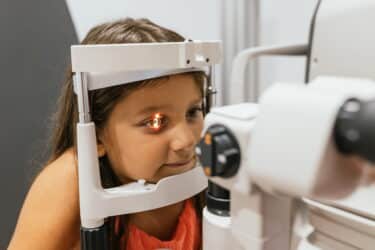
Pupillary responses were measured with a handheld electronic pupillometer, recording the contralateral pupil during a 7-second baseline, 10 seconds of red and blue light stimulation, and 40-second post-stimulation periods for each.
The ratio of pupil diameter measured 6 seconds after blue light offset, but not after red light offset, was significantly larger in POAG patients than in the other groups.
In addition, the difference between baseline pupil diameter and the mean pupil diameter during the 30-second post-illumination period was greater with blue versus red stimulation in POAG patients compared with both LHON patients and controls. Maintenance of pupillary constriction during blue light stimulation was also significantly reduced in the POAG group.
Reference
Iwaki Y, Ueda K, Mori S, et al. Difference in pupillary response to red and blue color stimuli between glaucoma and Leber hereditary optic neuropathy patients with comparable central visual dysfunction. Doc Ophthalmol. 2026;doi: 10.1007/s10633-025-10071-w. Epub ahead of print. PMID: 41553591.
Related Content