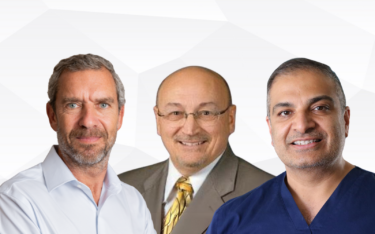
In this special episode of The Spotlight Series Podcast, host Mario Nacinovich speaks with Inder Paul Singh, MD, of Eye Centers of Racine & Kenosha, on wide-ranging topics in glaucoma in honor of Glaucoma Awareness Month. The pair speaks about the critical need for early diagnosis, the rise of interventional glaucoma management, and treatment options that are offering improved patient outcomes and compliance.
Mario Nacinovich:
Welcome to The Spotlight Series Podcast, where we share evidence-driven perspectives on complex conditions impacting patients’ daily lives. I’m your host, Mario Nacinovich. Today is a special Glaucoma Awareness Month edition of our podcast series. We’re focusing in on primary open-angle glaucoma, advances in diagnosis, treatment, and interventional innovation, with a particular emphasis on clinicians that can optimize early detection, personalized therapy, and thoughtfully integrate newer procedural options. Joining me today is a very good friend, Dr. Inder Paul Singh, an ophthalmologist, a Wisconsin native, and the president of the Eye Centers of Racine & Kenosha. Dr. Singh is a recognized expert in glaucoma management and interventional glaucoma surgery. Dr. Singh, welcome to the program.
Inder Paul Singh, MD:
Hey, Mario. Thanks for having me, my friend. Appreciate that.
Mario Nacinovich:
This is our Glaucoma Awareness Month edition. Dr. Singh, to set the stage, how do you characterize the current landscape of primary open-angle glaucoma in terms of prevalence, typical presentation, and the burden it places on patients and the overall healthcare system?
Inder Paul Singh, MD:
Yeah, glaucoma is a second leading cause of blindness around the world and in the US as well. It’s a very common issue that we’re facing, unfortunately. It’s POAG, primary open-angle glaucoma, basically just means for everybody out there that the eye, it’s like a water balloon. The eye, it needs fluid to keep the shape of that eye. The drainage system in the eye, where the fluid leaves the eye into the bloodstream, is just getting blocked. It’s not working as well. The fluid builds up in the eye, pressure goes up, and that could be a risk factor for developing nerve damage, which is the nerve in the back of the eye, the optic nerve that connects the eye to the brain. Basically, when the pressure goes up in the eye in a lot of these patients, or in some people who have normal pressure for their eye, it’s just too high, the nerve becomes damaged.
The problem with that is we have no symptoms for a majority of our patients. Patients are actually walking around every day with good distance vision. They never see a difference because when we see glaucoma damage occurring, it’s insidious. It’s slow and it progressively gets worse and we lose peripheral vision first for a majority of the patients, not always, but a majority of patients lose peripheral vision. Eventually, it can lead to central vision. But for most people, they can’t even detect it. There’s no pain, there’s no redness for a majority of patients. Unless the pressure is extremely high, a majority of patients don’t know about it. Like high cholesterol or high blood pressure for a lot of people. They just don’t know until they go to doctor’s office as well. I think what’s the problem would be the biggest issue in glaucoma presentation is that there is no presentation for the patient.
It’s more us as eye care providers when you go to your eye doctor’s office and we do the testing, we check the pressure, we look at the nerve, we do the visual field exams, and everything else. Then we say, “Oh wow, you have nerve damage, you have glaucoma.” That’s the biggest problem we face is the lack of symptoms and patients’ lack of awareness that they have to go see their eye care provider.
Mario Nacinovich:
I think that’s what we have to underscore here in Glaucoma Awareness Month. It’s that asymptomatic progression, that late presentation. Certainly, we want both ophthalmologists, optometrists, general practitioners, anyone in the listening audience to understand. We want every level of clinician to understand and patients to fully appreciate that in the day-to-day management of this, there are key clinical features, there are key clinical patterns that are observed, but the only way to understand that is to really go and get diagnosed. It’s those diagnostics, it’s that early detection that matters most. For clinicians in the comprehensive ophthalmology or optometry side of things, Dr. Singh, what are the most critical components of a contemporary workup beyond IOP alone?
Inder Paul Singh, MD:
Yeah. To your point earlier, before we get to that, the one thing I want everyone to know is that this is a progressive, irreversible disease. In other words, once we lose that nerve in the back of the eye, we cannot, at least now, hopefully someday, we cannot reverse that damage. The further damage we have, the harder and harder it is to stop whatever we have left from getting worse. In other words, my goal, when I tell my patients, is if someone that comes in with mild or advanced glaucoma, my goal is to not let them get worse. But it’s harder to stop it from getting worse when they’ve already had advanced disease. To your point, that’s why it’s so important to come in, get your eyes examined.
But in terms of the question was what are the biggest diagnostic factors? To me, the most important thing is for us to do a full eye exam. That means we have to check your eye pressure, but the pressure is tricky. There are some people who have pressures that are “normal.” We talk about the eye being a water balloon; the eye has to maintain this kind of pressure in the eye. Well, the pressure can range and everybody’s different. There are some people with a pressure of 10 to 21 is normal. Some people, the pressure of 15 is too high for that patient. Some people with pressure of 25, which is high, is actually okay for them. They haven’t developed any nerve damage yet. Pressure alone is not enough. What we have to look for is how does the nerve look? We look at the drainage system of the eye called a gonioscopy to make sure that the drain is functioning normally, make sure there’s no other risk factors for why the pressure may go up and down.
We look at the nerve in the back of the eye and make sure the nerve itself, we can see signs of nerve damage by the nerve fibers that enter the nerve can become thinner. We can actually see something called cupping where the surface of the nerve itself, when we have glaucoma damage, it’s like someone scooping out the nerve. When the nerve becomes damaged, it kind of caves in and it has a certain appearance, which is called a cup. That we can see that just by looking at the back of the eye. We also have to do other measurements. There’s something called pachymetry, which is a thickness measurement of the cornea. There are studies that show us, even if you have high pressure, there are some risk factors. Those people who may have high pressure that eventually develop glaucoma tend to have very thin surfaces of the eye.
That can be correlated to maybe having a thinner back of the eye where the structures that support that nerve may not be as thick. That could be a risk factor for glaucoma. People have very thin surfaces of the eye. We may be under appreciating the pressure. We may be undervaluing the pressure, maybe actually higher than what we’re getting. There’s other diagnostic testing like something called corneal hysteresis. There’s a machine that measures the shock-absorbing ability of the eye. It’s an air puff test that cell tells us, okay, if someone has, let’s say, a low shock-absorbing ability, a low hysteresis number, below 10, let’s say, that patient may not be able to withstand the pressure fluctuations that we see in patients who have glaucoma. Or just in general, if the pressures are normal, but they have a low hysteresis, a low thickness of the cornea, that’s a patient who actually still needs lower pressure despite it being “normal” as well.
Those are other diagnostic tests that help us as well. Then we have objective ways to measure the peripheral vision we just mentioned, right? There’s visual field testing. There’s different ways of measuring. There’s something called a bowl perimetry. We look in this big bowl and we shine some lights in your periphery and you press the button when you see the lights. That helps us diagnose and really map out the peripheral vision. Because in patients who have glaucoma, like we said earlier, they lose peripheral vision, but you can’t detect that loss of peripheral vision early on. It’s so subtle that patients can’t look and cover one eye and say, “Oh, I can see the periphery.” It’s not as easy as that. There’s other newer ways of testing peripheral vision, right? We have something called goggles. We have these headsets now that allow us for people who have a hard time with neck issues or have a difficult time taking that other automated perimetry test.
We have goggles that allow us to do the same thing, but sitting in the back of your chair, you can relax and don’t even have to worry about putting your neck forward as well. But those are called visual field-testing. We have different types of visual field-testing. We can test way, way out there. Or we can test near the center of the vision, and we can test with different type of patterns and different parameters to really highlight different types of glaucoma as well. Then also we have nerve analysis. We have scans that can give us a measurement of how thick are the nerves in the back of the eye. Even before we lose side vision, even before we lose our visual field, we can see loss of our nerves in the center of the back of the eye called the macula, called the ganglion cell.
We also can lose those nerve fibers around that optic nerve. As the nerves enter the optic nerve, we can see thinning in those nerves. Sometimes we only see any loss of peripheral vision, but we see nerve thinning in that test. That’s another sign of glaucoma before we lose your visual field. That’s the idea, detecting glaucoma as early as we can to stop it from ever getting to the point where we lose any type of vision function. So those are the very basic tests. Then we have a newer test, sorry, Mario, taking so much time, but we have even newer tests that are out there, which are genetic testing too. We have genetic tests that allow us to look at what are the risk factors from a genetic basis. There’s a company that has a cheek swab, it’s called site score, that can we take a cheek swab, send it to a lab, and they can compare that to two million genetic variants to see what is a risk profile from 0 to 100.
That’s been helpful to me to a patient, let’s say, who has borderline pressures, maybe they don’t have significant damage yet, but I do this test and it shows me a high risk score. I’m going to be more aggressive early on in that patient. If they have a low risk score, I might feel a little bit less like we have to be aggressive. We can maybe wait and observe them as well. Those are all the unique diagnostics that give us risk assessments of do we treat, do we not? How aggressive do we want to be? How low do the pressures have to be? And those are all helpful tools.
Mario Nacinovich:
Dr. Singh, in terms of integrating all these structural and functional testing into a practical, real-world diagnostic algorithm, is this something that starts at the initial visit with you? Is this something that continues any subsequent visit? What’s the structure and the timing of when all this testing is taking place for your fellow clinicians that are out there that may not have all of these tools available to them and certainly to the patients that may be listening that may have glaucoma or a loved one with glaucoma? How often should their practitioner be looking at some of this testing?
Inder Paul Singh, MD:
Well, it depends. Let’s say you have a glaucoma consult, it’s your first visit. I think everybody needs to have a good gonioscopy. First of all, pressure check. Number 1, check your pressure. I usually use Applanation, but there are other ones now. We have kind of pneumotonometry, we have rebound tonometry, different versions, but have it be consistent the same time. It’s the same type of way you check every time. But also I think you got to make sure we do a gonioscopy. Look at the angles. We want to look at the pigmentation. Are they not just narrow, but looking at the type of angles that we have because nowadays a lot of our treatment options are involving angle-based procedures, where we can open up the drain with different technologies, drug delivery, we have ways to deliver medications. Getting a good gonioscopy is important and that anybody can do.
Looking at the slit lamp, looking at the lens thickness and seeing is the lens could be that pushing forward, causing more pressure rise over time. Then using your 90 or your 60 area, whatever your diopter lens, 78 diopter lens, and looking at the optic nerve, just physically looking at the nerve, we’ve lost that art. We look at OCTs and all these other diagnostics, but those three things, checking your pressure, looking at the angle and looking at the optic nerve are just basic things you can do. And you can look at that…
Mario Nacinovich:
Foundational.
Inder Paul Singh, MD:
Foundational, basic. Everybody has that. It’s just a slit lamp and a lens and nothing else you need. If you look at the optic nerve, we got to remember to look at the basic things, right? Look at the rim tissue, look at the cupping, look at the vessels. Do we see peripapillary atrophy?
Are we looking at thinning around the nerve? What does a rim look like? Do we see any disc hemorrhages? I always look at that as the hemoglobin A1c of glaucoma. If you see a disc hemorrhage, that’s a sign that, hey, there’s probably some nerve damage going to happen over time, especially if they’re not diabetic. Then we also have to look, of course, the disc size. A large disc is going to give you a larger cup and that can be normal. The size and the shape of the cup is important. Sometimes you have a cup that’s large, but it looks clean and symmetric and you have a good rim. That might be something that’s physiologic, normal nerve. But someone who has an elongated cup where it’s kind of thin and inferiorly and has a little bit of a notch there, these are all signs of glaucoma.
You can see a lot still just by looking at the eye and not doing anything else. With that said, I still personally, if it’s a new glaucoma consult, besides those things, I’ll do a pachymetry for sure. Every patient who is a first consult, I’ll do that hysteresis measurement as well for every patient. I’ll do at least a visual field on that first visit because I want to know staging. We can’t stage glaucoma without doing a field to know how advanced the glaucoma is. Is it mild, moderate, severe that based upon the ICD-10 guidelines, it’s based upon field loss. That’s why that’s my first-line, first treatment now or first exam. I will have them come back for an OCT very soon after that and do a DFE at least. Make sure we look at the OCT, and also look at the DFE the next visit, to make sure that we have that documented as well.
Once you get those, you can get a good understanding of what’s going on for the patient. But a lot of times you don’t know that one or second visit, but you have all the diagnostics as a baseline and then you can have them come back for follow-up. I’ll do multiple visual fields in that first year. The reason why is because we want to make sure we have enough visual fields to then do what we call glaucoma progression analyses. We want to see are things changing? Well, you need at least 3 visits to get a good baseline glaucoma field, visual field, to then be able to compare in the future. I tried that first year to get a few fields and it takes a couple fields, 2 or 3 even more, if you look at data, to get reliable visual fields. A lot of our patients suck, myself included, at taking visual fields.
It’s not easy, man. Have you ever tried a field, Mario? Have you done it?
Mario Nacinovich:
I have. I have. I did wonderful on it, but I certainly have heard the horror stories and certainly…
Inder Paul Singh, MD:
It’s stressful.
Mario Nacinovich:
…The disclaimers upfront in terms of what you should expect and how long it’s going to take can be cumbersome to some.
Inder Paul Singh, MD:
Absolutely. That’s why a lot of times if you react based upon the first visual field…I had a patient literally, and I swear to God, right before I came in this room, I had a glaucoma consult, came in for ocular hypertensive consult. Pressures were borderline, hysteresis was thick, pachymetry are healthy, pachymetry was thick, nerves didn’t look too bad, but the field has some funky neuronasal arcuate defect, but it’s the first time the patient took it again. I had them tell the patient, “I’m going to have you come back in about a few weeks. Let’s repeat it again to be safe.” I’ve done that a lot. You’d be amazed at how many people take it at the second or third time. All of a sudden the fields are remarkably normal all of a sudden. That’s because they’re a better test taker.
These are all the little things that all nuances that we have to appreciate. But the bottom line, that first visit, those are the key, key components that I use for any of my glaucoma evaluations. Then of course, history taking is huge too. Family history and other risk factors for glaucoma systemically.
Mario Nacinovich:
Anything in your mind in your experience that should trigger earlier or more intense monitoring?
Inder Paul Singh, MD:
If they have a low hysteresis, that’s a big fan of like, “Hey, that’s something I’m going to monitor more often.” especially if I’m not treating them. The severity, if they’re more disease, if there’s more advanced glaucoma, more loss of visual field, that’s someone you got to see more often. Pseudoexfoliation, people who have conditions like that where they can spike up very suddenly. People who have pseudoexfoliation glaucoma, they tend to have those moments where they come, boom, way up. I make sure that we have them come more often, do more testing just to make sure we’re not catching them at a moment where they may spike. That’s why I also use eye care at home or other home tonometry kits as well.
I had a patient today who called me again who said, “Hey, doc, I need to come in. My pressure’s in the upper 30s.” I’m like, “Well, okay, fine. Come in.” The pressure’s actually 42. I’m like, “We’re going to set you up for surgery now.” It’s important to also recognize that we can’t catch everyone’s pressures at that moment when they’re actually high and it can fluctuate any time of the day. That’s why it’s so hard. For those people who I think have a risk factor for fluctuating their pressures, pigmentary glaucoma, people who have a condition where their pigmentation of the iris is sloughing off and blocking the trabecular meshwork, like those patients have pigmentary glaucoma, those who have secondary pigmentary dispersion syndromes, those are people who I’ll have them come more often. People have steroid-induced glaucoma; I’ll have them come more often. These are all secondary glaucomas where we want to make sure that we check them more often as well. Again, of course, if they’re more advanced, I’ll have them come more often as well.
Mario Nacinovich:
No, and I appreciate that because I think when we think about Glaucoma Awareness Month over the time course of our careers, we’re always thinking about that undiagnosed patient. But certainly there are individuals that are beyond the classic criteria for primary opening glaucoma, these secondary glaucomas that we also be raising awareness about as well.
Inder Paul Singh, MD:
Family history, so if you’re out there, if you’re a patient out there or if you’re a doctor who has patients who have a strong family history, that’s a big thing too as well. If your mother, father, primary relative has it, you also want to ask questions on, okay, what type of family histories? Not just my mom, their dad, or grandmother had it. Did they lose vision from glaucoma? Did they ever have to have surgery for glaucoma and what age they develop glaucoma? These are all the things that you want to look at and as well as the age. If I have a young patient with significant feel loss, I’m much more scared about that patient than someone, again, not to say that someone’s too old to be scared about, but if someone’s 85 and has a nasal step, I’m much less scared of that patient losing vision in their lifetime than someone is 55 and has a nasal step. That’s also the age that makes me concerned as well.
Mario Nacinovich:
Well, let’s talk about an area that you and I have discussed quite a bit over the last several years, and that’s interventional glaucoma and visualization. Turning to interventional glaucoma, minimally invasive and microinvasive approaches have really been gaining momentum. You have been at the forefront of many of the conversations leading the way in many of them. How do you define the role of interventional glaucoma to the broader therapeutic continuum for primary open-angle glaucoma?
Inder Paul Singh, MD:
Yeah, no, this is a great topic. I think there’s a lot of misunderstandings of what interventional, or IG, interventional glaucoma means. To me, it’s not about rushing to surgery or pushing any type of device or any type of technology. It’s about appreciating that earlier detection, earlier intervening or whatever that means is important. Understanding compliance and patient-related issues are significant enough to be a risk factor for progression. Meaning, if I can get aggressive with my pressure reduction, and do it as early as possible and yet keep patients with the highest quality of life, that’s in a nutshell what interventional glaucoma means. It means utilizing multiple different technologies along the pathway, along that journey of that patient, meaning whether it’s a drop, whether it’s doing SLT. First-line SLT I will talk about is for me by far what I do. I do first-line SLT.
Then we have drug delivery, we have minimally invasive glaucoma surgeries, we have traditional surgeries, we have other lasers. Then we have also drops that are there if we need to, right? We do have drops available to us if we need to, but the idea is not to wait, wait, wait, wait, wait, and then be more aggressive until it’s obviously progressing. The fields look worse. Or we see an obvious OCT loss. It’s saying, “Hey, this is a patient who has some type of signs or symptoms of glaucoma, but then more importantly, they’re having compliance-related issues.” Example, patient comes in, let’s say you’re a doctor, had latanoprost on the eye every night. Patient comes in, their vision is coming and going. They may say, “Hey, do you have samples? I have a hard time remembering.” “Here’s a sample, see it back in 6 months.”
That’s the kind of patient who’s telling you in so many ways, “I’m not doing a good job, doc.” But we sometimes don’t listen. That’s the kind of patient you say, let’s do something to get you off that topical latanoprost. Even if the visual field hasn’t gotten worse, even if the pressure is not super high, let’s be aggressive now, or not aggressive, but let’s be alert to saying, “Hey, let’s not wait for that patient to get worse before we do something more, like an SLT or offer a stent or a canaloplasty or a drug delivery, whatever it might be.” That’s the kind of, I think, appreciation of change in my philosophy and my world, because man, Mario, I’m telling you, after being now in glaucoma treatment world for 20-plus years, I’ve seen enough people get worse on my watch. I don’t care who you are, how good of a glaucoma surgeon or treatment you are, anybody who’s treating glaucoma will have patients who get worse than them.
It’s the worst feeling when you think you’ve done a good job for these patients. We want to save these patients’ visions, but yet they come back and be like, “Oh, I missed it, man. I waited too long, or I didn’t realize that patient was not controlled.” I’ve seen it too often. If the problem is, it’s like a boulder. I tell my patients all the time, imagine if you’re at the top of a hill and you’re trying to stop a boulder from going down that hill. It’s easier to stop that boulder if it hasn’t started yet, but when that boulder’s running down that hill and you’re at the bottom of that hill, it’s going to run you over. That’s how I tell patients with glaucoma, “I got to stop you up here. If I’m waiting down low, I’m screwed.” That’s why it’s so important to recognize we have to be more aggressive, appreciate compliance with our issues as early as possible.
We can now treat people aggressively and keep them with the highest quality of life because of all these different technologies. That’s in a nutshell what glaucoma and interventional glaucoma means to me at least.
Mario Nacinovich:
I think you used the term there aggressively, but I think we need to change the verbiage of that just a little bit for glaucoma awareness month, treat patients appropriately. Because where they are at the stage they are…
Inder Paul Singh, MD:
That’s a good question.
Mario Nacinovich:
…They certainly need to be treated appropriately because certainly in our time together, we know that, and your boulder analogy is a great one, day after day seeing non-compliance in terms of these patients. It turns into the Sisyphus story where you’re now having to roll that boulder back up the hill to try and get those patients to be adherent to whatever next medication is evolving in terms of the therapeutic regimen.
Inder Paul Singh, MD:
No, I was going to say, I was just saying, I love that idea of saying aggressive, probably it’s more appropriate. It’s more aggressive from a reduction of IOP. But luckily we don’t have to be aggressive with the effect on their daily functioning. We can actually do these procedures that allow them to maintain a high quality of life, minimal effect on their daily functioning, but yet still be aggressive from our pressure reduction. To your point, I think that’s exactly right. We got to use the word aggressive in an IOP, but not to say we’re being aggressive with how we treat them necessarily. That’s a good point.
Mario Nacinovich:
Absolutely. Now there has been an amazing evolution in some areas and an amazing revolution in other areas of technology. How has access to BVI Medical’s Leos, an advanced laser endoscopy ophthalmic system designed to deliver a more integrated and intuitive approach to endoscopic cyclophotocoagulation (ECP), enhanced your intraoperative visualization and optimize laser delivery for when you’re doing these procedures?
Inder Paul Singh, MD:
Yeah. First of all, I think that the ECP procedure, endocyclophotocoagulation, with the Leos, that whole procedure has been around for a while, but what Leos has done is taken it to another level. Just to back up, I think ECP was probably the original MIGS, in my opinion. It was a minimally invasive glaucoma surgery that was done in a very efficient time period, which had very little in terms of their negative adverse events on their quality of life afterwards. But yet, I think it was so ahead of its time, we didn’t know what to do at the time. But now I think we’re actually at a time where we realize and appreciate the benefits of doing it even in the more mild to moderate patients. What we’ve seen in MIGS now in general, or any glaucoma surgery, any cataract surgery doesn’t matter. The view is key.
If you cannot see what you’re doing, you do not know what you’re doing, what you’re treating. It’s not safe. I don’t care if it’s a stent, if it’s canaloplasty, if it’s a goniotomy, or if it’s a cataract procedure, we have to know and see our tissues. Although the predecessor to the Leos did give us a decent view, there were some times where it was hard to see. I couldn’t see the tissues as well. Where was the ciliary process? Did I do enough of the laser to completely paint that ciliary process? The Leos just take it to another level. The quality of the image of the angle and of the cellar process of the sulcus is just incredible. Now, right away, I can see as soon as you enter, bam, there’s your beautiful ciliary processes. The efficiency, of course, has gone up, but I feel more confident that I know exactly what I’m treating.
My endpoints are clear. I do think that part of the variability of ECP in general is if you don’t have a consistent ablation of those ciliary processes, you may have some variability and results. So far, the ones that we’ve done with the Leos, we have very consistent responses. In fact, amazing responses. It’s a great procedure to add onto other MIGS procedures. It can be done as a standalone, just ECP alone. We do it with cataract surgery, or we can do it along with other MIGS procedures, which is so nice because some of the LCDs don’t allow us to combine multiple MIGS procedures, but with the ECP, it’s allowed us to combine it with our traditional conventional outflow MIGS procedures. Why that’s important is because we know mechanism of action makes a difference. What’s nice about ECP is that it’s an additive IOP reduction to any other conventional MIGS procedure.
We’re helping outflow with your stenting, canaloplasties, your goniotomies, whatever you do, but then you can also decrease inflow with the ECP machine. What I love about the Leos is it’s so versatile in terms of the type of patients, in terms of how we do it with mild, moderate, severe patients. How we do it with combination of other procedures and other MIGS procedures as well. I’ve found it very useful for that. I think to your point earlier, the view really to me was the big, big change. Being able to see a larger screen now, not that smaller screen, a beautiful IHD view of the ciliary sulcus, feeling much more comfortable, more confident as we treat. Knowing exactly what an endpoint is.
Mario Nacinovich:
You mentioned several times about MIGS and expanding options. Glaukos has led many of the early and ongoing innovations in MIGS, including technologies such as iStent and sustained release implant, iDose TR. How have these options reshaped your approach to primary open angle glaucoma treatment across the disease spectrum?
Inder Paul Singh, MD:
Yeah, I think in general, having all these different technologies allows us to really feel comfortable intervening earlier. Remember, when you have no good options, you don’t think about it. We didn’t even think about surgery in a mild patient who’s on one medication, because we didn’t want to take the risk of causing these adverse events with a trabeculectomy or a tube surgery, etc. Or even let’s say ablation externally. We waited and waited and waited. But then when iStent came out and now with iStent infinite with the 3 as a standalone stent or with the iDose now giving us drug delivery, travoprost delivery for multiple years even, we now have these safer approaches that are significantly effective and especially in those mild to moderate patients. For me, what it’s done is made me appreciate that, hey, first of all, we don’t have to wait till someone’s more moderate or severe.
We don’t have to wait till there are multiple four or five different drops before we say it’s too many drops for that patient. The definition of what is considered maximum tolerated medical therapy has also changed. You have a patient who’s on 1 or 2 meds, and they’re already showing you signs that they’re having compliance issues with cost, side effects, forgetfulness, whatever it might be, that’s a patient who has maximum tolerated medical therapy. Because even if it’s 1 drop and they can’t take that drop appropriately, how are we expecting them to take a second or a third drop and have them be as compliant? Having these other devices and procedures to allow us to intervene earlier has allowed me to say, “Yeah, you know what? Maximum tolerated medical therapy, maybe 1 drop for that 1 patient. I’m going to go intervene and go in there, open up the drain, do a drug delivery, whatever it might be.”
The good thing about it is let’s say it doesn’t work forever. That’s the one thing too about interventional glaucoma is not every surgery that we do or every intervention has to last forever for it to be efficacious or for it to be worthwhile. Let’s say you do your SLT, it works on 2 or 3 years, it eventually doesn’t work as well. Then you go, you do your drug delivery. Guess what? That may work for a year, 2 years, 3 years. That doesn’t work after a while. Then we go ahead and do some stenting or canaloplasty. That works for one or 2 or 3 years, 4 years, then it has to do something else. It’s okay for us to not have something work forever. The reason why we had this mindset that a surgery for it to be valuable has to last forever was because of the adverse events of a trabeculectomy.
If we’re going to do a surgery that’s going to cause that potential for adverse events, I want to make sure that that surgery is worth it. It’s going to get that pressure super low and last forever, otherwise it’s not worth it. But with these minimally invasive procedures that are relatively safe and efficient, if it doesn’t work forever, that’s okay. It was still worth it. We still were able to get that reduction of pressure or get them off some drops, and hopefully help their quality of life. If we have to do something again later on or add a drop later on, it was still worth it. For me, that’s what it taught me was to not be as scared of intervening and it not being enough for that patient or not working forever. It’s okay because we have other options to take effect if we need to if that first procedure didn’t work as well. That’s what helped me the most, in my opinion.
Mario Nacinovich:
I think what we’ve just talked about to summarize is a tremendous amount of real-world experience with these innovations in terms of intraocular pressure control. We’ve talked about ultimate medication reduction improvement in patient quality of life, but that may be just for a certain period of time after a procedure. There may need to be another opportunity to invest in and incorporate another procedure at a later date. I think when we think about, particularly in some patients who struggle with adherence to topical therapies, these interventions at the appropriate time for the appropriate patient make a lot of sense, but it is not a 1-time and done. There is a series that may continue if pressure control is what’s needed. I think we’ve also talked a little bit about some of the comparative perspectives, but let me get your approach more specifically between surgical and pharmacologic because this has also been a topic that we’ve discussed quite a bit in terms of current and emerging options versus where we’ve been over the last several decades.
When you look across the topical medications, you look across the SLT, you look across MIGS and other type of invasive surgeries, how do you conceptualize the treatment ladder for primary opening and glaucoma now? Then let’s put on the prediction hat, Dr. Singh. Where are we going? Where is this ultimately happening? Are we going to have more interventions and less medications? I know that prediction has always been around and we’ve certainly lived with that prediction for a number of years. Where do we sit today and where do we conceptualize going in the near future?
Inder Paul Singh, MD:
Well, this is a great question and we could probably do a whole other podcast on this 1 answer.
Mario Nacinovich:
That’s true. That’s really true.
Inder Paul Singh, MD:
No, but it’s a great question. I would say it’s tricky about this question because where I think we are is maybe not where I think maybe some people think we are. What I mean with that is in my world, in my practice, I’m a pretty big fan of primary SLT. I think that alone is a huge, huge change in philosophy for a lot of people. But when we look at the data and we look at lot of the surveys that have been out there at AGS and ASCRS and other surveys, sometimes only 50%, 60% of doctors are doing primary SLT. There’s still a good portion of doctors who are still waiting. Why that’s so important is because that shows you that there’s still some hesitation to do procedures first line.
Even though SLT has been shown at the LiGHT trial, we have enough data supporting how safe and effective it is compared to first-line topical latanoprost, let’s say. There’s still some hesitation or I think fear. I think a lot of times we don’t want to be too aggressive in the eyes of our patients. We don’t want to be an outlier from our community. But if you don’t get the data, it’s clear that SLT is better, but we’re still not seeing that. I think to answer your question, I think where we’re at and where we can go forward, I think the first thing is we got to get everybody, in my opinion, to offer SLT first-line. Not everybody’s going to have it, of course, but I think it’s important to offer it and be diligent about it and have conviction with it. Meaning one of the hesitations I hear from a lot of doctors is, “Hey Paul, I offer SLT, but patients say, ‘No, I’m just going to do drops first.'” The question is why?
Well, first of all, number 1, I think it has to do with your conviction. If you believe strongly that SLT is a better option than a topical drop first-line for a patient, then it’s you have to tell that patient. It’s how you say it. If you can say, “Hey, you want this or that?” They have no background understanding. The SLT, you want a laser or do you want drops? What do you want? The patient’s going to say, “Well, I want drops first doc because it seems easier and safer.” But if you tell a patient, “Look, you have a beam of light that can stimulate your eye and rejuvenate the drain, help the drain function better. It’s the most natural way of treating your pressures right now. Or we can do a topical drop that’s going to cost you every month, cause some irritation, some dry eye, and you may have a hard time taking it every night. What do you want to do?” That’s a very different explanation.
I think a lot of it has to do with our own. Where I think we are at is we still need as an eye care provider and surgeons out there who are offering these procedures, we have to feel confident and really believe in what we’re offering these patients. We have to educate them to say, “This is standard of care at my practice.” I tell patients, I don’t give them an option anymore. I don’t say, “You could do this or that.” I say, “You have glaucoma and your patient, I want that pressure down by X amount.” I give them a range of vision. “I want it down from, let’s say the 20s, I’m down to upper teens.” I say, “I’m going to do a beam of light that’s going to rejuvenate the eye. It’s going to help the pressures come down, blah, blah, blah. It’s covered by insurance. It may not work the first time. It works about 80% of the time. If it doesn’t work, we can do it again. If it works and pressure goes back up, we can repeat it again.” That’s the first thing. Then I say to them, “If it doesn’t give us to where we want you to be, I don’t say it doesn’t work.” I say, “If the beam of light doesn’t get us to where we want you to be from your pressure perspective, we have other opportunities. We can give you a topical drop, which is absolutely fine. There are drops that do work, like I said, not a problem. Or we can even deliver that medication through other ways so you don’t have to take the drop every night. We talk about Durysta and iDose and those other drug-delivery platforms.
I think that’s where the future’s headed too, is delivering a lot of these medications, these ROC inhibitors as the PGAs, the latanoprostene bunods of the world. I think we can get those into different drug-delivery platforms, that’s going to give us a lot more opportunities to utilize these drops and even combinations of those drug deliveries in these patients. I think that’s one thing I think we need to see more of is doctors having conviction and really believing that first-line treatment is a procedure more than a topical drop. But now, I also think it’s important to recognize that drops are not evil. Medications aren’t bad. We still need them. I still use them, and I think there’s definitely important uses for them, but it doesn’t mean we have to use them first-line and then also wait to use them second, third, and fourth, and then do a procedure.
Now, where do I think we’re headed? I think we’re headed with a lot of drug delivery, of course, but also I think we’re headed to with genetic therapy, gene therapy. There’s some pretty cool technologies, in my opinion, where they’re actually injecting cells into the anterior chamber and having them translocate into the endothelium of a cornea, and having a cornea release these enzymes that actually open up the TM. Having your eye be its own factory for these medications. It’s pretty cool. So there’s some really cool gene therapies going on. I do think we’re going to see a lot more in diagnostics. I think diagnostics, there’s a company that’s called Beacon that just came out with a diagnostic that can look at stressed out mitochondria. You can see with a fundus photograph release of what we call flavor protein. Flavor proteins are released on the cell walls of any cell that’s dying out or stressed out, even before it becomes apoptotic.
Let’s say you have a patient who comes in ocular hypertensive, do I treat them? Do I not? You don’t know, you’re watching them, should I treat them? You have all these other risk factors that we look at. But if you do this test and it shows a high significant expression of these flavor proteins, guess what? That might be telling you these patients are having stressed out cells. Let’s treat these patients. Let’s say you have the other patient who has the same pressure, but has very little expression on those flavor proteins. You may say to yourself, “Hey, maybe I’ll hold off on this patient and watch them.” I think diagnostics are going to help us out a lot. Diagnostics, even in the terms of where the resistance to outflow is, one of the limitations to MIGS, especially conventional outflow MIGS, is we don’t know where the resistance to outflow is.
Is it the TM? Is it the canal? Is it the distal collector channel? What part of that outflow system is not functioning? We don’t know really which is the best procedure for that patient. We’re guessing sometimes, TM, canaloplasty, goniotomies. If we had a diagnostic, and there’s companies working on this now, if we had a diagnostic that could say, “Hey, this is where the resistance is in this patient, TM, canal, distal collector channels.” I think that’s going to be huge for us to then tailor as well. Then even more treatment options in terms of lasers. Now we have a laser coming out, a company called ViaLase doing something that’s giving us the ability to create goniotomies, these 500 by 200 micron goniotomies without having to open up the eye with the beautiful view of the angle as well.
We have other type of technologies coming our way that are going to also allow us to titrate subcon surgeries as well. We can titrate the flow of some of these devices. I think that we’re not at all at the endpoint of the innovation of procedures and the technologies for surgical options. But with all that said, Mario, it has to come from us first as providers. We got to believe it and we got to walk the walk. If we truly believe that compliance sucks, patients don’t take their medications like they should, ocular surface disease is huge when it comes to compliance and quality of vision for these glaucoma patients who are on multiple drops. If we’re still kind of waiting and waiting and waiting, it doesn’t matter how good the technologies are. The doctors have to believe it and utilize it. So that’s my quick nutshell.
Mario Nacinovich:
No, I think it’s tremendous. Certainly, the strength of conviction in any recommendation is what’s most critical. We talked a lot about diagnostics and the evolution of diagnostics and what’s forthcoming in terms of the tools and technologies that are available. But there’s a basic element here in terms of patient selection we haven’t spent a lot of time about. In terms of Glaucoma Awareness Month, I think it’s important that we spend the moment just talking about patient selection and how this is really critical as we’ve got a world of options that proliferate. What are the key clinical and lifestyle factors you weigh when deciding what’s best suited for a procedure or specific to a patient where they are at the time point that they’re presenting to you?
Inder Paul Singh, MD:
Yeah, that’s a really good question. I think in terms of most patients, I never like to say…
Mario Nacinovich:
Air quotes, most patients?
Inder Paul Singh, MD:
Yeah, “most patients,” right? Drops are hard, man. Drops are hard. I don’t care who you are. You’re a young, healthy individual. You try to put a drop in the eye. Ask any patient who comes in your office if you’re a doctor out there, and if you’re about to put them on a drop, just ask them to take an artificial tear in front of you. See what happens and how horrible it is and how hard it is for these patients to take drops. For me, anybody, no matter how healthy you are, it’s hard. But yes, if you have someone who has arthritis and is older and forgetful, and these are all the kind of patients that come into our office, unfortunately, as you know, glaucoma patients tend to be on the older side.
Mario Nacinovich:
It’s the nature of the beast.
Inder Paul Singh, MD:
Yeah. The nature of the beast. We didn’t get to the older age group. A lot of those patients are forgetful. A lot of times they’re on so many other systemic medications, have a hard time remembering that they’re having dry eye already because of the fact that they are on systemic hypertensive medicine and other things. These are the kind of patients where, yeah, you want to be careful of adding a drop. Or if you start with one drop before you add that second or third bottle, think about those things. Are you really going to remember, or if they’re living with someone else who has to put drops in their eye, think about that patient’s colleague or the patient’s caregiver rather who’s having to put those drops in their eye. I remember one of the happiest patients I had when I did my first eye stent back in 2012, whatever it was commercially, it was a patient whose daughter came in with the patient.
The patient was like, “Whatever, I’m happy, thank you, whatever.” But the patient’s daughter was like, “Thank you, doc” and was crying because every night she would have to go to her mom’s office and put her PGA at nighttime. She’s like, “You saved my marriage because I would have to always leave my husband. He was always upset.” But these are the little things that we don’t think about. I would say in general, patient selection in general is always important in terms of the medical part. If someone’s advanced disease, I’m not going to do an alloplasty on someone. I might do a trab on them. We have the right patient for the right surgery. What’s our target pressure? Those are obvious medical things. But we also look at the socioeconomic part of it. If someone can’t afford a drop, if they’re complaining of cost issues, if every time they come in and they say to you, “Hey, doc, guess what? I can’t afford my medication.” Or if they don’t tell you that, they say, “But do you have a sample?” They say every time they come in, please give me a sample, please give me a sample. That’s a cost issue. They don’t tell you that, but they’re not taking their meds every day because they can’t afford it. If they tell you they can’t remember the name, fine. If they can’t remember the top of your PGA, if they’ve been taking a prostaglandin for 10 years, and they can’t remember it’s a light green top. Guess what? They’re probably not taking it. These are all clues for poor compliance as well. These are all the things that I look at to say, “Hey, should I put them on a drop or let’s talk about a surgical option because I know that drops are just not going to be the option for them.” Whether it’s ECP, whether it’s a canaloplasty or something else, there’s a lot of options and each surgeon’s going to have their toolbox that they can use.
Mario Nacinovich:
Finally, Dr. Singh, during Glaucoma Awareness Month, what advice do you have for clinicians on strengthening the collaborations with patients, their caregivers, particularly around education, shared decision-making, staying off at Dr. Google and trusting your ophthalmologist or optometrist, and certainly reinforcing that glaucoma is a lifelong condition requiring an ongoing trusted partnership?
Inder Paul Singh, MD:
Yeah. I think that education is paramount for these patients. You made a great point just now. We need to, as providers, as our offices, working with our colleagues in optometry, with our staff, we need to make sure that we’re consistent with our messaging. Whether it’s an optometrist I work with in our community or our optometrists, colleagues in our practice or our staff, our technicians, everybody has to be on the same page saying the same messaging. You need to make sure the patients know that they’re asymptomatic, that I cannot cure glaucoma, I can’t reverse glaucoma. The earlier we treat the glaucoma, the better chance we have of halting it. Once we get damage, we can’t bring it back. You’re not going to know if you’re getting worse. Why these tests are important. In other words, that first visit they come into my office. It’s like an investment.
I say take extra time to educate these patients because once you educate patients at that first visit, that becomes an annuity. Then every time they come in, they know what to expect. They know why they’re having visual fields, why they’re having OCTs. But if you don’t take the time initially, then they get frustrated. Then they get more take more time in your follow-up visits. Making sure everybody has the same messaging, take that time to educate them what to expect, why we take visual fields, why we do OCTs, why we have to take drops or do surgeries. Also about pressures. That the pressure is not going to always be the same in every patient. It’s not going to be the same for you, Mrs. Smith. It may change over time what our targets are. We have to make sure we educate. All those things are so important because that’s going to allow patients to understand, take accountability for them as well. It’s a very complex thing. But I think that to your point, making sure all of us are tied together and that we’re making sure they’re all communicating appropriately.
Mario Nacinovich:
Dr. Singh, I want to thank you for a thoughtful and practical discussion on primary open-angle glaucoma and for helping us navigate the rapidly evolving diagnostic and certainly the incredible technological advances that have happened in the interventional landscape. Before we close, are there any final thoughts you’d like to leave with our audience about optimizing care of the patient with primary open-angle glaucoma in everyday practice?
Inder Paul Singh, MD:
Yeah, all I would say is keep your mind open, keep learning, keep thinking how can we do better? Because glaucoma is a tricky disease. It’s not the same for everybody. The worst feeling in the world is to have someone get worse on you. I would just say keep abreast of what’s happening. Don’t be afraid to use your skillset. What I would say, my dad taught me this one phrase, he said, “Paul, trust your skillset.” Even if you weren’t taught it in fellowship, even if you weren’t taught it in residency, if you have a skillset, learn something new, be open-minded to those new opportunities because once you start to open yourself up, you realize there’s a whole world that you didn’t realize ahead of time. But these patients get worse. Don’t be complacent. That’s all I would say.
Mario Nacinovich:
That is true. Ladies and gentlemen, during Glaucoma Awareness Month, everyone is encouraged to take proactive steps in protecting their vision and their future of their vision. There’s a number of things to consider. Number 1, if you have not, please go and get a comprehensive dilated eye exam. This is really the most effective way to detect glaucoma early. Measure your eye pressure with your practitioner. Have them examine the optic nerve for damage. Know your family history. We talked a little bit about that here as well. Sharing information about your family members who’ve had glaucoma can really help in an early detection as well. Help manage your underlying health conditions, control your chronic conditions such as high blood pressure, diabetes, maintain a healthy weight to prevent vision loss. Dedicate yourself to living a healthy lifestyle. Stay physically active, avoid smoking, support your overall health, including your vision.
Really, as we’ve just talked about with Dr. Singh, educate yourself and educate others. Share this podcast, spread awareness about glaucoma. It is Glaucoma Awareness Month. It’s really about understanding the symptoms, the risk factors, the importance of regular eye exams. Really by taking these actions, we can play a significant role in reducing the incidence of glaucoma and protecting site for years to come.
I thank you, Dr. Singh, for joining us, and thank you our listeners for joining us this Glaucoma Awareness Month episode of our Spotlight Series Podcast. For additional resources, key references, links related to primary open-angle glaucoma diagnosis, treatment, these interventional innovations that have been advanced, please see our episode notes. We hope you’ll join us again soon for our next evidence-based conversation on advancements in eye care and beyond. Thank you all.
Related Content