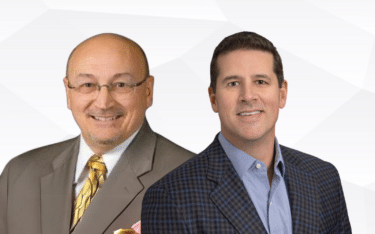
In this episode of The Spotlight Series Podcast, host Mario Nacinovich sits down with Zarmeena Vendal, MD, of Westlake Eye Specialists, to discuss the growing role of interventional glaucoma in modern practice. The pair discusses treatment options, including lasers, MIGS, sustained drug delivery, and endoscopic cyclophotocoagulation. Dr. Vendal shares practical insights on patient selection, treatment decision-making, and how earlier intervention is helping reshape long-term glaucoma care.
Mario Nacinovich:
Welcome to The Spotlight Series. I’m Mario Nacinovich. Today, we’re focusing on one of the most important shifts in glaucoma management: interventional glaucoma, or IG, and how it’s reshaping the treatment paradigm between drops and more invasive surgery. Joining me is Dr. Zarmeena Vendal, a glaucoma specialist and board-certified ophthalmologist and founder of Westlake Eye Specialist in Westlake Hills, Texas, who’s been actively integrating interventional approaches in her practice. We’ll explore how and why she adopted IG and how she thinks about lasers, MIGS, procedural pharmaceuticals like iDose TR, and where procedures like endoscopic cyclophotocoagulation, or ECP, fit into that mix. Dr. Vendal, welcome. Great to have you with us.
Zarmeena Vendal, MD:
Thank you so much. It’s great to be here.
Mario Nacinovich:
To start, can you briefly share your clinical background and the type of glaucoma patient population you typically manage there in Westlake, Texas?
Zarmeena Vendal, MD:
Absolutely. Mario, I have been a fellowship-trained glaucoma specialist as well as a cataract refractive surgeon, almost 50/50, for the last 20 years in Austin, Texas. I completed my glaucoma fellowship at Mass Eye and Ear Infirmary in Boston in 2004. When I landed in Austin, there was no academic institution. Really what happened is our practice morphed into this multi-subspecialty practice where the type of patients we tend to see run the gamut. They are active, they’re urbanites, they are of all ages, they’re professional. The way I like to describe it is they are coming to seek vision care, and they happen to have glaucoma. I worded it that way because we used to wear such different hats at Mass Eye and Ear. You were either treating glaucoma or you were either treating cataracts, but you were never doing both together necessarily. What happened as a result of practicing in Austin was I was almost forced to wear both hats at the same time. That’s really what our patients want in Austin is whether they have mild, moderate, or severe glaucoma, they want to learn about the most innovative solutions that we have to offer that keep their lifestyle still active and kind of merge with their day-to-day in the simplest fashion possible. These are the type of patients that we’ll see on any given day.
Mario Nacinovich:
I’m sure, given the type of patients and both education and profession of some of those patients, they want what is truly cutting-edge in terms of technology, correct?
Zarmeena Vendal, MD:
You are 100% correct. There is this premium cataract revolution that we all have seen in ophthalmology that happened over the last 10 years. Really we are in the heyday of what I call the premium glaucoma revolution where patients are seeking things that are innovative to help control this chronic disease and are actually in some ways even more motivated to seek out the newest and most innovative things we have to offer them because unlike cataracts, this is a chronic condition where patients are worried about losing vision, worried about going blind over their lifetimes. They’re even more motivated than our cataract patients to learn about the newest technologies that we and industry together have to offer.
Mario Nacinovich:
While you’ve got more of a combined approach in terms of treatment based on environment and patient needs, as you’ve expressed, the interventional glaucoma across the rest of the US has really emerged as a distinct treatment philosophy over the past several years. When did you first begin to incorporate IG into your practice and what drove that decision?
Zarmeena Vendal, MD:
The IG philosophy really, for me, started even back as a fellow. I saw patients that came in, especially with things like low-pressure glaucoma or even open-angle as a young person and we were treating them after the fact. Once they had a visual field defect or once they had an optic nerve that changed shape, then we were saying, “What are we going to do about it?” It was an after-the-fact solution. That’s when this idea of being more proactive and, “Why are we waiting?” really started to become in the forefront of my mind. Take that and combine it with industry really started to do for us was give us all these innovative solutions. I started thinking about IG 15 years ago because that’s when I started doing canaloplasty ab externo, one of the lesser invasive glaucoma surgeries that first came about. At the time that we started doing that, we were already incorporating laser like SLT into our practice for quite a while. Again, really stemming from this desire to stay ahead of the glaucoma and be preventative as opposed to react once it was too late.
Mario Nacinovich:
Like you, I certainly mirror that in terms of history over the last 2 decades. It seems like ancient history right now, but for our listeners, that was really an inflection point for many people to consider the rethinking of the traditional stepwise approach. Dr. Vendal, was there a specific inflection point, whether seeing clinical data or patient adherence challenges or that specific availability or you learning that surgical advancement that made you rethink that and adopt this mindset?
Zarmeena Vendal, MD:
Yeah, great question. I would say the first inflection point as far as adopting, and I call it LIGS, less-invasive glaucoma surgery.
Mario Nacinovich:
Oh, I love that.
Zarmeena Vendal, MD:
Yeah, less-invasive glaucoma surgery, which is…
Mario Nacinovich:
Apologies to Ike Ahmed, right?
Zarmeena Vendal, MD:
Which is what canaloplasty ab externo was. We weren’t truly internal yet in the eye, but we were already starting to explore how can we be less and less invasive. The first inflection point for me was listening to my patients. At that time, 15 years ago, we already had patients in Austin, Texas, and Westlake that suffered from dry eye that were asking for solutions to put in topical therapy fewer times a day that were wearing contact lenses. The first inflection point was listening to the daily challenges of my patients. The second inflection point was the LiGHT trial. Over 7 years ago, really finally confirming what we all felt anecdotally to be true for years, which is that laser had less of a likelihood of having patients progressing to needing surgery than topical therapy. The LiGHT trial was, in my mind, feeling the deal on, okay, there’s no excuse anymore to not be interventional.
Mario Nacinovich:
Are you doing SLT first line at this point?
Zarmeena Vendal, MD:
Absolutely. We are a unique practice also from the point of view is that we have 5 locations and at any given time, our providers are not just me, the glaucoma specialist. We have three comprehensive ophthalmologists and we have 2 optometrists that might be doing the primary care end of glaucoma management. Every one of our doctors is on the same page and we have trained them with evidence-based medicine like the LiGHT trial to offer laser first. We do not even give patients necessarily 2 options. We will always adhere to the patient’s wishes at the end, but it is never a, “Oh, we can use laser or drops.” It is always a discussion of lead with laser first and that if it were my eye, this is what I would pick for myself.
Mario Nacinovich:
It’s an intentional administrative management decision that’s made and offered to the patient to do laser trabeculoplasty first and foremost.
Zarmeena Vendal, MD:
Absolutely. All of us are counseling in exactly the same fashion because we truly believe in the IG mindset. It is a practice mission statement, if you will, a part of our mission to propagate IG as much as possible and to be as dropless as much as possible.
Mario Nacinovich:
Wow. Is that introduced to the patient upon their initial visit with your practice?
Zarmeena Vendal, MD:
Yes. If we see a glaucoma patient even as a first-time evaluation and they’ve never even been on eye drops, we get a lot of referrals. We have a lot of community partners who send us patients. We are simultaneously looking at their lifestyle and profession. Do they have dry eye to decide if in fact topical therapy is not the best for them and then leading with laser as a primary alternative?
Mario Nacinovich:
Excellent. Obviously a major area of evolution for our listening audience has been the procedural pharmaceuticals, a little bit of a break from the traditional topical therapy and particularly the sustained delivery options like iDose TR. How are you incorporating these into your practice?
Zarmeena Vendal, MD:
Yeah, I mean, gosh, what a gift to really be able to offer patients a long-term solution and second, and even more importantly, to curb diurnal variation. That is our big connection in our practice that we do not rely on spot check eye pressures, which is what really all our clinic appointments are. It’s just a snapshot that we truly believe that issues with diurnal variation and eye pressure are a big issue for patients. What a gift to curb diurnal variation with 24/7 drug release that these procedure pharmaceuticals offer. Immediately when we had the ability in our region for coverage for patients, we started to lead with that when it comes to surgical intervention. We talk to patients all the time about iDose TR and really cite the evidence that they have a potential of up to 3 years of sustained pressure control as a result of adding something like iDose.
We will frequently pair it with other things we’re doing at the time of cataract surgery and even in a standalone situation if we have insurance coverage. We really do think of it as an additive solution. We don’t think of it as either/or. Oh, we’re going to do this kind of surgery or iDose TR. No, we try to do the 2 together because they’re very complementary to alter the internal structure of the eye with MIGS plus add a sustained-delivery pharmaceutical in our minds is a great way of having blanket coverage for the patient.
Mario Nacinovich:
From a practical standpoint, how do patients respond when you introduce the concept of this implantable sustained release therapy versus what they may have been on in terms of daily drops, either by another provider or currently in practice with your oversight?
Zarmeena Vendal, MD:
I love to talk about our patient testimonials when it comes to this. Even after being in practice for 20 years, I was interested in seeing how the patient would consider an implant. You’re putting an implant in their eye, it’s going to stay in there forever. What’s it going to look like? Is the patient going to feel hesitant? What a pleasant surprise. I was honestly blown away with how welcoming the patient was for that as a solution. I give an example of one of the very first iDoses that I implanted. Gosh, I think I’ve done almost 150 now. Again, my discussion with the patients always focuses on why I would pick it for myself and simply just explaining the potential of the medicine lasting in the eye for a period of time and it potentially replacing her current topical prostaglandin analog that she was on was all that she needed to, in her mind, feel like it was the right thing to do.
There is never hesitation, in my opinion, on a patient’s part when it comes to picking a glaucoma therapy. We as the surgeons really are the rate limiting step. In fact, I asked her after what made her agree to pick this as an alternative and she said 2 things and it still stands out in my mind a year later, actually probably almost a year and a half since we implanted. She said, “There’s 2 reasons. One, when you told me about the technology, my kids and I looked it up and it looked like one of the newest things out there for glaucoma, which made us excited. Number 2 is because you as my doctor told me that it was good for me.” Those were her 2 reasons. I still cite her example because it’s very telling in what really patients value. It’s all about, at the end of the day, what the patient values and they value technology and they value the opinion of their doctor.
Mario Nacinovich:
I also want to touch on ECP and how are you thinking about ECP within the broader interventional glaucoma landscape that we’ve already talked about today?
Zarmeena Vendal, MD:
Again, glaucoma is different than refractive. We need a wide toolbox. It’s not like an IOL where we’re picking and we’re saying only this 1 is the 1 that I like. What we need in glaucoma is a large toolbox to battle a disease that we’re going to be partners on a journey with the patient for 30, 40 years. I like having ECP in that toolbox. It is, in my hands, not the treatment that I lead with necessarily. Some of the others we’ve talked about are really what I tend to lead with, but I like the ability of having a less invasive option, a non-invasive option that I can use in refractory situations, situations where the patient’s failed other treatment choices perhaps in a pseudophakic situation. I like having that as another tool in the toolbox again because of its efficient non-invasive nature or less invasive nature.
We also use MP3 diode laser a lot. In both of these, I think just really widen the toolbox for what we can do at various points along that journey and especially for patients with moderate and severe disease.
Mario Nacinovich:
I’d like to shift our conversation to talk a little bit about the clinical and practice level benefits and let’s talk about outcomes. You’ve hinted at it already in our conversation, but from a clinical perspective, what benefits have you observed with an interventional approach compared to the traditional management? Let’s not make any apologies for the topicals at this point.
Zarmeena Vendal, MD:
Yeah, let’s just go all the way and say what we really want to say.
Mario Nacinovich:
Exactly. Circle of trust, Meena.
Zarmeena Vendal, MD:
Yeah, that’s right. That’s right. We’re not bashful here. I mean, time and time again as a doctor, I feel more confident in my ability to control glaucoma when I’m interventional. I feel like taking the burden off of the patient’s shoulders and taking care of their disease is important and that’s what I feel interventional glaucoma solutions provide. At any given time, I’m less worried about diurnal variation. At any given time, I’m less worried about visual field progression and there is enough data out there now with studies. Gosh, we talked about the LiGHT trial already, patients less likely to progress to surgery. Let’s talk about HORIZON. Five-year data out from the HORIZON study that showed actually the second phase of what the data was released showed less visual field progression is out there. This is not new news. There’s other studies with different interventional glaucoma devices that have shown up to 36 months of not just pressure control but less visual field progression.
At the end of the day, that to me is a piece de resistance. If the patient’s field is not progressing, that’s when I feel like we’ve really made a difference. It’s counterintuitive to what we had 25, 30 years ago when all we had were trab and tubes, we felt more confident in our ability for topical therapy to create safety for the patient. That is not the question we’re asking anymore. Now it’s how confident do we feel that we’re going to be able to prevent visual field loss and blindness? I just simply feel like I do that better with interventional glaucoma techniques than I do with topical therapy.
Mario Nacinovich:
That is absolutely fascinating to me. I certainly come from a world starting my career in the topical therapy arena. I know that literally since the emergence of topical therapies for glaucoma in the 1970s here in the United States, adherence has always been one of the biggest challenges for your patients. How has IG helped address that issue in your practice? Has it completely taken it off the table for patients that continue on management with drops after a laser, after an IG intervention? You may have them on 1 drop. Has it lessened the burden of medications?
Zarmeena Vendal, MD:
No question. I think adherence goes up, adverse events go down. There’s multitude of clinical presentations I’ve done showing what happens to ocular surface disease and how it improves because of a simple procedural pharmaceutical. We’re seeing that time and time again with our patients, but I’ll take it to another level that even just creating an intervention I feel makes the patient participate more in their care. The fact that we are providing them with a solution, they are more likely to participate with a once a day topical therapy as a result because the burden is so much less. I’ll even point out some data that one of our industry partners recently put out there after reviewing thousands of charts of patients in every single kind of eye care practice, comprehensive, optometric, and glaucoma, which to me was mind-blowing that patients who are on topical therapy alone, 60% of them have the potential to get lost to follow-up; 60% of them have the potential of getting lost to follow-up, meaning they’re just not going to come back versus way less if they actually had IG.
There is something about this chronic, being on multiple drop situation that I feel even just psychologically makes patients participate less in their care. That’s something that I think we all as clinicians need to realize that patients view interventions as, I don’t know, increased commitment to managing their disease or as a better intervention even in their minds, even apart from the data. We are very excited about being able to move the needle in that way too, not just the efficacy of what IG does, not just the reduction of adherence issues or adverse events rather like ocular surface disease, but we’re excited about what it does in the mind of the patient and their willingness to participate in the process.
Mario Nacinovich:
I’d like to dig a little deeper into that mindset. I think for our listeners, patient selection is always key. Assuming that some of the topics that we’ve already covered are the known knowns. I think we can pass on some big lessons learned when we talk about some of the observed clinical or behavioral factors that you consider when deciding to move a patient, obviously, after laser towards MIGS, towards ECP, towards a sustained delivery option, or a combination if you’re stacking some of those. Patient selection is key. What are some of those factors that you consider when going one direction versus another?
Zarmeena Vendal, MD:
Yeah, I think it’s great to almost have an algorithm in our minds of what works in your hands. Certainly, for me, what I think about is lifestyle. We’ve already thought that way in leading with SLT. At that point, I will look at lifestyle, the patient’s ability to be compliant and ocular surface issues as 1 selection criteria. These are patients who then we would definitely manage with IG if possible. The second type of patient is anybody who happens to be needing cataract surgery. You’re there already. Why not go all the way? That’s a great candidate. Any patient in your practice about to have cataract surgery is a home run, in my opinion, of being able to augment their glaucoma at the same time. That’s where we’ll stack MIGS plus a procedure pharmaceutical if possible.
Mario Nacinovich:
How about those patients who’ve already had cataract surgery and maybe they have enjoyed pressure control as a result of the interventions we’ve made for some years and now, they’re starting to wear off? The last thing we’d want to do in that situation, especially if they did do something like astigmatism correction and you do have their vision corrected beautifully, the last thing we’d want to do is increase their ocular surface disease again and put them right back on their eyedrops. That is also, again, great patient to discuss being interventional with again, whether it’s back to another laser, which is perfectly reasonable, or a standalone offering.
Zarmeena Vendal, MD:
These are just some great day-to-day thoughts of patients that we’re talking about IG all the time and it’s one of those things if you look, you’ll find them. I would encourage really any of our listeners to really start looking and they’d be surprised at how many patients could be candidates.
Mario Nacinovich:
Well, let’s talk about surprises. That’s a great word and a great segue. Either positive or maybe challenges, what are some of the things that you’ve experienced that have shaped how you approach IG today, maybe different than you did 5 or 10 years ago?
Zarmeena Vendal, MD:
I think the pleasant surprise again to touch on is how well received it would be by our patients that the innovation and no matter how much of an intervention we discuss, the fact that we get behind it as a practice and can recommend with confidence that our patients really have never created pushback in being open to those choices. That’s a great pleasant surprise that we had with our patients. I think on the flip side, really compliance, the more we learn about compliance, more data that’s come out, really disheartening to know exactly how often patients aren’t taking their eye drops. It doesn’t matter how good we are at relaying to them the importance that patients really, really struggle long-term with taking topical therapy much worse than we realized. That’s very eye-opening for us. It’s irrespective actually of again, if we’re an optometrist, a comprehensive ophthalmologist or a fellowship-trained glaucoma specialist, the patients are being non-compliant at all the same rates.
These are some of the big, I would say, aha moments that pushed us towards IG more and more, patient’s willingness of receiving it and how difficult it is for them to stay compliant.
Mario Nacinovich:
Meena, we talked about the data landscape and some of the recent clinical milestones that have occurred looking at the LiGHT trial and HORIZON, and certainly that reinforced a lot of confidence in these approaches. In terms of if you had to play the futurist role, you’ve been there, you’re a pioneer over the last 2 decades have really kept pace with the innovation. But if you were going to be a futurist and you’re going to look forward and say how interventional glaucoma will be evolving going forward in the future and how it may be becoming the standard of care earlier and earlier in the treatment paradigm, what does the future look like for us?
Zarmeena Vendal, MD:
My IG crystal ball tells me that we will all be striving to become dropless practices in the future because there will be so much data on efficacy and visual field preservation that we will have no choice but to lead with the IG mantra. I think drug delivery is just going to become bigger and bigger with more and more molecules available because 24/7 control is night and day for diurnal variation. I also think we will be approaching patients with this option earlier and earlier. I don’t know that we’re going to necessarily wait for cataract surgery or even for pseudo fix. I think we’re going to be offering these treatments to patients earlier on their glaucoma journey and more phakic patients are going to be getting it than ever before as the efficacy improves, as things get safer and safer and as the data becomes more compelling.
Mario Nacinovich:
As we wrap up, what really stands out to me is certainly how IG is and has redefined not just how we treat disease, but when, with whom, and why we intervene. Certainly, we are moving towards and beyond a reactive model waiting for progression, relying on adherence to daily drops towards a more proactive model, as you said, and more procedural-based approach that offers that durability, that consistency, and ultimately better protection for the patient’s long-term vision. You’re certainly treating them a whole lot longer in practice than ever before. What’s especially compelling to me is the expanding toolkit from laser to MIGS to procedural pharmaceuticals like iDose TR that we talked about, approaches like ECP. Each brings such a different mechanism and an opportunity to individualize that care to patients in ways that simply could not have happened before. Any parting thoughts, Meena, as we wrap up here?
Zarmeena Vendal, MD:
Yeah, I think that this is an amazing time to be taking care of glaucoma patients. We are so lucky to have such collaboration between industry and doctors like never before that I would encourage every one of my peers to jump on board. You are doing the patient a favor when you are being proactive and they will thank us for being able to stay active and to see a lot longer. These are exactly the kind of tools that will help us get there. I would just say don’t wait and don’t think that you are only a glaucoma specialist if you have fellowship training in glaucoma. Every one of us are going to take care of glaucoma patients in our lifetime, in our professional practice and thanks to these sort of tools, every one of us can use them. Everyone who’s listening and all of my peers, I would encourage you to get on board and don’t wait another day.
Mario Nacinovich:
I’ll add to that. I think the challenge as well as the opportunity for your colleagues will be how to intentionally, as you have, and thoughtfully integrating these modalities earlier in the disease continuum, obviously based on patient needs, risk profiles, but a lot of real-world considerations. Dr. Vendal, thank you again for sharing your perspective, your 20-year perspective in interventional glaucoma, and certainly for helping us better understand how these advances are continuing to translate into clinical practice. Thank you so much for also enlightening me as well as our audience of this Spotlight Series in terms of being intentional about your interventional glaucoma. We really appreciate that.
Zarmeena Vendal, MD:
My pleasure. Love discussing IG and thanks for having me.
Mario Nacinovich:
Thanks to all of you for listening to The Spotlight Series. We certainly look forward to continuing these eye-opening conversations, pun intended, as Dr. Vendal said, as innovation continues to shape the future of ophthalmology and how we care for patients with glaucoma. Thanks for listening.
Related Content