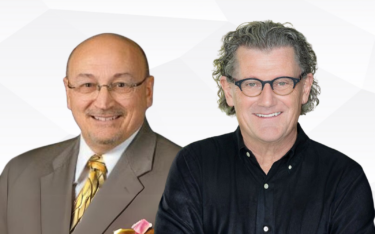

This podcast episode features an engaging discussion about standalone minimally invasive glaucoma surgery (MIGS) from Deborah Ristvedt, DO; Arkadiy Yadgarov, MD; and Mark Hornfeld, DO.
Deborah Ristvedt, DO:
Well, hi, everyone, this is Deb Ristvedt from Vance Thompson Vision in Alexandria, Minnesota. Welcome to Ophthalmology 360. We’re going to be talking about the standalone space when it comes to minimally invasive glaucoma surgery (MIGS), and I am so honored to be joined by 2 of my great friends, Mark Hornfeld and Arkadiy Yadgarov. Mark and Arkadiy, go ahead and introduce yourselves and tell the audience a little bit about yourselves.
Mark Hornfeld, DO:
I guess I’ll start. My name is Mark Hornfeld. I’m a comprehensive ophthalmologist. I’ve been in practice for, I can’t believe I’m going to say this, but almost 30 years. Do mostly cataracts. I do a lot of MIGS now, and for the past, I guess since it was FDA-approved, I’ve been doing a lot of standalone iStent implants, which is why I think that’s what we’re here to talk about. I was going to share my experience with what I’ve been seeing.
Arkadiy Yadgarov, MD:
Yeah, my name is Arkadiy Yadgarov. I’m a glaucoma specialist in Atlanta, Georgia. I’ve been practicing about 8 years and similar to Mark, I’ve got a lot of experience with MIGS.
Deborah Ristvedt, DO:
This is just fantastic you guys because we have a panel starting with comprehensive in practice for a long time where MIGS wasn’t even a thing in practice starting out to, Arkadiy, your experience when it comes to being a glaucoma specialist, seeing probably the worst of the worst when it came to glaucoma management and really developing a new algorithm as a young surgeon in practice. I’m excited to get into this.
I always like to start out with talking about our passion for interventional glaucoma because that’s really kind of the fruit of this in talking about the standalone space and our options. Arkadiy, when you think about interventional glaucoma, what comes to mind for you?
Arkadiy Yadgarov, MD:
Just as you mentioned, as a glaucoma specialist, my patient skews a little different. I see what glaucoma does to eyeballs over many, many years. Invariably, the 1 issue that happens is the patient who sees a doctor, an eye doctor, for years and 1 bottle wasn’t enough and second bottle maybe wasn’t enough and a third bottle wasn’t enough, and maybe we’ll just monitor you and then all of a sudden things get worse and now they’re in this just terrible state of disease where they’re on a lot of meds and their glaucoma is getting worse and you’re kind of fighting with your back against the wall because there’s not a lot of tissue there to work with and the eye just tends to be angrier and just a lot is at stake.
The question was always like, man, how do we avoid this scenario? What could we have done way back earlier when maybe 1 med wasn’t enough and a second med was just kind of getting by? Could we have offered something? We never really had a great answer to that prior to, let’s say 5, 10 years ago before the MIGS revolution, and now we do. On top of that, it used to be that it was a cataract MIGS, so we had to find that window of opportunity with cataract surgery. Now that’s changed where we have things like trabeculotomy or iStent infinite where we, as surgeons, could offer something beyond the status quo, which were more and more drops.
The truth of the matter is, and every doctor hearing this will nod their head, drops are not the solution for many patients because if they were, we wouldn’t be having this discussion, we wouldn’t be here. We wouldn’t need all this technology that’s coming out. We saw that there was a need and that’s why we’re here. Essentially, interventional glaucoma to me is finding that cohort of patients where medications don’t seem to be the answer, whether it’s compliance, intolerance, or just something that’s not good for their eyes.
Deborah Ristvedt, DO:
Arkadiy, you’re speaking to a real big issue when it comes to the barriers that we’ve faced in treating glaucoma in the past. Medication doesn’t mean that it’s totally safe. We have to manage the side effects that come with it. It doesn’t mean that medication doesn’t work. We have beautiful options when it comes to medication. We’re just changing how we’re delivering that and using it more as bridge therapy.
Mark, I can imagine back in practice 30 years ago, that’s really all the options you had: drops, laser, and then trabeculectomy. Did you find that you were frustrated or your patients were frustrated when it came to managing their glaucoma? Did that affect their quality of care?
Mark Hornfeld, DO:
Absolutely. When I started, what we have today is basically a lot more tools in the toolkit. That’s the bottom line. The more the better. We need these options. To echo Arkadiy, I think you take a step back, what’s our goal in managing these patients? The bottom line is the goal is to improve their lifestyle. That’s the bottom line. Part of that basket is you want them to maintain their vision, but you can’t have a patient on 4 medications. I may have an 85-year-old lady on 4 medications and her eye and she comes into the office, her eyes are red and that’s not a good lifestyle, and she’s spending all day putting these drops in. That’s where the interventions come in. The beauty is that they come with a lot fewer risks is what I find. I’ve seen the evolution of these treatments and it’s a game changer.
Arkadiy Yadgarov, MD:
I want to add onto that. Quality of life is not something a lot of us doctors think about. We’re so disease-based. Hey, you come in, pressure’s not high enough. What’s something, what other drop can we add? Then once a patient comes in and their pressure is 14, but they’re on 4 meds, we pat ourselves on the back and go, “Hey, we got that pressure down.” But the patient’s miserable. It sounds like, maybe I’m exaggerating, but it’s absolutely true, the amount of patients that I’ll see come in were on years and years of 3 to 4 meds or even 1 to 2, but their eyes are just red and they have preservative toxicity. You go, man, I mean, let me talk to you about these other options. I mean, patients are… half of these patients will literally go, “Can we do this surgery tomorrow?” Because they’re miserable. But we need to somehow figure how to break that habit with many doctors thinking, “Well, look, the pressure’s good. I think we’re okay.”
Deborah Ristvedt, DO:
Yeah, some things that have stuck out to me with interventional glaucoma is number 1, stacking medication. You get less effect as you add more medication. The first medication that you start with is always going to be the most robust as far as IOP-lowering effect. Then secondly, we still get fluctuations with medical management. We’re still seeing 13% of our patients go blind in 1 eye despite medical care.1
We think it goes back to the fact that we’re not seeing this 24/7 IOP control. When we are thinking about it, whether we’re anterior segment surgeons or we’re glaucoma specialists, this interventional mindset has really allowed us to not only be safe but effective in management in an earlier point in their treatment.
That kind of leads me to comfort. I started doing combination cataract with MIGS, and that’s kind of how I learned angle-based surgery, as many of us have. But then there’s this elephant in the room when it comes to the need for standalone surgery, and it’s kind of like when you get a red truck, well, you’re going to look around and everyone has a red truck because you’re looking for it, right? But how do we get doctors to actually look for patients in your office that could benefit from what we’re talking about with standalone minimally invasive glaucoma surgery? What do you think, Arkadiy?
Arkadiy Yadgarov, MD:
Yeah, I think you have to figure out where you can make the biggest impact. I think it’d be 2 very separate scenarios that I can think of right now. Scenario number 1 is patients on 2 to 3 meds. You could even make it a lot easier on yourself and just have a streamlined way where your technicians have a patient come in, they’re on 3 meds, and they’re told anybody on 3 meds, give them a brochure. Here’s an iStent infinite or here’s a trabeculotomy, or here’s iDose TR (travoprost intracameral implant) 75 mcg and we’re not recommending anything yet, but here’s some literature. Then that way, when the doctor comes in and looks and goes, “Oh, man, your eye’s just terrible, dry eye, terrible ocular surface disease. How are you feeling?” “Doc, my eyes feel terrible. What can we do?” “Well, let’s talk about option A, B, or C as an alternative to the intolerances that you’re dealing with.”
That’s kind of one place, and I’ll tell you out of all the scenarios, that would be the one where you’d make the patient the happiest. No patient wants to be on medicine if they don’t have to. Every single patient would be substantially happier if you get them off a medicine. It’s almost like you’re their best friend all of a sudden. They hated the idea that they have to be on more medicine, but you get them off medicine? They’re thanking you. It’s such an interesting dynamic because as glaucoma doctors or doctors that manage glaucoma, all we think is add glaucoma medicine, add glaucoma medicine. Patients don’t like that, as much as we think they do. That’s kind of one area.
Scenario number 2 would simply be exactly, Deb, what you said, which is we know that that first medicine gives the most bang for your buck. Almost having this kind of habit trying to build into your system where as soon as you think of… well, let’s talk about that second medicine, whether it’s timolol or brimonidine or whatever it is, you can simply offer an alternative now where you go, “Mr. John Doe, we can offer you… your pressure is not good enough. Let’s offer you an additional eye drop. Or we could go into the drain of your eye, improve the drain, and maybe not have to add more and more medicine.” That’s kind of another thing to other doctors think about.
Mark Hornfeld, DO:
Yeah, I’m going to interject also. That’s great. I would add one adjective to what Arkadiy said. I’d say no glaucoma patient wants more medicine. As a general guy, patients love eye drops. The dry eye patients love eye drops, allergic conjunctivitis, patient’s like, “Give me more. What can I put in my eye to stop the itching?” But the glaucoma patients are the exact opposite, because you’re causing all those problems. You’re causing the dry eye. You’re causing the conjunctivitis, so they’re not compliant. I mean, let’s face it. I mean, I know patients who put the drop in before they come to the office so they can get a good reading. I know for sure they’re just not taking their medications at home. This kind of intervention has put that concept to sleep. They work really well. That’s where it comes in my practice.
Deborah Ristvedt, DO:
Mark, how are you educating your staff? Are you explaining to them what this interventional mindset looks like or you know the patients to really be looking for that would benefit from, say, an iStent infinite?
Mark Hornfeld, DO:
Yeah, you have to educate your staff. The staff has to be on board. They have to understand what the game plan is, and they have to understand the risks and the benefits of all these procedures. I sit down whenever a new procedure comes out that I’m offering, I will make sure that they fully understand and are able to converse with the patient. Of course, if they get a question that’s out of their league, then they refer it back to me. But yeah, that’s a good question. You want to have the staff on board.
Deborah Ristvedt, DO:
How have you managed the learnings over time? Do you get the companies involved? Do you have reps come into the operating room to learn these new procedures?
Mark Hornfeld, DO:
Yes. When the iStent first came out, I had the rep came in and I learned to use it, and I did a cataract. I put in an iStent. I did a few that day. It’s a steep learning curve. You learn how to do it. My first question to him after the first day is, “Can I do this on a patient who had cataracts 10 years ago?” He said, “No, no, no. Not FDA-approved.” Well, why not? I was waiting for it to become a standalone procedure for many years.
Deborah Ristvedt, DO:
That’s beautiful. That’s what we’re hearing that we all started somewhere because of this curiosity and this energy to be able to say, “Hey, I can do something in a safe and effective manner earlier in the disease course.” This has just evolved into beautiful options for us. For those of you who don’t know, there’s certain devices and procedures that are approved in conjunction with cataract surgery, and then there’s some that are approved for the standalone space and some that are for both. Arkadiy, walk us through the options right now that we have for standalone minimally invasive glaucoma surgery.
Arkadiy Yadgarov, MD:
For standalone MIGS, and we’re going to assume we’re talking about trabecular MIGS, so not blood-based invasive procedures, you’ve really got 2 major categories and that would be trabecular stripping and trabecular meshwork opening. I guess 3 categories… you would have canaloplasty and sometimes a combination of either canaloplasty with trabecular stripping or trabeculotomy/goniotomy, and then you have stenting. I guess you could consider that as 3 different categories. They all have their pluses and minuses, but they are 3 very good effective options for glaucoma patients. In terms of 1 versus the other, I think there’s an art to that as a surgeon, and every surgeon might find 1 that works compared to others.
But I will say when it comes to prospective data, so we’re all data-driven, the iStent infinite right now is really the only one that’s got a published 1-year prospective data that looked in standalone patients and has shown statistically significant improvements in pressure despite in patients who may have refractory glaucoma. I think that’s what really has made the waves and has made it re-energize and opened this new chapter where we go, “Why are we sending it to the glaucoma specialist for a tube and a trab for this patient who was on 2 meds and maybe just not tolerant on a third med? Why don’t I consider a standalone MIGS like an iStent infinite and see if we can get the job done there?”
Deborah Ristvedt, DO:
That’s a beautiful answer because we see that so many times. I’m in a third-generation practice. Again, the only option was a trab or tube when you were beyond multiple medication use and laser, specifically ALT at that time. I find that I’m actually going back to the angle in these patients that have had trabeculectomies, and we saw that in these prospective studies, which again, were not mild to moderate patients. These were severe refractory glaucoma patients who still achieved a reduction in IOP and lessening of their eye drops. That’s so exciting about this space and really going back to the angle and treating that natural outflow pathway is we’re seeing resolution of some of these refractory glaucoma cases.
Arkadiy Yadgarov, MD:
I’ll just add that on that study, the prospective Glaukos study, what was really amazing was there were actually 2 different cohorts of patients. One, which was the, like you said, the refractory tough glaucomas, but there’s also a smaller subset, which were simply on max medically tolerated medicine, which I would say is way more common in most of our… especially in the comprehensive ophthalmology world, that’s what you’re going to see a lot of in your practices, and those are going to be the type of patients where you go, “Man, I wish there was something safe that I could do for this patient surgically but not have to worry about a tube or trab, right?” Refractory patients, it goes, “Well, look, your pressures are high. You need surgery and great, now we have iStent infinite.”
But what about those patients who are just on 3 or 4 meds and they’re barely getting by? They actually did the best based on that iStent infinite data. I think that’s what got me excited about iStent infinite was going, “Wow, look, we have some data that suggests that in patients who are on 3, 4 meds stable, but really not tolerating that really well, and here’s a great way to lower their pressure and not wait for that instability to occur. In other words, pressures are borderline high. They’re on max medical therapy. Why do we have to wait for fields to progress when we could do an iStent? Right?” That’s really the beauty of that study.
Mark Hornfeld, DO:
Yeah, I agree. Arkadiy, he hit the nail on the head there. That’s by far by numbers. We’ll see a patient on maximal medication exactly. We don’t want to… why are you going to give this person a trab if you want something safer, you want something less invasive or less risky? I’ll also say on the other end of the spectrum, I’ll have a patient who’s monocular, who’s already lost 1 eye to glaucoma, the other eye is not controlled. In that patient also, there’s a risk to benefit, but you want a risk a trab on a monocular patient, or do you want to try something a little more gentle first and see if that works? That’s where it comes in my practice too. I get unfortunately too many of those patients.
Arkadiy Yadgarov, MD:
Yeah, Mark, well, let me give you a little bit of insight into the glaucoma specialist world of monoculars. There are a lot of glaucoma specialists that I knew that back in my training days where if the patient was monocular and slightly getting worse, a lot of them would continue to watch them to see the rate of progression because they were that scared. In other words, they would allow that glaucoma to get worse as long as it’s getting worse slowly than go into an eye and do a trab. It’s a legit fear. Even glaucoma specialists wouldn’t want to touch a monocular patient with a trab unless they absolutely had to. There was an absolute need for something outside of trabeculectomy and tube shunt. Here we are with interventional standalone glaucoma therapy.
Deborah Ristvedt, DO:
Do you guys feel that patients are showing up more into your office, your established patients? Or say you co-manage with some of your optometry colleagues in the area, do you feel like patients are getting better care with interventional glaucoma procedures and standalone procedures versus drops?
Mark Hornfeld, DO:
That’s a tough question. I think the short answer is they’re getting better care because the technology exists. But the longer answer is in my area, the optometrists are not as aware of… that’s kind of on me. I should be educating them more efficiently. But they’ll send me their narrow angles, they’ll send me high pressures, but they’re not sending the run of the mill, a patient who they’re seeing has an open angle and can benefit from this technology. They’re not sending me those patients.
Deborah Ristvedt, DO:
I kind of set you up, you guys, because that’s exactly what I was hoping to hear. I mean, number 1, we need to do a better job educating our eye doctors around our community so that we’re all on the same page when it comes to what really interventional glaucoma means and that there is an opportunity not just for an opportunity in cataract surgery but as a standalone option. That’s number 1. You hit it on the head.
Number 2 is the fact that when we look at the data, when it comes to patients being lost to follow-up, patients tend to come in after a procedure for their typical follow-up more than just being managed by eye drops. When there were studies done looking at patients that actually showed up for their appointments, more patients showed up post-procedure than if they were just on an eye drop.
I think that’s just so interesting, and that’s why I asked that question is we have these patients that have true glaucoma and are we missing the boat? Are we missing that opportunity to say, “Hey, we can help you in different ways for 24/7 IOP stability. Can we help you so that you don’t have visual field progression?” Because that’s really what we’re after. It really comes down to educating our community, educating our referral network as well as recognizing that patients, when they have a procedure done, they take that seriously and they tend to come back to you more often. I just thought that was so interesting to look at that data.
Arkadiy Yadgarov, MD:
Yeah. Not only are they more likely to come back because they had an experience, I guess a pleasant experience of getting off drops, they’re more inclined to do more interventions. I find that my previous SLT patients that did well a couple of years ago and have come back 2 years later and their pressures are creeping up, they’re more than happy to repeat that SLT or patients who are cat-MIGS from a few years ago and 2 years now passed and their pressure is creeping up, they’re more than happy to do Durysta® or an iDose TR. There’s something about once you create that connection with a patient interventionally and say, “Let me be your surgeon. Let me do what’s best for your eyeball.” Just like you said, Deb, they’re, I think, more willing to come back and follow-up and have that continuity of care.
But number 2 is that they get it. They go, “Okay, what else could we do to stabilize this pressure? I really don’t want to have to get back on meds because I liked what you did initially. Can you do something similar?” I think it’s a beautiful positive feedback where patients continue to want to be managed by you or be returned and referred back by the optometrist when they’re educated well enough to go look, there are other things in the toolbox and the pressure starts creeping up, send them back. We’ll talk about the other options.
Mark Hornfeld, DO:
Yeah, I would add to that in terms of educating eye care providers in the neighborhood, but we kind of take it for granted, but we have to educate the patients. When you do any kind of minimal invasive procedure, a MIGS procedure, standalone MIGS, they have to fully understand we’re not doing it to improve their vision. Once they understand that our goal is pressure control, is to stop the progression, then they’re fully on board. But you have to explain that. You can’t take it for granted. You have to explain that fully to them.
Deborah Ristvedt, DO:
Interventional glaucoma is no easy feat when you’re talking about really changing the paradigm. Now we’ve discovered that truly there can be a consensus amongst doctors when it comes to how we’re treating glaucoma. It’s been a journey for all of us. I love talking to you, Mark. I love talking to you, Arkadiy, because you’ve seen it and you’ve seen the beauty and the gift that we can give patients when it comes to quality of life issues, when it comes to the economic burden, or having to be on multiple medications a day and to the true gift of sight when it comes to delaying visual field progression through intervention.
The last thing for the audience that is listening: what kind of advice would you give to people that maybe are still on the fence when it comes to using some of these devices like iStent infinite in a standalone way? What kind of barriers that maybe they’re facing could you suggest to start somewhere?
Mark Hornfeld, DO:
Yeah, I would say you want to find first few patients. You want to get the right personality. You want to get a patient who’s on board, who’s very eager and fully understands what the process is. That would be my first advice. Then you want to get as much information as you can and make yourself comfortable with the procedure before you start doing it. If you’ve operated in the angle already, it’s a steep learning curve. It’s about position, it’s about the visualization. The procedure itself, once you do a few, you’ll be comfortable with it. The first few that you do to jump in, you want to make sure that you have the right patient.
Arkadiy Yadgarov, MD:
The way I would look at it for doctors, number 1 is I think iStent is an easy place to start because if you’re already doing cataract with iStent, then you’re already comfortable with the procedure. From a confidence perspective, I would start there. If you’re not comfortable with standalone MIGS, let’s say you haven’t done it, but you’re doing cataract surgery, well, that’s the first place you start with getting comfortable with MIGS. Then just like everyone else did, once you’re getting comfortable with glaucoma-MIGS, cataract-MIGS, that’s when you move on to standalone MIGS. Because at that point, if you talk to a patient, go, “I’d like to put a stent in you,” they’re not going to be like, “Well, have you done this before?” “Yeah, I have with cataracts.” Right? There’s that.
I would say that the 2 most important things from a doctor’s perspective, not from the patients, is number 1 is surgeon confidence. You’ve got to be confident in what you’re talking about. In other words, you have to believe this and you have to do your due diligence, read the data, look at the studies, call your peers, and is this something that really works well and needs to be done or not? Because you have to buy in. There’s got to be a sense that this is what I think is best for the patient. Once you buy in, and you should based on the data, then when you tell that patient well… you go from, “Well, we could do an iStent, we could do the standalone MIGS thing, or you keep doing your drops” to “This is what’s best for your eye. It doesn’t seem like your eyes are tolerating the meds very well. We should do an iStent.” That’s number 1, I think, is that surgeon confidence.
Number 2 is, and Mark has mentioned it, that education. It goes a huge, huge way. I mean a long, long way. If you just give them a little bit more chair time and really kind of give them that lesson almost about glaucoma because you know it all, a lot of that stuff goes over their head. I’ll just give you an example about iDose TR. It can be a reflex to say no. When a surgeon comes in and goes, “Look, your pressures are borderline. You’ve got a lot of dry eye. I’d like to put this iDose TR in your eye, this procedural pharmaceutical, so we can get you off the eye drop.”2 The initial kind of reflex will be like, “Well, maybe I can just use my drop.” But if you start telling them about that the medicine is no longer irritating the surface of your eye, it goes right into the drainage tissue where it ought to go. It’s medicine where it ought to be.
Just really give them almost like a crash course. I mean 3, 4 minutes, but you give that extra 3 to 4 minutes and now you have a patient that goes, “Oh, that makes sense.” Then boom, they take it, right? If it’s not you, it could be a technician. Think about the cataract analogy. There are many surgeons out there that have an IOL consultant who will get educated, right? Education is key. You can’t just run in there and go, “Here’s a PanOptix. Here’s all the pros and why we think this is great technology.” Deb, to answer your question to the other doctors out there, I would say it’s confidence and it’s a little bit of extra chair time because it is a brand new chapter of ophthalmology. It’s very hard without you spending that extra time with a patient or having the confidence for you to start a kind of new endeavor when the status quo is much simpler, which is keep doing all these medications.
Deborah Ristvedt, DO:
I think that’s where it’s so interesting to me when we look at market scope data, and it still shows that most of the eye care providers in the United States go towards a drop as first-line therapy. I think it’s like 80% if I’m not wrong.3 That’s still really high. We have a lot of work to do.
Those of you listening, you’re not alone when you think there’s some barriers when it comes to switching this whole algorithm and paradigm. Sometimes it can be really kind of anxiety provoking because you’re like, “Well, how am I going to have time to fit in all these extra patients? Or how am I going to have the chair time like Arkadiy mentioned? How am I going to explain this to our patients and how am I going to have the confidence to proceed?”
It really is taking one step in front of the other. Start, like we said, with cataract surgeries. Start with 1 device. There’s beautiful technologies on the market now and get good at 1 and then move to maybe 2 and then move to the standalone space when you get more confident and comfortable. This can be done, and the best thing that we can do as providers is not be complacent and be the leaders in our community to show that this really is changing patients’ lives for the better.
Do you guys have anything else to add as we wrap up Ophthalmology 360?
Arkadiy Yadgarov, MD:
I would simply tell the doctors out there, it is a rewarding chapter of glaucoma care. You’ll find that patients will be much more appreciative and much more willing to do these procedures than you think.
Mark Hornfeld, DO:
From coming from the comprehensive ophthalmology side, I echo that. I find myself doing more than I thought I would’ve done in terms of standalone MIGS.
Deborah Ristvedt, DO:
Well, this has been a wonderful time with 2 of my favorite people. I think we could talk forever about this subject because it is such a passion of ours, and thank you so much for tuning in, and we look forward to the next podcast.
Arkadiy Yadgarov, MD:
Thank you.
References
- Malihi M, Filho ERM, Hodge DO, Sit AJ. Long-term trends in glaucoma-related blindness in Olmsted County, Minnesota. Ophthalmology. 2014;121(1):134-141. doi:10.1016/j.ophtha.2013.09.003
- Singh IP, Berdahl JP, Sarkisian SR Jr, et al. Long-term safety and efficacy evaluation of travoprost intracameral implant based on pooled analyses from two phase III trials. Drugs. 2024;84(10):1299-1311. doi:10.1007/s40265-024-02074-9
- 2024 Q2 Interventional Procedures Market Share. Market Scope. 2024.
IMPORTANT SAFETY INFORMATION for iDose® TR (travoprost intracameral implant) 75 mcg
Dosage and Administration
For ophthalmic intracameral administration. The intracameral administration should be carried out under standard aseptic conditions.
Contraindications
iDose TR is contraindicated in patients with active or suspected ocular or periocular infections, patients with corneal endothelial cell dystrophy (e.g., Fuch’s Dystrophy, corneal guttatae), patients with prior corneal transplantation, or endothelial cell transplants (e.g., Descemet’s Stripping Automated Endothelial Keratoplasty [DSAEK]), patients with hypersensitivity to travoprost or to any other components of the product.
Warnings and Precautions
iDose TR should be used with caution in patients with narrow angles or other angle abnormalities. Monitor patients routinely to confirm the location of the iDose TR at the site of administration. Increased pigmentation of the iris can occur. Iris pigmentation is likely to be permanent.
Adverse Reactions
In controlled studies, the most common ocular adverse reactions reported in 2% to 6% of patients were increases in intraocular pressure, iritis, dry eye, visual field defects, eye pain, ocular hyperaemia, and reduced visual acuity.
INDICATIONS AND USAGE
iDose TR (travoprost intracameral implant) is indicated for the reduction of intraocular pressure (IOP) in patients with open angle glaucoma (OAG) or ocular hypertension (OHT).
Please see full Prescribing Information.
You are encouraged to report all side effects to the FDA. Visit www.fda.gov/medwatch, or call 1-800-FDA-1088. You may also call Glaukos at 1-888-404-1644.
Risk Information
The most common side effect of iDose TR was increased eye pressure. Other common side effects were inflammation of the iris, dry eye, a loss of part of the usual field of vision, eye pain, eye redness, and reduced clearness of vision.
IMPORTANT SAFETY INFORMATION for iStent infinite®
INDICATION FOR USE. The iStent infinite® Trabecular Micro-Bypass System Model iS3 is an implantable device intended to reduce the intraocular pressure (IOP) of the eye. It is indicated for use in adult patients with primary open-angle glaucoma in whom previous medical and surgical treatment has failed. CONTRAINDICATIONS. The iStent infinite is contraindicated in eyes with angle-closure glaucoma where the angle has not been surgically opened, acute traumatic, malignant, active uveitic, or active neovascular glaucoma, discernible congenital anomalies of the anterior chamber (AC) angle, retrobulbar tumor, thyroid eye disease, or Sturge-Weber Syndrome or any other type of condition that may cause elevated episcleral venous pressure. WARNINGS. Gonioscopy should be performed prior to surgery to exclude congenital anomalies of the angle, PAS, rubeosis, or conditions that would prohibit adequate visualization that could lead to improper placement of the stent and pose a hazard. MRI INFORMATION. The iStent infinite is MR-Conditional, i.e., the device is safe for use in a specified MR environment under specified conditions; please see Directions for Use (DFU) label for details. PRECAUTIONS. The surgeon should monitor the patient postoperatively for proper maintenance of IOP. Three out of 61 participants (4.9%) in the pivotal clinical trial were phakic. Therefore, there is insufficient evidence to determine whether the clinical performance of the device may be different in those who are phakic versus in those who are pseudophakic. ADVERSE EVENTS. The most common postoperative adverse events reported in the iStent infinite pivotal trial included IOP increase ≥ 10 mmHg vs. baseline IOP (8.2%), loss of BSCVA ≥ 2 lines (11.5%), ocular surface disease (11.5%), perioperative inflammation (6.6%) and visual field loss ≥ 2.5 dB (6.6%). CAUTION: Federal law restricts this device to sale by, or on the order of, a physician. Please see DFU for a complete list of contraindications, warnings, precautions, and adverse events.
iStent® Trabecular Micro-Bypass System
United States
INDICATION FOR USE
The iStent Trabecular Micro-Bypass Stent (Models GTS100R and GTS100L) is indicated for use in conjunction with cataract surgery for the reduction of intraocular pressure (IOP) in adult patients with mild to moderate open-angle glaucoma currently treated with ocular hypotensive medication.
CONTRAINDICATIONS
The iStent ®is contraindicated in eyes with primary or secondary angle closure glaucoma, including neovascular glaucoma, as well as in patients with retrobulbar tumor, thyroid eye disease, Sturge-Weber Syndrome or any other type of condition that may cause elevated episcleral venous pressure.
WARNINGS
Gonioscopy should be performed prior to surgery to exclude PAS, rubeosis, and other angle abnormalities or conditions that would prohibit adequate visualization of the angle that could lead to improper placement of the stent and pose a hazard. The iStent® is MR-Conditional meaning that the device is safe for use in a specified MR environment under specified conditions, please see label for details.
PRECAUTIONS
The surgeon should monitor the patient postoperatively for proper maintenance of intraocular pressure. The safety and effectiveness of the iStent® has not been established as an alternative to the primary treatment of glaucoma with medications, in children, in eyes with significant prior trauma, chronic inflammation, or an abnormal anterior segment, in pseudophakic patients with glaucoma, in patients with pseudoexfoliative glaucoma, pigmentary, and uveitic glaucoma, in patients with unmedicated IOP less than 22 mmHg or greater than 36 mmHg after washout of medications, or in patients with prior glaucoma surgery of any type including argon laser trabeculoplasty, for implantation of more than a single stent, after complications during cataract surgery, and when implantation has been without concomitant cataract surgery with IOL implantation for visually significant cataract.
ADVERSE EVENTS
The most common post-operative adverse events reported in the randomized pivotal trial included early post-operative corneal edema (8%), BCVA loss of = 1 line at or after the 3 month visit (7%), posterior capsular opacification (6%), stent obstruction (4%) early post-operative anterior chamber cells (3%), and early post-operative corneal abrasion (3%). Please refer to Directions for Use for additional adverse event information.
CAUTION
Federal law restricts this device to sale by, or on the order of, a physician. Please reference the Directions for Use labeling for a complete list of contraindications, warnings, precautions, and adverse events.
PM-US-2713
The doctors were compensated by Glaukos for their time.
Third-party marks are property of their respective owners.
Related Content