Optometry360 Logo White
  • Conferences
  • Videos
  • Podcasts
  • Quizzes
  • About
    • About Us – Mission
    • Content Awards
    • Media Partners
    • Business Team
    • Brand Ambassadors
    • Industry Council
    • Advisory Board

What are you looking for?

  • Anterior Segment
  • Cataract
  • Cornea and External Disease
  • Diabetic Macular Edema
  • Dry Eye
  • Early Onset Cataracts
  • Exclusives
  • General
  • Geographic Atrophy
  • Glaucoma
  • Industry News
  • Inherited Retinal Disease
  • IOLs
  • Neurotrophic Keratitis
  • Ocular Surface Disease
  • Oculoplastics
  • Optometry
  • Pediatrics
  • Practice Management
  • Presbyopia
  • Refractive Surgery/Vision Correction
  • Residents & Young Ophthalmologists
  • Retina
  • Retina Care 360
  • Retinopathy of Prematurity
  • Spotlight Series
  • The Interventional Glaucoma Project
  • The Ophthalmic Project
  • Trending Topics
Spotlight - The Future of Cryopreserved Amniotic Membrane in Oculoplastic Surgery
Optometry360 Logo White
  • Conferences
  • Videos
  • Podcasts
  • Quizzes
  • About
    • About Us – Mission
    • Content Awards
    • Media Partners
    • Business Team
    • Brand Ambassadors
    • Industry Council
    • Advisory Board
Home > Inherited Retinal Disease > Adaptive optics holds promise for early detection, monitoring of inherited retinal diseases
  • Inherited Retinal Disease

Adaptive optics holds promise for early detection, monitoring of inherited retinal diseases

Ophthalmology 360

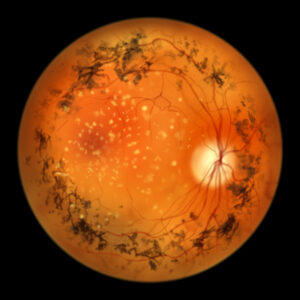
Adaptive optics (AO) imaging may be a promising and potentially revolutionary tool for the early diagnosis and monitoring of inherited retinal diseases (IRDs). A recent article discusses how AO imaging can provide valuable insights into disease progression, especially in cases of retinitis pigmentosa (RP) where traditional imaging methods might not detect early changes.

By utilizing cone metrics and focusing on the foveal region, AO imaging offers an opportunity to assess the efficacy of interventions and treatments for IRDs. However, the article also highlights the need for standardized imaging protocols and further validation to ensure the reliability of AO imaging in clinical trials and practice.

One of the most intriguing findings of this study is AO imaging’s effectiveness in identifying disease progression in patients with RP who do not exhibit obvious outer retinal defects on Spectral Domain Optical Coherence Tomography (SD-OCT) scans. RP is a type of IRD characterized by the gradual loss of peripheral vision. Since significant visual impairment often occurs after foveal involvement in many IRDs, the early detection of AO imaging in the foveal region provides a valuable signal for assessing the safety and efficacy of interventions for IRDs.

The importance of region-specific imaging is also discussed in the study. While monitoring disease progression in RP might be best achieved by imaging the temporal retina along the horizontal meridian, central retinal images are more adept at detecting subtle photoreceptor mosaic changes at early stages of macular disorders or generalized retinopathies.

Overall, AO imaging has the potential to transform the way IRDs are diagnosed, monitored, and treated, offering a new avenue for precision medicine in this field.

The full article can be found here.

Reference
Ashourizadeh H, Fakhri M, Hassanpour K, et al. Pearls and Pitfalls of Adaptive Optics Ophthalmoscopy in Inherited Retinal Diseases. Diagnostics (Basel). 2023;13(14):2413. doi: 10.3390/diagnostics13142413. PMID: 37510157; PMCID: PMC10377978.


Share

Related Content

  • Inherited Retinal Disease

Survey finds variation in inherited retinal disease care among U.S. retina specialists

  • Inherited Retinal Disease

Patients with inherited retinal diseases face elevated risk of multiple ocular complications

  • Inherited Retinal Disease

Low-dose atropine shows limited effect on myopia progression in children with IRDs

  • Inherited Retinal Disease

Emerging imaging technologies offer hope for inherited retinal disease management

  • Inherited Retinal Disease

Emerging therapies and treatment for rare retinal diseases: a look at the pipeline

  • Inherited Retinal Disease

Breakthroughs in Gene Therapy and Diagnostics: Advancing Treatments and Understanding

Share

Editor's Picks

  • Neurotrophic Keratitis

Topical insulin shows real-world benefit in neurotrophic keratopathy

  • Retina

GLP-1 RAs have protective effects against AMD

  • Retina

Four-month injection intervals appear safe for long-term stable nAMD

Advisory Board

Saad Ahmad, MD

Ahmad A. Aref, MD, MBA

Roomasa Channa, MD

David Chow, MD, FRCS(C)

Sally L. Baxter, MD, MSc

Neel R. Desai, MD

Nadia Haqqie, MD

Simon Fung, MD, FRCOphth

Sumit Garg, MD

Ross Lakhanpal, MD, FACS

Sanjai Jalaj, MD

Anton Kolomeyer, MD, PhD

Shan Lin, MD

Steven R. Sarkisian, Jr., MD

See All
Optometry360 Logo

Ophthalmology 360® is a dynamic digital platform dedicated to advancing the field of eye care.

Get to Know Us

  • Home
  • About Us
  • Media Partners
  • Advertising Policy
  • Our Advisory Board

Sign up for our Newsletter

Sign up for our Newsletter to get our newest articles instantly!

  • Privacy Policy
  • Advertising Policy
  • Medical Disclaimer
IHM Logo

2026 Ophthalmology 360 is a trademark of International Healthcare Media, LLC. All rights reserved

  • MedJournal360 Icon
  • RareDisease360 Icon
  • MyHero360 Icon
  • Optometry360 Icon
  • Ophtalmology360 Icon