Clinical Trials for Retinal Disease Gene Therapies are Driving the Need for Genetic Testing


Ben Shaberman
Senior Director of Scientific Outreach
Foundation Fighting Blindness

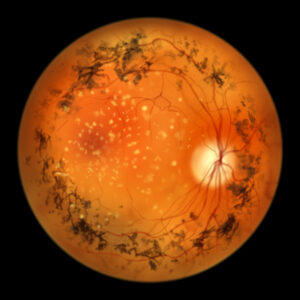
The momentum for the development of genetic treatments for inherited retinal diseases (IRDs) has accelerated dramatically in recent years, thanks, in part, to the FDA’s approval of LUXTURNA® in December 2017. The first FDA-approved gene therapy for the eye or any inherited condition, LUXTURNA continues to provide life-changing vision improvements for children and young adults with Leber congenital amaurosis (LCA) and retinitis pigmentosa (RP) caused by biallelic mutations in RPE65.
The success of LUXTURNA, has led biotechnology and pharmaceutical companies, both large and small, to flock to the gene therapy space to address unmet needs for myriad forms of IRDs, which are virtually all monogenic. Today, more than two dozen clinical trials are underway for emerging gene augmentation, gene-editing, and RNA therapies for a broad range of IRDs, including X-linked RP, RP and Usher syndrome caused by USH2A mutations, and LCA caused by mutations in CEP290 and GUCY2D. Dozens more are in preclinical development, including those that are gene-agnostic such as neuroprotective approaches to preserve photoreceptors and optogenetic treatments for harnessing bipolar and ganglion cells for vision restoration in people with advanced retinal degeneration.
The advent of gene therapy development is driving the need for genetic testing of IRD patients for clinical trial recruitment. Furthermore, genetic testing can clarify/confirm the patient’s clinical diagnosis and help them understand who else in their family may be at risk of the condition.
In 2017, the Foundation Fighting Blindness launched its no-cost My Retina Tracker® Genetic Testing Program for patients clinically diagnosed with an IRD. The program is available to all MDs and most ODs in the US who can clinically diagnose their patients with IRDs. More than 10,000 tests have been ordered since the program’s launch.
The no-cost My Retina Tracker Program features a broad and deep genetic testing panel from Blueprint Genetics, telephone-based genetic counseling by InformedDNA (or the provider’s genetic counselor), and the My Retina Tracker Patient Registry which is used by companies and researchers for recruiting patients for clinical trials. Patient privacy is paramount with the program — only de-identified data is shared with the research community.
Though identifying the patient’s disease-causing mutated gene is an important objective of the program, the overarching goal is to help patients and families better manage their condition and understand which clinical trials and emerging therapies are relevant to them.
“The identification of the disease-causing mutated gene is often a cathartic moment for patients and families, but it is just one step in their journey,” says Todd Durham, PhD, vice president of clinical & outcomes research at the Foundation Fighting Blindness. “Through genetic counseling and our vast information on diseases and science, we help ensure that they understand their IRD and the resources and research to address it. Ultimately, we provide a hopeful path forward.”
More on the program components:
Blueprint Genetics screening panel
DNA screening using Blueprint Genetics’ 322-gene panel includes the entire mitochondrial genome, full coverage of RPGR (a difficult-to-screen gene commonly associated with X-linked RP), high-resolution copy number variant detection, and comprehensive coverage of IRD related non-coding variants. Doctors order the test online at BlueprintGenetics.com/nucleus. (Doctors should select the My Retina Tracker Panel to ensure they get the no-cost panel.
InformedDNA genetic counseling
The genetic counselors have extensive experience with IRDs and help patients and families understand in lay terms and concepts what the results in the testing report mean. They also tell patients if additional testing is recommended and about relevant clinical trials for emerging therapies. Counseling sessions are phone-based and are typically 60-75 minutes in duration.
The My Retina Tracker Patient Registry
Launched in 2015, the free, global, patient-controlled registry enables those with IRDs to get on the radar screen of companies and investigators recruiting for clinical trials and natural history studies. The patients’ personal information is never shared; researchers and trial sponsors can only access de-identified data. When a patient is identified as a potential candidate for a trial, the patient is notified and it is up to them to contact the study coordinator. The patient’s personal information is again never shared. Nearly 19,000 patients are in the registry.
For more information on the My Retina Tracker Genetic Testing Program, visit www.FightingBlindness.org and click on the Genetic testing tab near the top of the homepage. Or, you can send an e-mail to [email protected].
Related Content