Optometry360 Logo White
  • Conferences
  • Videos
  • Podcasts
  • Quizzes
  • About
    • About Us – Mission
    • Content Awards
    • Media Partners
    • Business Team
    • Brand Ambassadors
    • Industry Council
    • Advisory Board

What are you looking for?

  • Anterior Segment
  • Cataract
  • Cornea and External Disease
  • Diabetic Macular Edema
  • Dry Eye
  • Early Onset Cataracts
  • Exclusives
  • General
  • Geographic Atrophy
  • Glaucoma
  • Industry News
  • Inherited Retinal Disease
  • IOLs
  • Neurotrophic Keratitis
  • Ocular Surface Disease
  • Oculoplastics
  • Optometry
  • Pediatrics
  • Practice Management
  • Presbyopia
  • Refractive Surgery/Vision Correction
  • Residents & Young Ophthalmologists
  • Retina
  • Retina Care 360
  • Retinopathy of Prematurity
  • Spotlight Series
  • The Interventional Glaucoma Project
  • The Ophthalmic Project
  • Trending Topics
Spotlight - The Future of Cryopreserved Amniotic Membrane in Oculoplastic Surgery
Optometry360 Logo White
  • Conferences
  • Videos
  • Podcasts
  • Quizzes
  • About
    • About Us – Mission
    • Content Awards
    • Media Partners
    • Business Team
    • Brand Ambassadors
    • Industry Council
    • Advisory Board
Home > Inherited Retinal Disease > Key clinical and genetic features of CRB1-associated retinopathies identified
  • Inherited Retinal Disease

Key clinical and genetic features of CRB1-associated retinopathies identified

Kelsey Moroz

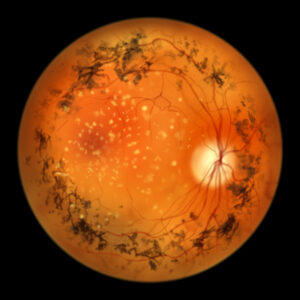
Key retinal signs, such as geographic macular degeneration and hyperopia, are more prevalent in patients with CRB1 mutation compared to other inherited retinal diseases, according to a study.

The multicenter study included 40 patients with CRB1 mutations and 40 age- and gender-matched individuals with other inherited retinal diseases (IRDs).

Certain retinal features were found to be particularly prevalent in patients with CRB1 mutation, including yellowish geographic macular degeneration (66.67%), small white or yellow dots (65.6%), and hyperopia (62.5%). These characteristics were significantly more common in patients with CRB1 compared to other IRD groups. In addition, patients with early-onset severe retinal dystrophy/Leber congenital amaurosis exhibited more pronounced retinal changes, such as thicker peripheral retinas and thinner central fovea, compared to those with retinitis pigmentosa or macular dystrophy.

The study also identified 55 pathogenic variants, including 20 novel mutations. Null mutations were linked to early-onset severe retinal dystrophy/Leber congenital amaurosis, while missense mutations were more common in retinitis pigmentosa and macular dystrophy.

Reference
Wang MY, Gao FJ, Ju YQ, et al. Clinical and mutational signatures of CRB1-associated retinopathies: a multicentre study. J Med Genet. 2024;jmg-2024-110289. doi: 10.1136/jmg-2024-110289. Epub ahead of print. PMID: 39496395.

Share

Related Content

  • Inherited Retinal Disease

Patients with inherited retinal diseases face elevated risk of multiple ocular complications

  • Inherited Retinal Disease

Low-dose atropine shows limited effect on myopia progression in children with IRDs

  • Inherited Retinal Disease

Emerging imaging technologies offer hope for inherited retinal disease management

  • Inherited Retinal Disease

Emerging therapies and treatment for rare retinal diseases: a look at the pipeline

  • Inherited Retinal Disease

Breakthroughs in Gene Therapy and Diagnostics: Advancing Treatments and Understanding

  • Inherited Retinal Disease

Limited myopia progression in CSNB patients may guide treatment approaches

Share

Editor's Picks

  • Neurotrophic Keratitis

Topical insulin shows real-world benefit in neurotrophic keratopathy

  • Retina

GLP-1 RAs have protective effects against AMD

  • Retina

Four-month injection intervals appear safe for long-term stable nAMD

Advisory Board

Saad Ahmad, MD

Ahmad A. Aref, MD, MBA

Roomasa Channa, MD

David Chow, MD, FRCS(C)

Sally L. Baxter, MD, MSc

Neel R. Desai, MD

Nadia Haqqie, MD

Simon Fung, MD, FRCOphth

Sumit Garg, MD

Ross Lakhanpal, MD, FACS

Sanjai Jalaj, MD

Anton Kolomeyer, MD, PhD

Shan Lin, MD

Steven R. Sarkisian, Jr., MD

See All
Optometry360 Logo

Ophthalmology 360® is a dynamic digital platform dedicated to advancing the field of eye care.

Get to Know Us

  • Home
  • About Us
  • Media Partners
  • Advertising Policy
  • Our Advisory Board

Sign up for our Newsletter

Sign up for our Newsletter to get our newest articles instantly!

  • Privacy Policy
  • Advertising Policy
  • Medical Disclaimer
IHM Logo

2026 Ophthalmology 360 is a trademark of International Healthcare Media, LLC. All rights reserved

  • MedJournal360 Icon
  • RareDisease360 Icon
  • MyHero360 Icon
  • Optometry360 Icon
  • Ophtalmology360 Icon