
Case series demonstrates low enhancement rate and high rates of 20/20 and J1 vision
The contents of this article are informational only and are not intended to be a substitute for professional medical advice, diagnosis, or treatment recommendations. This editorial presents the views and experiences of the author and does not reflect the opinions or recommendations of the publisher of Ophthalmology 360.
By Brian Szabo, DO; T. Hunter Newsom, MD; Nikhil Swarup, MD; Eric Fazio, OD; Daniel Ochs, OD; and Paula Quecano
At Newsom Eye, a large percentage of our patients choose refractive cataract surgery with a toric intraocular lens (IOL), a presbyopia-correcting IOL, or an adjustable lens option.
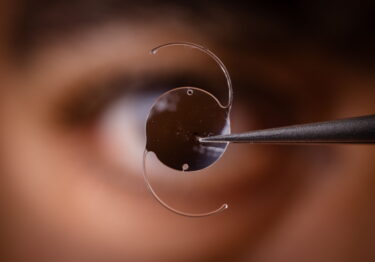
We recently analyzed 1- and 3-month outcomes from a case series of 183 consecutively operated-on eyes that were implanted at our practice with the TECNIS Odyssey IOL, the most recent full visual range (FVR) lens from Johnson & Johnson. Patients who were lost to follow-up or had incomplete visual acuity data, such as a missing near acuity at 1 visit, were excluded, leaving 126 of the 183 eyes with complete data. The results were excellent, with about three-quarters of the eyes achieving 20/20 or better uncorrected distance visual acuity and J1 or better uncorrected near visual acuity (see Figure 1).

Image credit: Drs. Szabo and Newsom
This was a real-world case series in which Drs. Szabo and Newsom performed all the surgical procedures at 5 different locations, with a variety of staff assisting. Clinic staff were not necessarily consistently pushing patients to read the smallest line possible on the eye chart during follow-up exams, so these outcomes could have been better had they been part of a rigorous, prospective clinical trial.
Enhancement Rate
In the full case series of 183 eyes, 1 eye needed a laser vision touchup, for an enhancement rate of 0.5%. That patient had a slightly denser cataract than is typical, and our preoperative measurements were likely somewhat off. The patient underwent photorefractive keratectomy (PRK) to correct –1.0 D of residual myopia and is very happy now with the result. There were no IOL exchanges in the series. An enhancement rate of 0.5% is considerably lower than our typical presbyopia-correcting IOL enhancement rate of about 2.0%. Patients who elect to have a premium lens have high expectations, so we have no qualms about performing a LASIK or PRK touchup or, less commonly, an IOL exchange when the outcome is unsatisfactory. As in this case, the most common reason that patients seek an enhancement is blur at distance, rather than dissatisfaction with near vision.
Residual refractive error typically has a negative impact on visual quality and nighttime dysphotopsias with presbyopia-correcting IOLs.1,2 However, we have found that the Odyssey is very tolerant of small amounts of refractive error, something that other investigators have also reported at recent professional conferences.3,4 One reported that the vast majority (90%) of Odyssey patients could maintain 20/40 or better, even with up to 1.5 D of induced with-the-rule astigmatism or up to 1.0 D of against-the-rule/oblique astigmatism.3 This tolerance, we believe, is due to the high-quality, precision-lathed TECNIS material and also the unique non-uniform diffractive optics of this lens, which help to eliminate the gaps between near, intermediate, and distance focal points for a more continuous vision experience.
A forgiving lens technology that can reduce enhancement rates is both patient- and doctor-friendly. Patients don’t have to undergo a second procedure, and providers can be confident in more consistent results, well-controlled surgery center and staffing costs, and, most importantly, satisfied patients who refer others.
In our experience, in this case series and beyond, patients are also experiencing very rapid visual recovery following TECNIS Odyssey implantation. When we call patients the day after surgery, it is not uncommon for them to volunteer that they are amazed by how crisp and clear their vision is.
Ideal Patients
The ideal candidate for the Odyssey lens is an active adult with otherwise healthy eyes and near hobbies who desires a full range of vision after surgery. It is a great choice for the categories of patients who have traditionally been very hard to please, such as plano presbyopes and low myopes who take their glasses off to read. We find that TECNIS Odyssey has minimal contrast loss and a favorable nighttime dysphotopsia profile.5
To set expectations appropriately, we tell patients that they can expect to have good vision for driving, watching TV, using their computer, and reading text messages or doing a Google search on their cell phone, but that they might need reading glasses in dim light or for very fine print. There is usually a bottle of hand sanitizer in the exam room, which makes a great a prop to demonstrate to patients that they will be able to read everything on the front of the bottle but probably not the ingredients list on the back of the bottle after surgery.
We do not offer the TECNIS Odyssey to post-refractive patients or those who have retinal disease or significant glaucoma or ocular surface disease. For post-refractive patients, those desiring monovision, and anyone who is extremely wary of night vision problems, we prefer the Light Adjustable Lens (LAL; RxSight). The LAL is also a good choice for patients who play golf or pickleball, but don’t have a lot of near-work hobbies and who want to really control the final outcome.
We are so fortunate to have a strong and growing armamentarium of premium refractive IOLs. The case series discussed shows that the latest offerings can provide patients with excellent uncorrected acuity, with minimal need for enhancement.

Meet Dr. Brian Szabo
Fellowship Trained | Refractive Cataract, LASIK/ICL/PRK, MIGS & Corneal Cross-Linking Surgeon
Dr. Brian Szabo is a highly experienced ophthalmologist at Newsom Eye, specializing in advanced cataract surgery, refractive procedures like EVO ICL and LASIK, corneal cross-linking, and micro-invasive glaucoma surgery. Known for his precision in the operating room and warm, patient-first approach, Dr. Szabo has performed tens of thousands of vision-correction procedures and continues to stay at the forefront of innovation in eye care.
With over a decade in medical practice and advanced fellowship training under world-renowned refractive surgeons, Dr. Szabo is often called upon to teach, consult, and speak at leading national conferences. He was among the first surgeons in the country to implant the next-generation Light Adjustable Lens (LAL+) and the first in Florida to implant the Clearview lens.
Patients appreciate Dr. Szabo’s ability to make complex vision decisions simple and personalized. He’s frequently featured on WFLA’s “The Doctor Is In” and has worked with patients from all walks of life – including celebrities, athletes, and everyday individuals who want to regain clarity and freedom from glasses. When he’s not in surgery or speaking at medical conferences, Dr. Szabo enjoys time on the water with his wife Ashley and son JJ, staying active, and mentoring the next generation of ophthalmologists.
Credentials at a Glance:
- Fellowship-Trained in Refractive Cataract, LASIK/ICL/PRK & Glaucoma Surgery at
- Newsom Eye
- National Faculty Speaker at AECOS, ASCRS, and Kiawah Eye
- Consultant for Johnson & Johnson Vision, RxSight, STAAR Surgical, and Glaukos
- Member of the American Academy of Ophthalmology (AAO), ASCRS and AECOS
Dr. T. Hunter Newsom is the founder of Newsom Eye. He is a nationally recognized innovator and educator in the world of eye surgery. With more than 2 decades of experience, Dr. Newsom is known for pushing boundaries in cataract, LASIK, and minimally invasive glaucoma surgery. From pioneering FDA studies to developing surgical techniques used around the world, he has helped thousands of patients regain their vision and their confidence.
The authors are in private practice at Newsom Eye, with 5 offices in central Florida. Contact Dr. Szabo at [email protected] and Dr. Newsom at [email protected]. Disclosures: Drs. Fazio, Newsom, and Szabo are consultants for RxSight. Dr. Szabo is a consultant for Johnson & Johnson.
References
- Pedrotti E, Carones F, Talli P, et al. Comparative analysis of objective and subjective outcomes of two different intraocular lenses: trifocal and extended range of vision. BMJ Open Ophthalmol. 2020;5(1):e000497. doi:10.1136/bmjophth-2020-000497
- Rementería-Capelo LA, Contreras I, García-Perez JL, et al. Tolerance to residual refractive errors after trifocal toric intraocular lens implantation. Eye Contact Lens. 2021;47(4):213-218. doi:10.1097/ICL.0000000000000726
- Rocha KM, Borges Hu, Feltrin de Barros M, et al. Optical phenomena and tolerance to simulated astigmatism of a violet light filtering diffractive full-range vision IOL. Presented at the AAO 2025 Annual Meeting, October 17-20, 2025; Orlando, FL.
- Chang D. Clinical evaluation of tolerance to residual refractive errors following implantation with new diffractive presbyopia-correcting IOL. Presented at the ASCRS Annual Meeting 2024, April 5-8, 2024; Boston, MA.
- Waring GO IV, De Jesus M, Muenz D, Weeber H. Depth of focus and spectacle independence 1-month outcomes for a new full vision range IOL. Presented at the ASCRS Annual Meeting 2024, April 5-8, 2024; Boston, MA.
Related Content