Optometry360 Logo White
  • Conferences
  • Videos
  • Podcasts
  • Quizzes
  • About
    • About Us – Mission
    • Content Awards
    • Media Partners
    • Business Team
    • Brand Ambassadors
    • Industry Council
    • Advisory Board

What are you looking for?

  • Anterior Segment
  • Cataract
  • Cornea and External Disease
  • Diabetic Macular Edema
  • Dry Eye
  • Early Onset Cataracts
  • Exclusives
  • General
  • Geographic Atrophy
  • Glaucoma
  • Industry News
  • Inherited Retinal Disease
  • IOLs
  • Neurotrophic Keratitis
  • Ocular Surface Disease
  • Oculoplastics
  • Optometry
  • Pediatrics
  • Practice Management
  • Presbyopia
  • Refractive Surgery/Vision Correction
  • Residents & Young Ophthalmologists
  • Retina
  • Retina Care 360
  • Retinopathy of Prematurity
  • Spotlight Series
  • The Interventional Glaucoma Project
  • The Ophthalmic Project
  • Trending Topics
Spotlight - The Future of Cryopreserved Amniotic Membrane in Oculoplastic Surgery
Optometry360 Logo White
  • Conferences
  • Videos
  • Podcasts
  • Quizzes
  • About
    • About Us – Mission
    • Content Awards
    • Media Partners
    • Business Team
    • Brand Ambassadors
    • Industry Council
    • Advisory Board
Home > Refractive Surgery/Vision Correction > In-Person vs Remote Patient-Surgeon Discussion After Refractive Surgery
  • Refractive Surgery/Vision Correction

In-Person vs Remote Patient-Surgeon Discussion After Refractive Surgery

Ophthalmology 360
Article Image

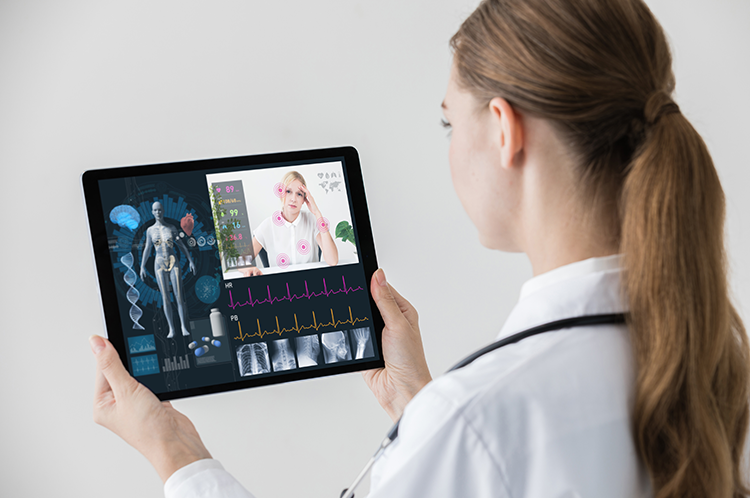
Most patients who had refractive surgery preferred a remote discussion with their surgeon postoperatively, according to a retrospective study involving nearly 5,000 individuals. Additionally, satisfaction with the preoperative informed consent process was high. The findings were presented by David Teenan, MD, medical director at Optical Express UK, during the American Society of Cataract and Refractive Surgery’s 2018 annual meeting in Washington, DC. 

Participants were examined by and had a discussion with a refractive optometrist, and watched a video consent prior to either laser vision correction (LVC) or refractive lens exchange (RLE). They were then given the choice of an in-person or remote discussion with the surgeon postoperatively. Patients were examined 1 day and 1 month postoperatively, and completed a patient experience questionnaire. Investigators looked at clinical outcomes and questionnaire answers. Among the results: 

  • 82% of LVC patients chose remote discussion, vs 57% of those in the RLE contingent. 
  • Older patients and those with higher refractive errors tended to opt for in-person discussion. 
  • Nearly all the patients in both groups said they were satisfied with the consent process. 
  • Patients who thought they were not consented properly usually experienced poor outcomes, were dissatisfied with vision, or experienced significant visual phenomena/dry eye.

Teenan D. Consent process in refractive surgery: Comparison of in person versus telemedicine approach. Talk presented at: 2018 ASCRS-ASOA Annual Meeting; April 13-17, 2018; Washington, DC.  

Share

Related Content

  • Refractive Surgery/Vision Correction

VISUMAX 800 lenticule extraction linked to high satisfaction and spectacle independence

  • Refractive Surgery/Vision Correction

First-in-human study underway for non-invasive vision correction technology

  • Refractive Surgery/Vision Correction

Tips to successfully integrate EVO ICL into office-based surgery

Dr. Ling implanting EVO ICL
  • Refractive Surgery/Vision Correction

EVO ICL plays a strategic role in my refractive business model

  • Cornea and External Disease

Who is the ideal candidate for EVO ICL?

  • Cornea and External Disease

Impact of corneal size on refractive surgery outcomes highlighted in new research

Share

Editor's Picks

  • Neurotrophic Keratitis

Topical insulin shows real-world benefit in neurotrophic keratopathy

  • Retina

GLP-1 RAs have protective effects against AMD

  • Retina

Four-month injection intervals appear safe for long-term stable nAMD

Advisory Board

Saad Ahmad, MD

Ahmad A. Aref, MD, MBA

Roomasa Channa, MD

David Chow, MD, FRCS(C)

Sally L. Baxter, MD, MSc

Neel R. Desai, MD

Nadia Haqqie, MD

Simon Fung, MD, FRCOphth

Sumit Garg, MD

Ross Lakhanpal, MD, FACS

Sanjai Jalaj, MD

Anton Kolomeyer, MD, PhD

Shan Lin, MD

Steven R. Sarkisian, Jr., MD

See All
Optometry360 Logo

Ophthalmology 360® is a dynamic digital platform dedicated to advancing the field of eye care.

Get to Know Us

  • Home
  • About Us
  • Media Partners
  • Advertising Policy
  • Our Advisory Board

Sign up for our Newsletter

Sign up for our Newsletter to get our newest articles instantly!

  • Privacy Policy
  • Advertising Policy
  • Medical Disclaimer
IHM Logo

2026 Ophthalmology 360 is a trademark of International Healthcare Media, LLC. All rights reserved

  • MedJournal360 Icon
  • RareDisease360 Icon
  • MyHero360 Icon
  • Optometry360 Icon
  • Ophtalmology360 Icon