Tips to successfully integrate EVO ICL into office-based surgery


This approach maximizes the clinical advantages of EVO ICL with the practice-building benefits of OBS
The contents of this article are informational only and are not intended to be a substitute for professional medical advice, diagnosis, or treatment recommendations. This editorial presents the views and experiences of the author and does not reflect the opinions or recommendations of the publisher of Ophthalmology 360.
By Jason Brenner, MD
Meeting the expectations of today’s refractive patients while building a sustainable, high-performing practice requires alignment across several key pillars—efficiency, efficacy, and, above all, safety. Patients are increasingly informed, highly motivated, and selective, seeking procedures that deliver predictable outcomes with minimal disruption to their daily lives. At the same time, refractive surgeons must navigate operational demands that support access, consistency, and long-term practice growth.
This article explores how adopting office-based surgery (OBS) and including the EVO Implantable Collamer Lens (ICL; STAAR Surgical) in our surgical armamentarium enabled us to achieve those aims at Boston Vision.
Practice Efficiency and Control Through OBS
OBS allows us to deliver refractive care in a setting that feels more familiar and comfortable for patients, with staff they already know and trust. Patients tend to perceive the in-office setting as less intimidating than a hospital or ambulatory surgery center (ASC). The fact that patients are in a familiar location and being cared for by the staff they’ve seen at preoperative appointments reduces stress and adds a degree of comfort. In my experience, this familiarity can positively influence patient confidence and decision-making, supporting smoother surgical conversion while maintaining a high standard of care.
OBS also offers operational advantages, including the ability to control our surgical scheduling as well as make independent decisions about equipment and protocols. This autonomy enhances both efficiency and value, enabling us to deliver a more streamlined and cost-effective experience for patients.
For instance, office-based ICL surgery eliminates anesthesia-related fees and other ASC facility costs. In our experience, this allows for improved margins while lowering cost to the patient relative to local competitors. OBS startup requirements are modest, with the operating microscope representing the primary capital investment.
EVO ICL in the OBS Setting
EVO ICL has emerged as a particularly strong example of how advanced refractive technology can maximize the value of the OBS setting. The EVO ICL offers predictable outcomes, short surgical times, and a reproducible workflow that integrates seamlessly into the office-based environment.
In our practice, the adoption of EVO ICL and the transition to OBS occurred in parallel, and together they drove a significant increase in ICL volume. Prior to EVO, ICLs accounted for approximately 1% of our refractive procedures. Today, that figure exceeds 20%. This growth reflects both clinical confidence and improved access.
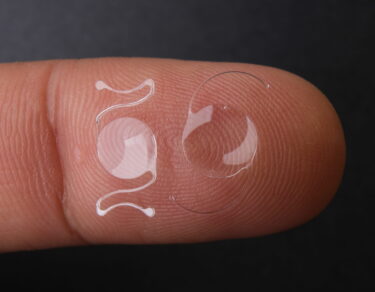
The EVO ICL is distinguished from earlier ICL generations by a central port, eliminating the need for a preoperative peripheral iridotomy, which enables us to perform the surgery as a 1-step procedure. This lens delivers consistently strong visual results without corneal tissue removal, offering patients a lens-based option that remains reversible if future needs change. Long-term follow-up has demonstrated durable vault stability and low rates of endothelial cell loss beyond a decade, reinforcing confidence in the safety of the procedure over time. EVO has also reduced the risk of cataracts and intraocular pressure issues. Many patients describe improved quality of vision in low-light conditions and fewer visual disturbances relative to laser-based refractive surgery, underscoring the role of EVO ICL as a go-to refractive solution for discerning patients with high expectations.
Expanding Patient Candidacy
Once limited primarily to patients with higher degrees of myopia, EVO ICL is now considered for individuals with refractive errors as low as –3.00 D. This broader applicability enables us to address the needs of younger adults and those who prefer a non-ablative approach to vision correction. The FDA-approved age range for EVO ICL is 21 to 45 years, though select off-label cases, such as highly myopic patients in their late 40s, may benefit from EVO ICL over refractive lens exchange, particularly when retinal risk is a concern.
Historically, ICL was often reserved for patients who were poor LASIK candidates. With EVO, that framework has expanded. In our practice, EVO ICL is routinely discussed with patients who have dry eye disease, irregular corneas, or who would otherwise be steered toward photorefractive keratectomy. LASIK remains a mainstay, but many patients value the reversibility of ICL and the ability to preserve future options for cataract surgery. If a moderate myope, for example, a –4.00 D patient, prefers ICL, there is no compelling clinical reason to discourage that choice.
EVO ICL can be offered to more patients compared with earlier-generation ICLs primarily due to its improved safety profile and non-ablative, reversible design. Our confidence in the safety of the EVO ICL, combined with the ease of access to the procedure in the OBS setting, comes across in our discussions with patients and has unquestionably contributed to the increase in ICL volume we’ve seen in the last 3 to 4 years.
Scheduling and the Patient-Centered Experience
Moving ICL cases into an office-based setting removed major logistical barriers. Previously, patients were scheduled through cataract surgery pathways, often facing delays of several months, unilateral surgery requirements, and multiple procedural visits. The patient was facing 2 surgical dates plus a peripheral iridotomy appointment for earlier ICL iterations in an ASC. OBS simplified that process dramatically because we are in control of scheduling.
Beyond logistical simplification, OBS allows us to meet patient scheduling expectations in a way that was extremely challenging to achieve in an ASC or hospital setting. For instance, we can decide to work an extra 30 or 60 minutes on a given week to fit in a specific patient’s surgery. This scheduling flexibility allows us to offer a much better customer experience. Patients often take 5 to 10 years to decide if they want refractive surgery, but when they finally make the decision, they want it tomorrow.
Surgical Efficiency and Staff Engagement
From a procedural standpoint, EVO ICL integrates easily into an office-based environment. Surgical time averages approximately 7 minutes per eye. Each eye is treated as a separate procedure with full re-prepping and re-draping, and the total time in the operating room is typically about 25 minutes. This efficiency supports predictable scheduling without compromising surgical rigor.
An unexpected benefit of OBS has been increased staff engagement. Allowing team members to observe EVO ICL procedures firsthand improves understanding and confidence, which translates into more consistent patient education. Our counseling process includes a pre-education video, physician consultation, and reinforcement by a surgical counselor, ensuring clarity and alignment throughout the patient journey.
Maintaining consistency and safety was a central consideration as we transitioned to OBS. Our ophthalmic technicians assist in surgery but do not perform surgical support functions every day. To reduce variability and minimize risk, we made a deliberate decision to use premixed and prepackaged medications from ImprimisRx, including lidocaine with epinephrine, intracameral moxifloxacin, and select postoperative compounded drops. In addition, we decided to use almost exclusively disposable instruments from BVI. This approach simplifies workflow, reduces the potential for compounding and contamination errors, and allows staff to focus on execution and patient care rather than medication preparation.
A Modern Model for Refractive Care
Ultimately, EVO ICL offers a scalable, safe, and reversible option that aligns with both patient demand and long-term practice growth. By combining OBS with EVO ICL, refractive practices can align clinical excellence with modern patient expectations while supporting operational efficiency and sustainable growth. Together, these elements form a compelling model for contemporary refractive care.
Jason Brenner, MD, is a corneal refractive surgeon at Boston Vision in Brookline, MA. He can be reached at [email protected]. Disclosure: He is a consultant to STAAR Surgical.
Related Content