
This Spotlight Series article is editorially independent content.
A leading cause of dry eye disease (DED) is excessive tear evaporation, often linked to abnormalities in the tear lipid layer and commonly associated with the clinical signs of meibomian gland dysfunction (MGD). An unstable tear film triggers increased ocular surface desiccation, inflammation, and damage to the ocular surface.1,2
MIEBO® Directly Targets Tear Evaporation
Treating evaporation as the root cause of DED signs and symptoms may help disrupt the cycle of chronic disease and support the restoration of ocular surface homeostasis. In 2023, MIEBO (perfluorohexyloctane ophthalmic solution; Bausch & Lomb, Novaliq) was introduced—the first and only FDA-approved treatment for the signs and symptoms of DED that directly targets tear evaporation.3
Efficacy Data
MIEBO demonstrated consistent efficacy in improving signs and symptoms of DED in multiple studies.
GOBI and MOJAVE
FDA approval was based on results from GOBI and MOJAVE—two 57-day multicenter, randomized, double-masked, saline-controlled, phase 3 studies. A total of 1,217 patients with a history of DED and clinical signs of MGD were randomized 1:1 to MIEBO or saline 0.6% (control) four times per day for 57 days.1,2,4
The studies met their primary efficacy endpoints, with MIEBO significantly improving total corneal fluorescein staining (tCFS) and Visual Analog Scale (VAS) dryness score versus the control group as early as day 15 through 57.1,2,4 A pooled analysis of data at day 57 showed that MIEBO-treated patients achieved a 2-fold improvement in tCFS and a 1.5-fold improvement in VAS eye dryness score from baseline versus the control group (see FIGURES 1 and 2).5
Figure 1.

Figure 2.

KALAHARI
KALAHARI was an open-label extension study of GOBI that examined the long-term efficacy and safety of MIEBO over 52 weeks, with 208 patients from GOBI enrolled. Efficacy endpoints included changes in tCFS and VAS eye dryness score from the GOBI study baseline.6
Patients continued to show significant reductions from baseline through week 52 in tCFS and VAS eye dryness score. Furthermore, patients in the saline crossover group demonstrated improvements in tCFS and VAS eye dryness score by week 4, and results were maintained through week 52 (see FIGURES 3 and 4).6
Figure 3.

Figure 4.

Phase 4 Study
New data from a prospective, multicenter, open-label, phase 4 study evaluated the effect of MIEBO on symptom severity and frequency early in treatment. A total of 99 patients with a history of DED and evidence of MGD were enrolled.7
Patients reported that MIEBO significantly reduced symptom severity. Overall symptom severity decreased significantly from 72.1 (17.0) at baseline to 27.8 (22.3) at day 7 (mean change, −44.5; P<0.0001). Additionally, significant symptom relief was observed within 5 and 60 minutes after a single administration on day 1. The mean VAS for overall dry eye symptoms was 72.1 (17.0) at baseline and decreased to 38.5 (22.8) at 5 minutes post-administration and 31.7 (22.1) at 60 minutes post-administration.7
Safety and Tolerability
MIEBO exhibited a favorable safety profile across the pivotal trials and open-label extension study.1,2,4,6 Most adverse events (AEs) were considered mild or moderate in severity. Blurred vision in the MIEBO group in GOBI (3.0%) and conjunctival redness (1.6%) in MOJAVE were reported in 1% to 3% of patients.1,2
In KALAHARI, the most common ocular AEs were nontreatment-related vitreous detachment (1.9%), allergic conjunctivitis (1.4%), blurred vision (1.4%), and increased lacrimation (1.4%).6
Dosing and Administration
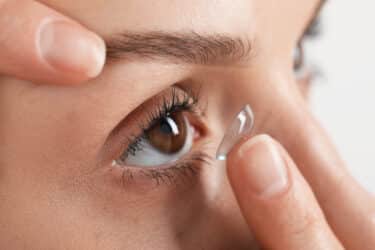
The recommended dose of MIEBO is 1 drop 4 times daily into the affected eye(s). MIEBO should not be administered while wearing contact lenses. Contact lenses should be removed prior to and for at least 30 minutes after administration.4
For more information, visit www.miebo-ecp.com.
References
- Tauber J, Berdy GJ, Wirta DL, Krösser S, Vittitow JL; GOBI Study Group. NOV03 for dry eye disease associated with meibomian gland dysfunction: results of the randomized phase 3 GOBI study. Ophthalmology. 2023;130(5):516-524. doi:10.1016/j.ophtha.2022.12.021
- Sheppard JD, Kurata F, Epitropoulos AT, Krösser S, Vittitow JL; MOJAVE Study Group. NOV03 for signs and symptoms of dry eye disease associated with meibomian gland dysfunction: the randomized phase 3 MOJAVE study. Am J Ophthalmol. 2023;252:265-274. doi:10.1016/j.ajo.2023.03.008
- Bausch & Lomb. MIEBO is the first and only prescription eye drop approved for dry eye disease that directly targets tear evaporation, based on consistent results from two consecutive pivotal phase 3 trials. May 18, 2023. Accessed July 12, 2025. https://www.novaliq.com/press-releases/2023/05/19/bausch-lomb-and-novaliq-announce-fda-approval-of-miebotm-perfluorohexyloctane-ophthalmic-solution-for-the-treatment-of-the-signs-and-symptoms-of-dry-eye-disease/
- Package insert. Bausch & Lomb Inc; 2023.
- Fahmy AM, Harthan JS, Evans DG, et al. Perfluorohexyloctane ophthalmic solution for dry eye disease: pooled analysis of two phase 3 clinical trials. Front Ophthalmol. 2024;4:1452422. doi:10.3389/fopht.2024.1452422
- Protzko EE, Segal BA, Korenfeld MS, Krösser S, Vittitow JL. Long-term safety and efficacy of perfluorohexyloctane ophthalmic solution for the treatment of patients with dry eye disease: the KALAHARI study. Cornea. 2024;43(9):1100-1107. doi:10.1097/ICO.0000000000003418
- Bacharach J, Kannarr SR, Verachtert A, et al. Early effects of perfluorohexyloctane ophthalmic solution on patient-reported outcomes in dry eye disease: a prospective, open-label, multicenter study. Ophthalmol Ther. 2025;14(4):693-704. doi:10.1007/s40123-025-01097-z
Related Content