
This Spotlight Series article is editorially independent content supported by Tarsus.
Demodex blepharitis is caused by an infestation of Demodex mites and is the most common ectoparasite found on human skin. Its prevalence has been reported as high as 55% to 58% among patients visiting eye care clinics in the United States. Clinical manifestations include itching, foreign body sensation, eyelid inflammation, and the presence of collarettes. Because Demodex blepharitis shares many signs and symptoms with other eyelid margin or ocular surface diseases, it is often misdiagnosed or underdiagnosed.1,2
Xdemvy® Targets Demodex Mites
Xdemvy (lotilaner ophthalmic solution; Tarsus Pharmaceuticals) 0.25% is the first and only FDA-approved treatment for Demodex blepharitis. It directly targets Demodex, the root cause of Demodex blepharitis.3 Xdemvy works through its active ingredient, lotilaner, a lipophilic agent in an aqueous drop that acts on mite gamma-aminobutyric acid–gated chloride channels to target, paralyze, and kill Demodex mites.4-6
Efficacy Data
The FDA approval was based on 2 randomized, multicenter, double-masked, vehicle-controlled studies—SATURN-1 and SATURN-2—designed to evaluate the safety and efficacy of Xdemvy. A total of 833 patients were randomized to receive Xdemvy (n=415) or placebo twice daily for 6 weeks. The primary endpoint was the proportion of patients with a reduction of collarettes (≤2) per upper eyelid.3-5,7
At day 43, patients in the Xdemvy group achieved a statistically significant reduction in collarettes (see FIGURE 1) compared with the control group. Additionally, both mite eradication (reducing mite density to 0 mites per lash) and erythema cure (grade 0) showed statistically significant improvement across both studies.4,5,7

In a combined analysis of both studies at day 43, Xdemvy demonstrated statistically significant improvements in collarette reduction (≤2) (49.8% vs 9.9%), mite eradication (60.2% vs 16.1%), and erythema cure (24.9% vs 7.9%) compared with the control group. Furthermore, 85.1% of patients in the Xdemvy arm achieved a collarette reduction (≤10) versus 28.0% of patients in the control arm.2
Extension Study
The extension study was designed to observe any safety events occurring up to 1 year after completing 6 weeks of Xdemvy. The analysis included patients with Demodex blepharitis who completed the SATURN-1 study and returned for the day 180 visit (n=239).1
A high proportion of patients maintained collarette reduction (≤2) throughout 1 year of follow-up (see FIGURE 2), suggesting that the efficacy of Xdemvy may last well after completion of therapy.1

Safety and Tolerability
In pivotal studies, Xdemvy was generally safe and well tolerated. The most common ocular adverse reaction in SATURN-1 and SATURN-2 was instillation-site stinging and burning, reported in 10% of patients. Other ocular adverse reactions occurring in <2% of patients included chalazion/hordeolum and punctate keratitis.4
A pooled analysis of SATURN-1 and SATURN-2 showed low overall rates of adverse events (AEs), with no serious drug-related ocular AEs reported. Additionally, more than 90% of patients in the Xdemvy group rated the drop as neutral to very comfortable.2 In the extension study evaluating safety for up to 1 year after initiation, no serious long-term safety concerns were identified. No serious ocular AEs were observed with Xdemvy, and only 1 treatment-related ocular AE (blurred vision) was reported and considered mild.1
Dosing and Administration
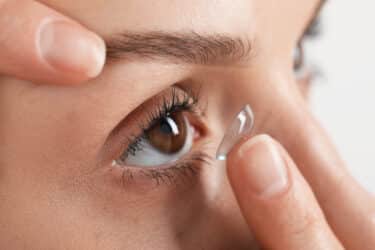
The recommended dosage is 1 drop in each eye twice daily (approximately 12 hours apart) for 6 weeks. If more than 1 topical ophthalmic drug is used, administer them 5 minutes apart. If a dose is missed, treatment should continue with the next scheduled dose. Contact lenses should be removed prior to instilling Xdemvy and may be reinserted 15 minutes after administration.4
For more information, visit https://xdemvyhcp.com.
References
- Sadri E, Paauw JD, Ciolino JB, et al. Long-term outcomes of 6-week treatment of lotilaner ophthalmic solution, 0.25%, for Demodex blepharitis: a noninterventional extension study. Cornea. 2024;43(11):1368-1374. doi:10.1097/ICO.0000000000003484
- Yeu E, Paauw JD, Vollmer P, et al. Safety and efficacy of lotilaner ophthalmic solution (0.25%) in treating Demodex blepharitis: pooled analysis of two pivotal trials. Ophthalmol Ther. 2025;14(3):555-571. doi:10.1007/s40123-024-01089-5
- FDA approves XDEMVY™ (lotilaner ophthalmic solution) 0.25% for the treatment of Demodex blepharitis. News release. Tarsus Pharmaceuticals. July 25, 2023. Accessed December 1, 2025. https://ir.tarsusrx.com/news-releases/news-release-details/fda-approves-xdemvytm-lotilaner-ophthalmic-solution-025
- Package insert. Tarsus Pharmaceuticals; 2023.
- Yeu E, Wirta DL, Karpecki P, Baba SN, Holdbrook M; Saturn I Study Group. Lotilaner ophthalmic solution, 0.25%, for the treatment of Demodex blepharitis: results of a prospective, randomized, vehicle-controlled, double-masked, pivotal trial (Saturn-1). 2023;42(4):435-443. doi:10.1097/ICO.0000000000003097
- Toutain CE, Seewald W, Jung M. The intravenous and oral pharmacokinetics of lotilaner in dogs. Parasit Vectors. 2017;10(1):522. doi:10.1186/s13071-017-2475-z
- Gaddie IB, Donnenfeld ED, Karpecki P, et al; Saturn-2 Study Group. Lotilaner ophthalmic solution 0.25% for Demodex blepharitis: randomized, vehicle-controlled, multicenter, phase 3 trial (Saturn-2). Ophthalmology. 2023;130(10):1015-1023. doi:10.1016/j.ophtha.2023.05.030
Related Content