Practice Assessments Advance Interventional Glaucoma Initiatives


This content was developed in partnership with and is sponsored by Glaukos.
Advances in minimally invasive glaucoma surgery (MIGS) and procedural pharmaceuticals are transforming the glaucoma treatment paradigm, allowing for earlier, targeted interventions while reducing patients’ dependence on long-term topical medications.
Known as interventional glaucoma (IG), this model has been making inroads in ophthalmology for over a decade, yet many practices are not as interventional as they think.
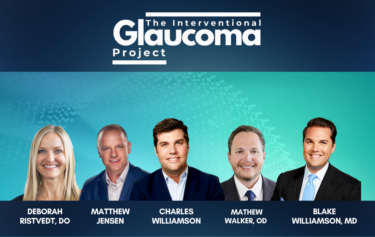
To better understand this disconnect, Matt Jensen, of MJM / Marjen, is hosting a 6-part video series called The Interventional Glaucoma Project, powered by Ophthalmology 360, where he speaks with leading eye care professionals about their approach to IG care following a practice assessment of their facility. Evaluating practice patterns has led his guests to have a deeper appreciation of their IG initiatives and work toward meaningful changes that advance patient care and practice sustainability.
The Eye-Opening Assessment
In the first video in the series, Mark Gallardo, MD, of El Paso Eye Surgeons, explains how he believed his practice was fully aligned with IG principles until he conducted a data-driven practice assessment. “Eighteen months ago, I would have said we were interventional,” he told Mr. Jensen. “But after doing a practice assessment, I realized we were still stuck in drop-first management, despite having the tools and data to do more.”
The assessment revealed that, despite his intentions, his approach remained topical-heavy and reflective of longstanding habits. “I realized that, at the time, I wasn’t as interventional as I thought,” he said, noting that his practice needed to better align with current evidence, such as the findings of the LiGHT trial, which demonstrated that first-line selective laser trabeculoplasty (SLT) for open-angle glaucoma and ocular hypertension offers intraocular pressure (IOP) control equivalent to medical therapy with a lower rate of disease progression, fewer adverse events, and improved cost-effectiveness.1
As part of the practice assessment, Dr. Gallardo and his team pulled 2 years of electronic health record (EHR) data and tracked glaucoma patients by CPT codes, disease severity, and treatment modalities. The results were surprising: While he believed most of his patients had advanced disease requiring traditional filtering procedures, the data revealed that over two-thirds had mild-to-moderate glaucoma, making them ideal candidates for earlier procedural intervention.
“When I see a new patient, I explain that starting with a safe, effective laser treatment can lower the need for medications, reduce the risk for incisional surgery, and better preserve vision than drops alone,” he said, adding that most patients welcome the chance to reduce or avoid the reliance on daily topical medications.
One striking finding from this assessment was the link between intervention and patient adherence. “We found that patients managed solely with drops had a 50% higher lapse rate [lost to follow-up] compared to those who received interventional procedures,” Dr. Gallardo explained. This insight shifted his treatment paradigm to prioritize interventions such as SLT, procedural pharmaceuticals, and MIGS earlier in the disease course, reducing or removing medication burden and improving follow-up adherence.
Data That Drives Change
At Williamson Eye Center, Blake Williamson, MD, and Charles Williamson, the practice administrator and CEO, undertook a similar assessment that produced profound findings. “We wanted to see what our practice patterns truly were versus what we thought they were,” Charles Williamson told Mr. Jensen in the second video in the series.
Their review revealed that patients who underwent procedural interventions had a threefold lower lapse rate (22%) than those managed only with topical medications (64%). Patients who lapse from care receive less management for a progressive disease. “Anytime you intervene procedurally, it reiterates to the patient that they have a chronic, progressive disease requiring active management, which encourages them to adhere to regular eye exams,” Dr. Blake Williamson said.
This deeper understanding propelled the team to adopt a more proactive, interventional mindset. Dr. Blake Williamson emphasized that even when IOP seemed controlled, conversations with patients often revealed struggles with topical medication adherence, side effects, or costs, leading to discussions about interventional options. “We believe in doing something. We don’t want to sit on our hands while the disease progresses,” he said.
Practical Steps to Becoming More Interventional
These conversations highlight the value of systematic reviews and open communication with clinical and administrative teams to implement IG concepts. Dr. Gallardo recommends practices pull retrospective data to assess how patients are currently managed, then align treatment protocols with IG principles.
“Ask yourself if you’re truly interventional or just think you are,” he advised. His practice now uses a protocol (developed by the Interventional Glaucoma Working Group [IGWG], of which he is a member) that escalates care appropriately while improving quality of life. The protocol prioritizes patient-centric factors, such as adherence and quality of life, while addressing the importance of IOP reduction, outlining a stepwise approach that integrates lasers, MIGS, procedural pharmaceuticals, and topical medication.2
Teamwork and Scheduling
Dr. Gallardo and the Williamson team point out that while the shift toward IG offers clear benefits for preserving vision, it also has practical implications, such as adapting clinic workflows, managing schedules, training staff, ensuring patients understand their treatment options, and streamlining patients’ access to procedures.
At Williamson Eye Center, teamwork and forward-thinking are crucial. Mr. Charles Williamson explained how administrative teams pre-screen upcoming patient schedules for glaucoma visits, verifying insurance coverage and eligibility for interventional procedures in advance. “We actively identify opportunities for intervention instead of letting the schedule dictate our actions,” he said.
Dr. Williamson emphasized educating and empowering staff to understand and support a proactive IG approach. “Having the conversation with your team about your philosophy towards glaucoma care is critical. When everyone is on board, it’s easier to adopt an interventional approach,” he noted.
Improving Patient Care
The shift toward IG is not just clinically beneficial; it also enhances practice efficiency. “Patients managed with interventional procedures are more engaged, and this reduces lapse rates and improves outcomes,” Dr. Gallardo said.
Dr. Williamson echoed this, adding that patients perceive procedural interventions as a sign that their disease is being actively managed. “They see us as their surgeon, not just someone handing out drops, which helps maintain adherence and strengthens the doctor-patient relationship,” he explained.
Recommendations for Practices Considering IG
Dr. Gallardo and the Williamson team recommend the following endeavors:
- Conduct a practice assessment: Use EHR data to understand your management patterns and patient characteristics.
- Team engagement: Educate your team on the IG philosophy and involve them in pre-visit planning and patient education.
- Protocol development: Create clear protocols for management, using procedural interventions earlier in the course of therapy when clinically appropriate, utilizing glaucoma drops as bridge or supplemental therapy.
- Patient conversations: Discuss medication burden and lifestyle factors with patients, presenting interventional options proactively.
- Monitor outcomes: Track lapse rates, medication reduction, and patient satisfaction to measure progress.
Clearing a Path to IG
The conversations from The Interventional Glaucoma Project provide a roadmap for practices that are ready to assess and expand their IG efforts. Insight from surgeons whose practices are successfully implementing IG is fueling the initiative. Dr. Williamson emphasized the importance of ensuring patients are truly managed when they leave the office: “With procedural interventions, I can be confident their disease is either under control or progressing in the right direction. That’s not necessarily the case when we’re relying solely on drops because, in that scenario, the burden of treatment falls outside the clinician’s direct influence.”
With respect to successful IG implementation, Dr. Gallardo said, “The ultimate goal is to align your treatment approach with what’s best for the patient, while preserving vision and quality of life.”
By initiating a practice assessment, organizations gain a clear picture of where they can improve their interventional approach. Once adjustments are made, practices can improve patient outcomes while enhancing operational effectiveness, which is a win for patients, providers, and the future of glaucoma care.
Learn more from the Williamson team.
References
- Gazzard G, Konstantakopoulou E, Garway-Heath D, et al; LiGHT Trial Study Group. Selective laser trabeculoplasty versus eye drops for first-line treatment of ocular hypertension and glaucoma (LiGHT): a multicenter randomized controlled trial. 2019;393(10180):1505-1516. doi:10.1016/S0140-6736(18)32213-X
- Funke CM, Ristvedt D, Yadgarov A, Micheletti JM. Interventional glaucoma consensus treatment protocol. Expert Review of Ophthalmology. 2025;1-9.
INDICATIONS AND USAGE
iDose TR (travoprost intracameral implant) is indicated for the reduction of intraocular pressure (IOP) in patients with open angle glaucoma (OAG) or ocular hypertension (OHT).
IMPORTANT SAFETY INFORMATION for iDose® TR (travoprost intracameral implant) 75 mcg
Dosage and Administration
For ophthalmic intracameral administration. The intracameral administration should be carried out under standard aseptic conditions.
Contraindications
iDose TR is contraindicated in patients with active or suspected ocular or periocular infections, patients with corneal endothelial cell dystrophy (e.g., Fuch’s Dystrophy, corneal guttatae), patients with prior corneal transplantation, or endothelial cell transplants (e.g., Descemet’s Stripping Automated Endothelial Keratoplasty [DSAEK]), patients with hypersensitivity to travoprost or to any other components of the product.
Warnings and Precautions
iDose TR should be used with caution in patients with narrow angles or other angle abnormalities. Monitor patients routinely to confirm the location of the iDose TR at the site of administration. Increased pigmentation of the iris can occur. Iris pigmentation is likely to be permanent.
Adverse Reactions
In controlled studies, the most common ocular adverse reactions reported in 2% to 6% of patients were increases in intraocular pressure, iritis, dry eye, visual field defects, eye pain, ocular hyperaemia, and reduced visual acuity.
Please see full Prescribing Information.
You are encouraged to report all side effects to the FDA. Visit www.fda.gov/medwatch, or call 1-800-FDA-1088. You may also call Glaukos at 1-888-404-1644.
IMPORTANT SAFETY INFORMATION for iStent infinite®
INDICATION FOR USE. The iStent infinite® Trabecular Micro-Bypass System Model iS3 is an implantable device intended to reduce the intraocular pressure (IOP) of the eye. It is indicated for use in adult patients with primary open-angle glaucoma in whom previous medical and surgical treatment has failed. CONTRAINDICATIONS. The iStent infinite is contraindicated in eyes with angle-closure glaucoma where the angle has not been surgically opened, acute traumatic, malignant, active uveitic, or active neovascular glaucoma, discernible congenital anomalies of the anterior chamber (AC) angle, retrobulbar tumor, thyroid eye disease, or Sturge-Weber Syndrome or any other type of condition that may cause elevated episcleral venous pressure. WARNINGS. Gonioscopy should be performed prior to surgery to exclude congenital anomalies of the angle, PAS, rubeosis, or conditions that would prohibit adequate visualization that could lead to improper placement of the stent and pose a hazard. MRI INFORMATION. The iStent infinite is MR-Conditional, i.e., the device is safe for use in a specified MR environment under specified conditions; please see Directions for Use (DFU) label for details. PRECAUTIONS. The surgeon should monitor the patient postoperatively for proper maintenance of IOP. Three out of 61 participants (4.9%) in the pivotal clinical trial were phakic. Therefore, there is insufficient evidence to determine whether the clinical performance of the device may be different in those who are phakic versus in those who are pseudophakic. ADVERSE EVENTS. The most common postoperative adverse events reported in the iStent infinite pivotal trial included IOP increase ≥ 10 mmHg vs. baseline IOP (8.2%), loss of BSCVA ≥ 2 lines (11.5%), ocular surface disease (11.5%), perioperative inflammation (6.6%) and visual field loss ≥ 2.5 dB (6.6%). CAUTION: Federal law restricts this device to sale by, or on the order of, a physician. Please see DFU for a complete list of contraindications, warnings, precautions, and adverse events.
PM-US-2882
Matt Jensen, Dr. Mark Gallardo, Dr. Blake Williamson, and Charles Williamson were compensated by Glaukos for their time.
Related Content