

The contents of this article are informational only and are not intended to be a substitute for professional medical advice, diagnosis, or treatment recommendations. This editorial presents the views and experiences of the author and does not reflect the opinions or recommendations of the publisher of Ophthalmology 360.
Opportunities to waste less, reuse more, and be better environmental stewards in our practices
By John Hovanesian, MD
I grew up in a frugal household where we saved plastic bags and aluminum foil. My parents taught us not to be wasteful. Yet, as a young medical resident, I absorbed the lesson that discarding gloves, gowns, packaging, tubing, and more after each case was just the way things were done. Every single day, medical facilities in the United States throw away more than 3,000 tons of plastic waste that ends up in landfills or incinerators.1 Estimates are that each cataract case generates up to 4.27 kg of solid waste (Figure 1) and that up to 73% of cataract surgery emissions are related to the procurement and disposal of medical devices.2,3 With about 4 million cataract procedures per year in the United States (and 30 million globally), our specialty makes a significant contribution to overall medical waste and emissions.

I serve on the board of EyeSustain, a global coalition of medical societies, industry, and concerned ophthalmologists who want to reduce cost, waste, and environmental impact. A recent survey found that 93% of ophthalmologists and nurses are concerned about waste in the surgical setting.4 Founded by David F. Chang, MD, EyeSustain’s leadership now includes representatives of the largest ophthalmic societies, including the AAO, ASCRS, and ESCRS, as well as many young people who are passionate about protecting our planet. Collectively, we try to identify ways to be more efficient and reduce waste without compromising patient safety.
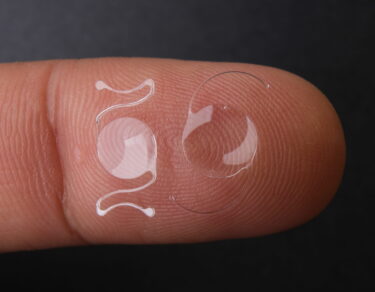
Some of those efforts require the cooperation of industry. For example, we are working with intraocular lens (IOL) manufacturers to reduce IOL packaging waste. An IOL weighing much less than 1 g might have 64 g of associated paper and plastic packaging.5 Instead of the large, multifold pieces of paper that typically make up most of the bulk inside the IOL box, a QR code on the box can direct surgeons to more up-to-date and less wasteful electronic instructions for use (IFU). Not only do electronic IFUs reduce paper waste, but they also mean that less fuel and space are needed to transport the IOLs, reducing cost and the product’s total carbon footprint.
Changing manufacturing practices takes a lot of time and effort. Below are a number of steps that individual doctors and ambulatory surgery center owners can take to improve sustainability on a smaller scale.
Reconsider routine sources of waste
There is no study or regulation that requires the use of full-body patient gowns and drapes for cataract surgery, yet many of us rely on these unthinkingly. In recent years, 47% of European surgeons and 44% of North American surgeons have switched from full-body draping to shorter face drapes for cataract surgery.4,6 Even larger percentages of surgeons (50% to 56%) allow patients to wear their own clothing instead of changing into a disposable gown.4,6 A large registry study showed no evidence that this practice increases the risk of endophthalmitis.7
Surgeons can also evaluate the contents of the surgical packs ordered for cataract surgery. Are there supplies or instruments that are infrequently used? Those items could be individually peel-packed so that they are only opened and discarded when needed, rather than for every case.
Use drops for multiple patients
It has become customary to use a bottle of eyedrops for each patient and then discard that bottle at the end of the case, even though there is a significant amount of the product remaining in the bottle. Many institutions require this with dilating drops, artificial tears, betadine, and intraoperative medications. These are all small bottles and might seem inconsequential, but the cumulative amount of plastic discarded over a year’s worth of cases is substantial. There is no evidence that using the same bottle for multiple procedures increases the risk of contamination or infection. A 2022 position paper by recommends reducing waste by using a bottle of drops until it is either empty or expired.8
Think critically about preloaded IOL injectors
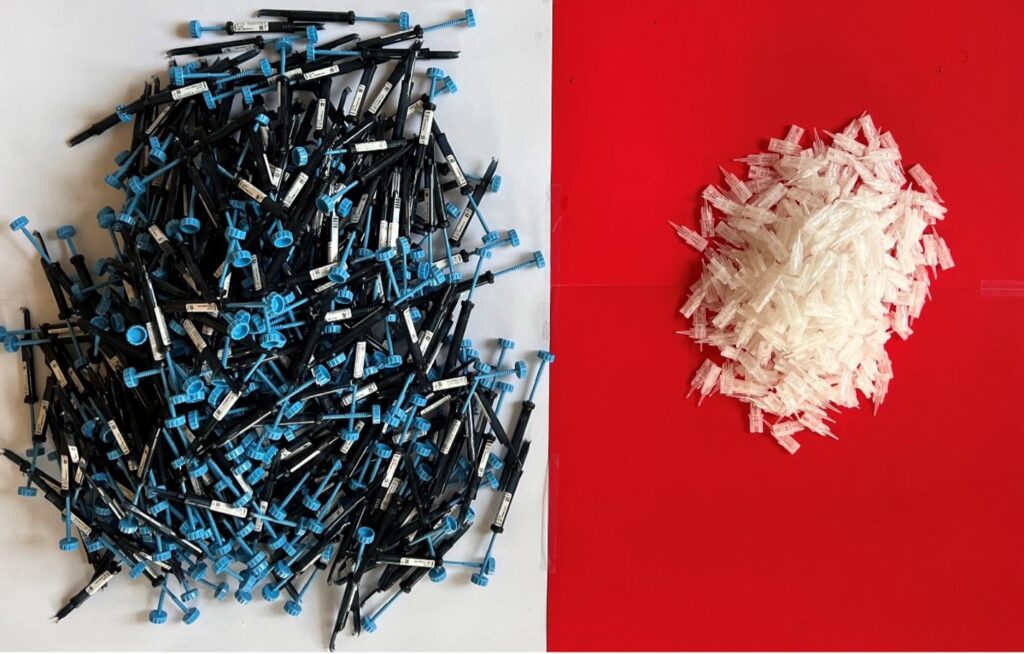
From the standpoint of standardizing IOL delivery, preloaded injectors have been an innovative and desirable development. They can reduce total case time by 12% and enable smaller incisions.9 A preloaded lens requires fewer IOL touches and makes the surgeon less dependent on staff to load the injector properly, potentially reducing variability in patient outcomes. However, single-use injectors contribute to plastic waste and increase packaging size and shipping weight. I’m excited about a unique new injector system that balances both of these priorities. SmartLOAD Delivery Technology (Johnson & Johnson) is a small, disposable plastic cartridge that houses the preloaded IOL; this piece is snapped onto the VITAN Unfolder, a reusable titanium inserter. Currently, the system can be preloaded with TECNIS monofocal IOLs, including TECNIS Eyhance. This 2-part system produces 55% to 75% less product plus primary packaging waste than other preloaded disposable delivery systems (Figure 2).
Boost your recycling efforts
Investigate what products can be recycled in your local community or returned to manufacturers for recycling. Many practices have set up a “green team” to lead the charge on these efforts. Some manufacturers accept packaging returns or have programs to offset the plastic waste in their IOL delivery systems and/or disposable contact lenses. For example, Alcon has a partnership with Plastic Bank, which builds recycling ecosystems in underdeveloped communities to collect and reuse plastic that might otherwise end up in the ocean.
Consider reusable equipment
In many countries, reusable equipment is the norm. Aravind Eye Hospitals in India, for example, reuse gloves, sutures, blades, and many other things that we would not consider candidates for reuse in the United States. This provides Aravind with a dramatically lower cost per case and greatly reduces waste—yet their endophthalmitis rate is comparable to US standards.10,11 Obviously, we have a different legal and regulatory environment here, but there are lessons we can leverage from low- and middle-income countries to better optimize sustainable resource use in our clinics.
Phaco machine cassettes are a significant factor in cataract surgery waste. Not only do these get discarded after each case, but they contain multiple plastic and metal components, making them difficult to recycle. I would like to see all the manufacturers move toward some form of reusable phaco cassette—either re-sterilizable or a multi-use cassette that could be used for all the cases in a single surgical day. One such daily reusable phaco cassette (Sophi, Rayner) was found to provide reduced downtime between cases, a 68% reduction in storage requirements, and a 75% reduction in plastic waste compared with a single-use phaco cassette.12 In the United States, we don’t have any completely reusable cassettes. However, users of the Compact Intuitiv phaco machine (Johnson & Johnson) have the option of ordering reusable tubing that has been validated for re-sterilization and use in up to 20 cases. I think, eventually, devices like those mentioned will have a competitive advantage because surgeons want to reduce waste without giving up all the other features of our preferred cataract surgery systems.
We can make a difference
Ophthalmic surgical facilities can take the EyeSustain pledge, which incorporates many of the steps discussed in this article. As surgeons, the best way we can encourage sustainability is to choose products that are more environmentally friendly and let our sales representatives know that sustainability is an important factor in our purchasing decisions. Collectively, doctors have a lot of power in influencing product development decisions. We don’t ever want to decrease patient safety or jeopardize the excellent outcomes that we have in cataract surgery, but when we can balance those goals with cost and environmentally efficient products, it’s a win for all.
Dr. Hovanesian is in practice at Harvard Eye Associates in Laguna Hills, California. He is a consultant, shareholder, or board member for a number of companies with eye care drugs and devices, including Alcon, AbbVie, Glaukos, Johnson & Johnson, Ocular Therapeutix, and Sight Sciences. Contact him at [email protected].
References
- Chang DF. Reducing surgical waste in cataract surgery. Presnted at the 43rd Congress of the European Society of Cataract and Refractive Surgeons 2025. September 12-16, 2025; Copenhagen, Denmark.
- Goel H, Venkatraman N, Cavinato J, et al. Improving productivity, costs and environmental impact in international eye health services: using the ‘Eyefficiency’ cataract surgical services auditing tool to assess the value of cataract surgical services. BMJ Open Ophthalmol. 2021;6(1):e000642. doi:10.1136/bmjophth-2020-000642
- Buchan JC, Limburg H, Burton MJ, et al. Addressing the environmental sustainability of eye health-care delivery: a scoping review. Lancet Planet Health. 2022;6(6):e524-e534. doi:10.1016/S2542-5196(22)00074-2
- Chang DF, Thiel CL; Ophthalmic Instrument Cleaning and Sterilization Task Force. Survey of cataract surgeons’ and curses attitudes toward operating room waste. J Cataract Refract Surg. 2020;46(7):933-940. doi:10.1097/j.jcrs.0000000000000267
- Morris DS, Wright T, Somner JE, Connor A. The carbon footprint of cataract surgery. Eye (Lond).2013;27(4):495-501. doi:10.1038/eye.2013.9
- Chang DF, Elferink S, Nuijts RMMA. Survey of ESCRS members’ attitudes toward operating room waste. J Cataract Refract Surg. 2023;49(4):341-347. doi:10.1097/j.jcrs.0000000000001096
- Haripriya A, Ravindran RD, Robin AL, Shukla AG, Chang DF. Changing operating room practices: the effect on postoperative endophthalmitis rates following cataract surgery. Br J Ophthalmol. 2023;107(6):780-785. doi:10.1136/bjophthalmol-2021-320506
- Palmer DJ, Robin AL, McCabe CM, Chang DF. Reducing topical drug waste in ophthalmic surgery: multisociety position paper. J Cataract Refract Surg. 2022;48:1073–1077. doi:10.1097/j.jcrs.0000000000000975
- Jones JJ, Chu J, Graham J, Zaluski S, Rocha G. The impact of a preloaded intraocular lens delivery system on operating room efficiency in routine cataract surgery. Clin Ophthalmol. 2016:10:1123-1129. doi:10.2147/OPTH.S107726
- Chang DF. Tackling the challenge of needless surgical waste in ophthalmology. J Cataract Refract Surg. 2023;49(4):333-338. doi:10.1097/j.jcrs.0000000000001175
- Shukla AG, Chang DF, Dhanaseelan T, et al. Reusing surgical materials for cataract surgery: An assessment of potential contamination. J Cataract Refract Surg. 2024;50(10):993-999. doi:10.1097/j.jcrs.0000000000001509
- Kallay O, Sadad R, Zafzafi A, Motulsky E. Cataract surgery and environmental sustainability: A comparative analysis of single-use versus reusable cassettes in phacoemulsification. BMJ Open Ophthalmology. 2024;9(1):e001617. doi:10.1136/bmjophth-2023-001617
Related Content