

Optometry360 Logo White
  • Conferences
  • Videos
  • Podcasts
  • Quizzes
  • About
    • About Us – Mission
    • Content Awards
    • Media Partners
    • Business Team
    • Brand Ambassadors
    • Industry Council
    • Advisory Board

What are you looking for?

  • Anterior Segment
  • Cataract
  • Cornea and External Disease
  • Diabetic Macular Edema
  • Dry Eye
  • Early Onset Cataracts
  • Exclusives
  • General
  • Geographic Atrophy
  • Glaucoma
  • Industry News
  • Inherited Retinal Disease
  • IOLs
  • Neurotrophic Keratitis
  • Ocular Surface Disease
  • Oculoplastics
  • Optometry
  • Pediatrics
  • Practice Management
  • Presbyopia
  • Refractive Surgery/Vision Correction
  • Residents & Young Ophthalmologists
  • Retina
  • Retina Care 360
  • Retinopathy of Prematurity
  • Spotlight Series
  • The Interventional Glaucoma Project
  • The Ophthalmic Project
  • Trending Topics
Spotlight - The Future of Cryopreserved Amniotic Membrane in Oculoplastic Surgery
Optometry360 Logo White
  • Conferences
  • Videos
  • Podcasts
  • Quizzes
  • About
    • About Us – Mission
    • Content Awards
    • Media Partners
    • Business Team
    • Brand Ambassadors
    • Industry Council
    • Advisory Board
Home > Conference Roundup > Atia Vision IOL system shows promise for cataract and presbyopia correction
  • Conference Roundup

Atia Vision IOL system shows promise for cataract and presbyopia correction

Ophthalmology 360

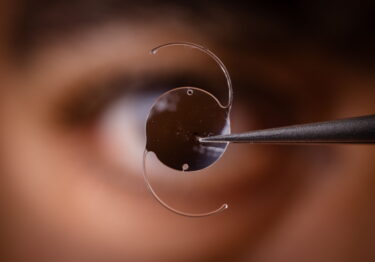
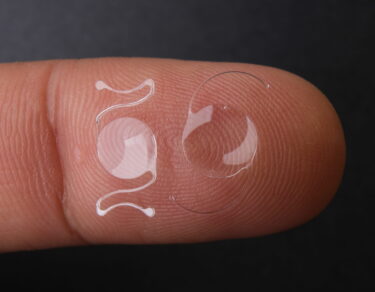
The Atia Vision IOL demonstrates the potential to achieve predictable refractive outcomes approaching plano, while simultaneously offering functional distance-corrected intermediate (DCIVA) and distance-corrected near visual acuities (DCNVA), according to early clinical trial outcomes presented at ASCRS 2023.

The prospective clinical trial, currently underway, is a 12-month study conducted in a non-randomized, open-label fashion. The dual-optic IOL system consists of a shape-changing, fluid-filled accommodating base and a fixed power front optic. The design enables the IOL to adjust its power according to the natural accommodative demand of the eye, resulting in dynamic power change.

The study enrolled patients  ≥50 years with visually significant cataracts. The surgical procedure involved a sutureless corneal incision of 3.5 mm. Visual acuities were measured before surgery and at 1, 3, 6, and 12 months post-surgery, including best corrected distance (BCDVA), distance-corrected intermediate (DCIVA), and distance-corrected near visual acuities (DCNVA). Defocus curves were also assessed. Throughout the study duration, safety and patient satisfaction were closely monitored.

Preliminary findings from the 3-month data of 13 monocular cases are promising, with 89% of patients exhibiting stable refraction within ±0.5D of plano. The mean monocular BCDVA was -0.02 (±0.07) logMAR (20/19), indicating exceptional visual acuity. DCIVA was measured at 0.01 (±0.10) logMAR (20/20), while DCNVA was recorded at 0.22 (±0.11) logMAR (20/33). The mean defocus curve demonstrated visual acuity better than 20/32 across the range of 0 to -1.5D. Notably, the study’s patients-directed symptom assessment revealed only 1 case of positive dysphotopsia.

Reference
Waring GO, et al. Prospective, Open-Label, Non-Randomized, Trial of a Presbyopia-Correcting, Modular Intraocular Lens System for Treatment of Cataract. Presented at: ASCRS 2023.

Share

Related Content

  • Cataract

IOL exchange shows highest success for dissatisfaction after presbyopia-correcting lens surgery

  • Cataract

Head-to-head study highlights differences between EDoF intraocular lenses

  • Glaucoma

Review finds low adverse event rates for glaucoma stents

  • Retina

Switching to aflibercept 8 mg extends treatment intervals in suboptimal nARMD responders

  • Conference Roundup

Cryopreserved amniotic membrane significantly improves ocular surface integrity in patients with severe keratoconjunctivitis sicca and neurotrophic keratopathy

  • Conference Roundup

CAM360 with a collagen shield provides rapid epithelial healing with better tolerability and safety than when used with bandage contact lenses

Share

Editor's Picks

  • Neurotrophic Keratitis

Topical insulin shows real-world benefit in neurotrophic keratopathy

  • Retina

GLP-1 RAs have protective effects against AMD

  • Retina

Four-month injection intervals appear safe for long-term stable nAMD

Advisory Board

Saad Ahmad, MD

Ahmad A. Aref, MD, MBA

Roomasa Channa, MD

David Chow, MD, FRCS(C)

Sally L. Baxter, MD, MSc

Neel R. Desai, MD

Nadia Haqqie, MD

Simon Fung, MD, FRCOphth

Sumit Garg, MD

Ross Lakhanpal, MD, FACS

Sanjai Jalaj, MD

Anton Kolomeyer, MD, PhD

Shan Lin, MD

Steven R. Sarkisian, Jr., MD

See All
Optometry360 Logo

Ophthalmology 360® is a dynamic digital platform dedicated to advancing the field of eye care.

Get to Know Us

  • Home
  • About Us
  • Media Partners
  • Advertising Policy
  • Our Advisory Board

Sign up for our Newsletter

Sign up for our Newsletter to get our newest articles instantly!

  • Privacy Policy
  • Advertising Policy
  • Medical Disclaimer
IHM Logo

2026 Ophthalmology 360 is a trademark of International Healthcare Media, LLC. All rights reserved

  • MedJournal360 Icon
  • RareDisease360 Icon
  • MyHero360 Icon
  • Optometry360 Icon
  • Ophtalmology360 Icon